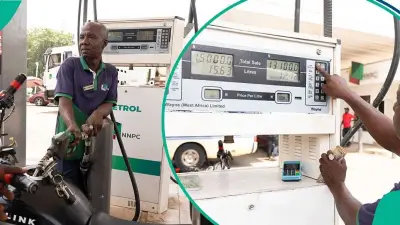
Dangote Refinery Announces Significant Diesel Price Reduction
In a move that brings relief to Nigeria's downstream petroleum sector, Dangote Petroleum Refinery has implemented a substantial price cut for Automotive Gas Oil, commonly known as diesel. The refinery has reduced its ex-depot price by N200, bringing the new rate to N1,750 per litre. This represents a significant 10.25% decrease from the previous price of N1,950 that had been in effect.
Loading Operations Resume Amid Global Market Fluctuations
The price adjustment comes directly on the heels of the refinery resuming its loading operations. According to industry reports, loading activities at the Dangote facility recommenced on Wednesday afternoon at approximately 3:00 PM. This operational resumption followed a brief period of disruption and coincided with a temporary dip in global crude oil prices, which helped stabilise the supply chain and brought gantry operations back to normal capacity.
With loading operations now back on track, diesel availability is expected to improve significantly across key Nigerian distribution hubs. Major cities including Lagos, Port Harcourt, and Warri should see enhanced product distribution, providing much-needed relief to transport operators, industrial consumers, and downstream marketers who rely heavily on diesel for their operations.
Petrol Price Also Adjusted in Related Move
In a related development that underscores the refinery's responsive pricing strategy, Dangote also adjusted its petrol pricing on Wednesday, April 8. The refinery reduced its ex-gantry petrol price to N1,200 per litre, reversing a N75 increase that had been announced just a day earlier. This petrol price adjustment brought the rate down from N1,275 per litre, though industry sources indicate the initial increase was so brief that it had minimal market impact.
The dual price reductions demonstrate the refinery's capacity to respond quickly to changing market conditions, though analysts caution that further adjustments may be necessary given ongoing global oil market volatility.
Global Geopolitical Tensions Threaten Price Stability
The international oil market continues to experience significant uncertainty that could affect domestic fuel pricing in Nigeria. Recent developments include Iran reportedly shutting the Strait of Hormuz less than twenty-four hours after agreeing to a ceasefire with the United States. This action was reportedly in response to Israel's continued strikes on Lebanon, reigniting fears of major supply disruptions in one of the world's most critical shipping corridors.
As of Thursday morning, April 9, benchmark crude prices showed notable increases. Brent crude was trading at $97.20 per barrel, representing a 2.59% rise, while West Texas Intermediate stood at $97.37 per barrel, marking a 3.14% increase. These price movements followed a brief period of decline after the initial truce announcement that included reopening the Strait of Hormuz.
Analysts monitoring the situation warn that continued geopolitical tensions could trigger further price swings in the global oil market, potentially influencing domestic fuel pricing in Nigeria in the coming days and weeks. The delicate balance between supply stability and geopolitical risk creates an environment where price adjustments may become more frequent.
Historical Context and Regional Price Variations
To understand the significance of the current price reduction, it's helpful to examine recent diesel price trends in Nigeria. According to data from the National Bureau of Statistics, the average retail price paid by consumers for diesel stood at N1,361.57 per litre in January 2026. This represented a 9.32% decrease compared with the N1,501.58 recorded in January 2025.
On a month-on-month basis, the average retail price declined by 2.86% from N1,401.63 in December 2025. The NBS data also revealed significant regional variations in diesel pricing across Nigerian states:
- Lagos recorded the highest average retail price at N1,560.82 per litre
- Akwa Ibom followed closely with N1,558.52 per litre
- Borno state recorded N1,480.00 per litre
These regional disparities highlight the complex distribution challenges within Nigeria's petroleum sector, even as major refiners like Dangote work to stabilise prices through domestic production.
The latest price reduction from Dangote Refinery represents a positive development for Nigeria's economy, particularly for transportation and industrial sectors that depend heavily on diesel. However, the ongoing volatility in global oil markets suggests that stakeholders should remain prepared for potential future adjustments as international conditions continue to evolve.