
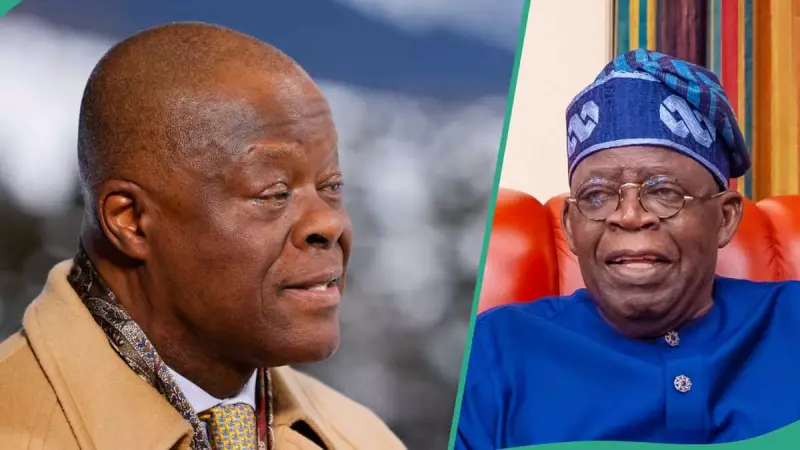
A significant contradiction has emerged at the highest levels of Nigeria's government regarding the nation's financial health. The Minister of Finance and Coordinating Minister for the Economy, Wale Edun, has presented figures that directly conflict with a previous claim made by President Bola Ahmed Tinubu about meeting the 2025 revenue target.
The Contradiction in Revenue Claims
During an interactive session with the House of Representatives Committees on Finance and National Planning on Tuesday, December 16, 2025, Minister Edun delivered a sobering assessment. He stated that the federal government's revenue for the 2025 fiscal year is projected to reach only ₦10.7 trillion. This figure stands in stark contrast to the government's initial full-year projection of ₦40.8 trillion, indicating a massive shortfall.
This revelation directly contradicts President Tinubu's public declaration from September 2025. While addressing stakeholders of the Buhari Organisation at the Presidential Villa in Abuja, the President had confidently announced that Nigeria had met its revenue target for the year ahead of schedule, specifically by August. "Today, I can stand here before you to brag: Nigeria is not borrowing. We have met our revenue target for the year, and we met it in August," Tinubu was quoted as saying.
Implications for Public Finances and Borrowing
Minister Edun's disclosure raises fresh and serious concerns about the sustainability of Nigeria's public finances. The wide gap between projected and actual revenue has significant consequences for the national budget and debt management strategy.
The Tinubu administration now plans to borrow N17.89 trillion in 2026 to address a widening fiscal deficit fueled by lower revenue. A substantial 80% of this planned borrowing is expected to be sourced domestically. Furthermore, the cost of servicing the country's existing debt is projected to rise sharply, putting additional pressure on the nation's finances.
Expert Warnings and Economic Stability
Economists and civil society experts have consistently warned about the dangers of escalating public debt. They argue that rising debt levels could undermine Nigeria's macroeconomic stability and place a heavy burden on future generations. The contradiction between the President's optimistic announcement and the Finance Minister's stark figures highlights the challenges in managing the country's economic narrative and fiscal reality.
The emerging details point to a complex financial landscape where revenue generation has fallen dramatically short of targets, necessitating increased borrowing and raising questions about long-term economic planning and transparency.




