
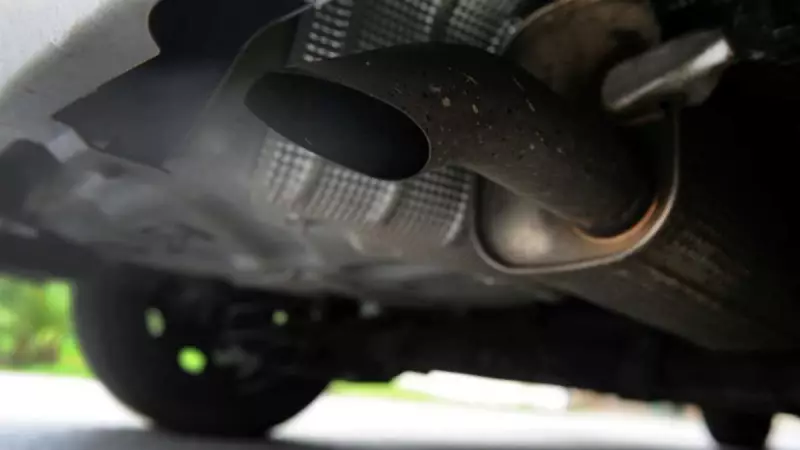
In a significant policy reversal, the European Union is preparing to abandon its landmark plan to ban the sale of new petrol and diesel cars by 2035. The decision, expected to be formalised on Tuesday, marks a major victory for car manufacturers who have lobbied intensely against the strict deadline.
A Shift in Green Policy
Instead of a complete phase-out, the European Commission is now expected to propose a new target: a 90-percent reduction in CO2 emissions from new vehicles by 2035. This move is part of a broader package of reforms designed to bolster Europe's automotive sector, which faces fierce competition from Chinese manufacturers and a slower-than-anticipated consumer shift to electric vehicles (EVs).
"This is a critical milestone for the future of the sector. There is a lot at stake," stated Sigrid de Vries, head of the European Automobile Manufacturers' Association (ACEA), during a press conference in Brussels on Monday.
The original 2035 ban, established in 2023, was a cornerstone of the EU's ambitious Green Deal. However, it has faced mounting pressure from industry leaders and right-wing politicians as the economic challenges of the transition became clearer.
Why the Ban is Being Scrapped
Carmakers have argued that the 2035 target, along with an intermediate goal for 2030, is no longer realistic. They cite high upfront costs for EVs and a persistent lack of adequate charging infrastructure across the 27-nation bloc as key reasons consumers are hesitant.
The data supports this view. According to ACEA, just over 16 percent of new vehicles sold in the first nine months of 2025 were fully battery-powered.
With the expected policy change, automakers are likely to be authorised to continue selling certain hybrid models after 2035. These include plug-in hybrids and vehicles with range extenders—small combustion engines that recharge the battery rather than power the wheels directly.
Division Among Member States
The policy shift has exposed divisions within the EU. Nations like Germany and several Eastern European countries, where major car factories are located, support the flexibility for hybrids. Italy is pushing for the allowance of alternative fuels made from crops and waste.
"EVs will be the dominant choice, but to make the transition work for society and industry, other options must be available too," de Vries emphasised in a social media post.
However, a coalition including France, Spain, and the Nordic countries has advocated for sticking to the original plan. They argue that diluting the target could harm companies that have already invested heavily in the electric transition and create market uncertainty.
Environmental groups have expressed deep concern. A recent report indicated that plug-in hybrids can pollute almost as much as conventional petrol cars. William Todts, director of the clean transport group Transport & Environment, offered a pragmatic view, hoping the compromise would end the political stalemate.
"I hope that if they get a little bit of what they want, they will stop poisoning the political debate," he told AFP, noting the confusion the heated discussions have caused for both the industry and consumers.
The Commission is also expected to announce additional support measures for the auto sector. These may include plans to "green" company vehicle fleets and incentives to produce smaller, more affordable electric cars.
This pivotal decision comes as the EU grapples with the dual challenges of climate action and industrial competitiveness. Road transport accounts for roughly 20 percent of Europe's total planet-warming emissions, with cars responsible for 61 percent of that share.




