
The Federal Government of Nigeria and the World Bank have renewed their joint pledge to significantly broaden social protection systems and enhance economic pathways for the nation's poor and vulnerable populations. This commitment was solidified during a high-level meeting in Abuja on Wednesday.
High-Level Reassurances in Abuja
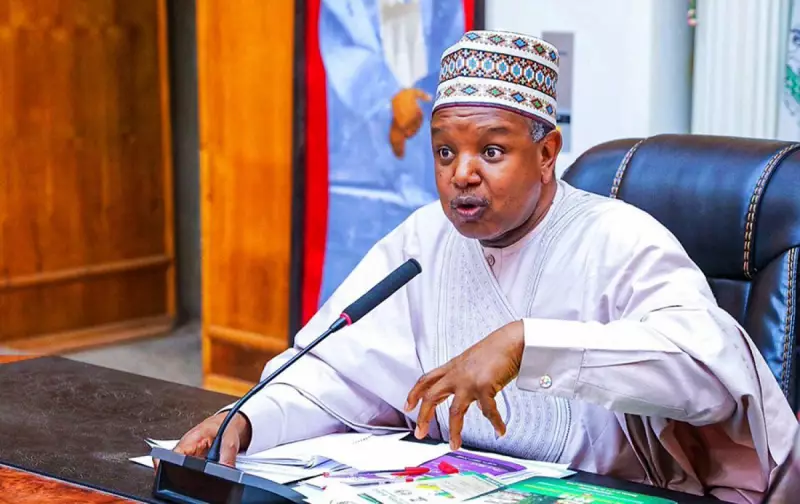
The assurance came during a visit by the World Bank's Regional Manager for Social Protection and Labour for West and Central Africa, Mr. Robert Chase, to the Minister of Budget and Economic Planning, Senator Abubakar Bagudu. This marked Chase's first official visit to Nigeria since his appointment.
Minister Bagudu warmly welcomed the World Bank official, expressing profound gratitude for the institution's sustained support. He highlighted that Nigeria's ongoing macroeconomic reforms and social protection initiatives have gained substantially from this critical partnership.
The minister also used the occasion to introduce the ministry's new Permanent Secretary, Dr. Deborah Odoh, during her first formal engagement with the bank. He praised her strategic expertise and leadership capabilities in the realm of social policy and reform execution.
Constitutional Mandate and National Alignment
Bagudu emphasized that the Nigerian Constitution explicitly tasks the federal, state, and local governments with pursuing shared national goals. These objectives include social welfare and inclusive development. He noted that this legal framework directs the ministry's efforts in coordinating social protection policies and ensuring alignment across all tiers of government.
In her remarks, Permanent Secretary Odoh assured Mr. Chase of the Federal Government's unwavering commitment to mobilizing all available resources. This effort is aimed at realizing President Bola Tinubu's vision for a more inclusive and resilient Nigeria.
Commendation and Next Phase of NG-CARES
Robert Chase commended Nigeria's leadership and innovative approach in delivering large-scale social protection programmes. He described these efforts as expansive, innovative, and a model for other countries across the African continent.
He specifically pointed to the strong national ownership of the Nigeria COVID-19 Action Recovery and Economic Stimulus (NG-CARES) programme. Chase revealed that the World Bank's initial $750 million support for NG-CARES has been effectively leveraged, attracting over $2.2 billion in complementary investments at the state level.
The World Bank official provided a clear timeline for the programme's progression. He stated that the first phase of NG-CARES will be concluded by the end of December 2025. Additional financing is expected to take effect by December 9, 2025, with a full launch scheduled for January 2026 to ensure a seamless transition and implementation.
The forthcoming phase, he explained, will focus on expanding key areas in line with the World Bank's Country Partnership Framework for Nigeria. These expansions will include:
- Scaling up direct cash transfer programmes.
- Strengthening national identification systems.
- Broadening livelihood support initiatives for sustainable income generation.
This meeting underscores a continued and deepening collaboration aimed at building a robust social safety net and fostering economic resilience for millions of Nigerians.




