
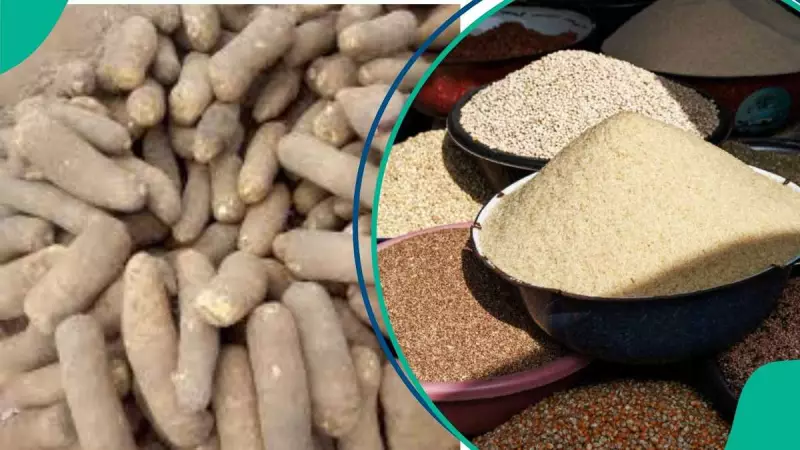
Nigerian households are breathing a collective sigh of relief as the cost of essential food items has recorded a significant and sustained drop for the fifth month in a row. This welcome development has pushed the country's food inflation rate down to 11.08% in November 2025, according to the latest data from the National Bureau of Statistics (NBS).
Steady Decline in Food Costs Brings Relief
The sharp fall in the prices of staples such as rice, yam, garri, tomatoes, and cassava tubers marks a clear turnaround from the punishingly high costs witnessed earlier in the year. The NBS Consumer Price Index (CPI) report shows food inflation dropped sharply from 13.12% in October to 11.08% in November, a near two percentage point decrease month-on-month.
This positive trend represents a massive improvement compared to the same period last year. In November 2024, food inflation stood at a staggering 39.93%, meaning the current rate of 11.08% is a dramatic 28.85 percentage point reduction. For families across the nation, this statistical shift translates directly to more manageable bills at local markets and a gradual restoration of purchasing power.
Headline Inflation Also Eases for Eighth Consecutive Month
The good news extends beyond the food basket. Nigeria's overall headline inflation rate also continued its downward trajectory, easing for the eighth consecutive month to 15.45% in November, down from 16.05% recorded in October. The NBS identified key contributors to inflation during the period as food and non-alcoholic beverages, restaurants and accommodation services, and transport.
While these sectors still account for a significant portion of consumer spending, their impact is now moderating as prices cool across the board. The sustained decline, which began after volatile price movements between January and June, indicates a gradual return to stability in the economy.
Regional Disparities and Rural Challenges Persist
Despite the encouraging national figures, the report highlights an uneven distribution of the economic relief. Rural inflation once again outpaced urban inflation, standing at 15.15% compared to 13.61% in urban areas. This nearly two percent gap underscores persistent challenges in farming communities.
Analysts attribute this disparity to ongoing insecurity in some agricultural regions, high costs of transportation, and profit-seeking activities by middlemen. The situation has led many farmers and traders to divert their produce to urban markets where demand is stronger and prices are more stable, inadvertently leaving rural consumers with higher costs.
A state-by-state analysis reveals wide variations in food inflation. Kogi State recorded the highest rate at 17.83%, followed by Ogun at 16.52% and Rivers at 16.11%. Conversely, Imo, Katsina, and Akwa Ibom states posted the lowest food inflation rates at 3.52%, 3.65%, and 4.52% respectively, reflecting better local price stability and supply conditions.
Festive Season Hope Amidst Cautious Optimism
As the Christmas and New Year festivities approach, the steady decline in food prices is lifting spirits nationwide. The current scenario offers a stark contrast to the previous year when soaring costs severely limited celebrations for many.
With reports indicating that rice dealers have reduced the price of a 50kg bag by over N20,000, households are cautiously optimistic that the worst of the recent food price crisis may be over. However, the NBS data and expert analyses call for measured celebration, as underlying issues in the agricultural value chain and regional disparities remain to be fully addressed.




