
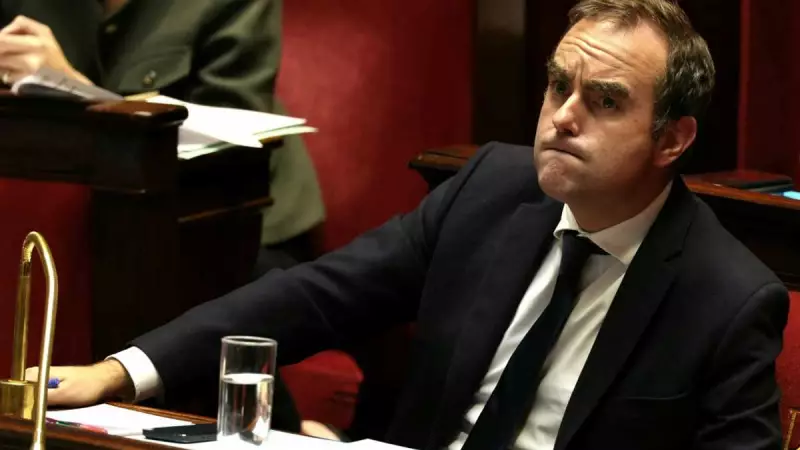
France, the eurozone's second-largest economy, has been plunged into a fresh political crisis after lawmakers failed to agree on a state budget for 2026. This failure means the country will enter the new year without an approved spending plan, dealing a significant blow to Prime Minister Sebastien Lecornu's government.
Budget Negotiations Collapse in Parliament
On Friday, December 19, 2025, a joint committee of French senators and members of the National Assembly could not reach a compromise on the crucial finance bill. Parliamentary sources confirmed the deadlock, which ensures that France will not have a 2026 budget by the end of the year. As a result, the 2025 budget is now expected to be carried over into the new year while contentious debates continue in both legislative chambers.
Prime Minister Sebastien Lecornu confirmed the setback on social media platform X, stating, "Parliament will therefore be unable to vote on a budget for France before the end of the year." Lecornu, who was appointed in September and then renamed in October after a brief resignation, had staked his credibility on passing a budget by year's end. He had pledged not to use a constitutional power to force it through without a parliamentary vote, a tactic employed by previous administrations.
A Nation Gripped by Political and Economic Paralysis
The budget impasse highlights the severe political gridlock that has hampered France's efforts to control its soaring public debt and reduce its deficit. The nation has been in a deep political crisis since President Emmanuel Macron's snap elections last year, which resulted in a hung parliament and significant gains for the far right.
The current budget debate has been complicated by a fundamental clash between the two houses of parliament. The right-leaning Senate is pushing for aggressive spending cuts, while the hung lower house, where leftist factions hold considerable sway, is demanding increased tax revenues. This political tug-of-war previously delayed the adoption of the 2025 budget, which was only approved in February after being forced through the lower house.
Short-Term Fixes and Long-Term Warnings
In response to the crisis, Lecornu's team told AFP that the government will seek to pass a "special law" to temporarily extend the 2025 budget. This measure would allow the state to continue collecting taxes after January 1 and ensure the payment of civil servant salaries. Prime Minister Lecornu also announced plans to consult with main political leaders starting Monday to chart a path forward.
However, this stopgap solution has drawn sharp criticism. Francois Villeroy de Galhau, the governor of the Bank of France, warned that rolling over the 2025 budget would lead the country to a "deficit far higher than desired." In an interview with France Inter radio, he emphasized that such a move is only a short-term fix that fails to address the underlying fiscal challenges.
The budget failure overshadows a minor victory for Lecornu earlier in the week, when lawmakers narrowly adopted the social security budget—a component of the broader spending plan. That vote included a postponement of an unpopular pensions reform until 2028.
The ongoing crisis underscores the fragility of the French government and raises serious questions about its ability to implement the fiscal discipline demanded by European partners. With no clear majority in parliament and deep ideological divides, the path to a stable budget and sustainable economic policy remains fraught with uncertainty.




