
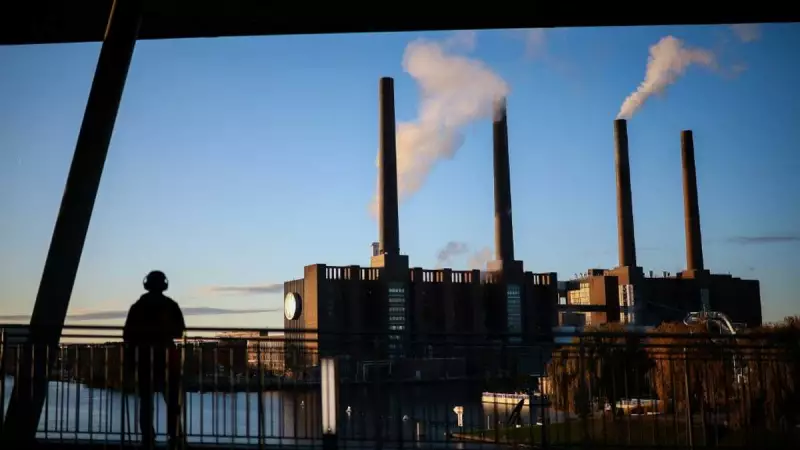
Germany, Europe's largest economy, is now facing its most severe economic crisis since the end of the Second World War, a leading industry association has declared. The Federation of German Industries (BDI) issued a stark warning on Tuesday, stating the economy is in 'free fall' and calling for immediate and decisive action from Chancellor Friedrich Merz's government.
A Perfect Storm of Economic Challenges
The BDI president, Peter Leibinger, highlighted a confluence of critical problems dragging the economy down. German manufacturers are buckling under the weight of persistently high energy costs, while demand for the country's vital exports has weakened in key international markets. Furthermore, Germany now contends with intense industrial competition from China and faces a new wave of tariffs from the United States.
This toxic mix has already resulted in two consecutive years of recession. Current forecasts suggest the economy will manage only minimal growth in 2025, failing to signal a strong recovery. The BDI's own grim prediction is that German factory output will fall by another two percent in 2025, marking a fourth straight year of contraction for the industrial sector.
Government Response Deemed Too Slow
Chancellor Friedrich Merz, who took office in May, has promised to revitalise the traditional powerhouse of the eurozone. His plans include a significant increase in public spending, particularly on defence and infrastructure projects. However, business leaders are growing increasingly frustrated, arguing that these efforts are moving too slowly and are insufficient to address deep-rooted structural issues.
These chronic problems include a severe shortage of skilled labour and a heavy bureaucratic burden that stifles business activity. 'The economy is experiencing its deepest crisis since the founding of the federal republic, yet the federal government is not responding with sufficient determination,' Leibinger stated. He emphasised the urgent need for 'decisive structural reforms' and a clear policy shift focused on restoring competitiveness and growth.
International Echoes and a Glimmer of Hope
The industry group's criticism is not isolated. Last week, the International Monetary Fund (IMF) also cautioned that Merz's planned spending surge alone would not be enough to ensure a lasting economic turnaround. The IMF joined the call for the government to implement additional 'pro-growth' reforms to complement its investment plans.
Despite the bleak outlook, there is a minor positive forecast. The German government itself expects the economy to begin a gradual recovery next year, projecting a growth rate of 1.3 percent in 2025. In response to the mounting criticism, Chancellor Merz recently defended his administration's pace, asking for more time to steer the massive economy. 'Germany is not a speedboat, Germany is a large ship,' he told an audience, comparing the nation's economy to a tanker that cannot be turned around instantly.
The stakes are exceptionally high. Germany's heavy industry—spanning automotive manufacturing, industrial equipment, and steel production—remains the backbone of its economy. The BDI represents over 100,000 manufacturing firms of all sizes, which together employ more than eight million people. The urgency for a effective economic policy is clear, as the nation's industrial might and global standing hang in the balance.




