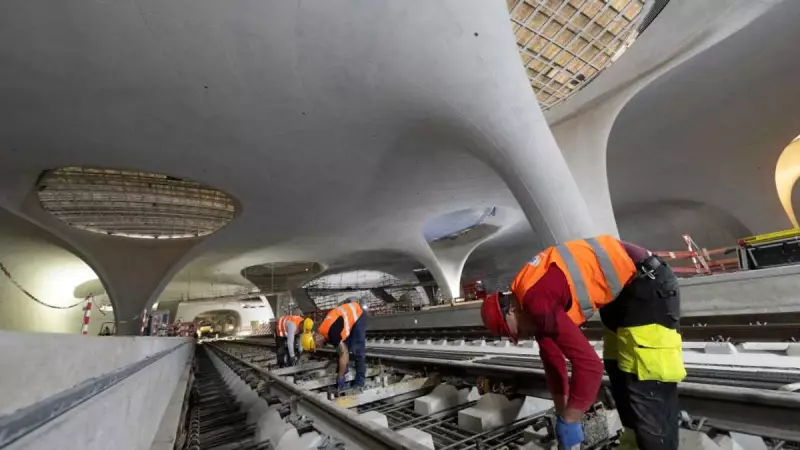
Major German Rail Project Hits Another Roadblock
Germany's ambitious Stuttgart 21 railway project, which has become symbolic of the infrastructure challenges facing Europe's largest economy, has encountered yet another significant delay according to recent reports.
The massive rail initiative, originally scheduled for completion in 2019, now faces an indefinite postponement due to mounting technical problems that have compromised the project timeline.
Project Timeline and Current Status
Trains were expected to begin operating from the new underground station by December 2026, with a full opening planned for summer 2027. However, Der Spiegel news outlet revealed that Evelyn Palla, the recently appointed head of state-owned rail operator Deutsche Bahn, has put the project on hold indefinitely.
Deutsche Bahn confirmed in an official statement that "scheduling risks" had escalated to "an extent that was previously unforeseeable." The company acknowledged the issues are currently being evaluated by its supervisory board, though specific details about the technical challenges remain undisclosed.
Growing Concerns and Public Reaction
Dieter Reicherter, spokesperson for the protest group Action Alliance Against Stuttgart 21, expressed little surprise at the latest development. "I'm not surprised at all, because the problems are so huge," Reicherter told AFP. "I wouldn't be surprised if the project were to be cancelled altogether at some point."
Tim Alexandrin, a transport ministry spokesman, emphasized that the federal government maintains no direct control over the project, which is managed at the local level. However, he acknowledged that "any further delays are extremely frustrating, particularly for passengers."
The project's challenges include:
- Major risks with digital infrastructure implementation
- Construction delays affecting the city center
- Significant cost overruns
Financial Impact and Broader Implications
Work on Stuttgart 21 commenced 15 years ago, with plans to replace the existing station with a major underground facility. The prolonged construction has transformed Stuttgart's city center into an extensive building site, while project costs have more than doubled to approximately 11 billion euros ($12.7 billion).
This project has come to represent the broader deterioration of German rail services and infrastructure, including issues with crumbling bridges and inconsistent internet coverage nationwide.
In response to these systemic challenges, Chancellor Friedrich Merz's coalition government has established a substantial fund dedicated to infrastructure improvements. According to Deutsche Bahn, 81 billion euros have been allocated specifically for rail system enhancements through 2029.
A new opening date for Stuttgart 21 is not expected to be announced until mid-2026, leaving passengers and stakeholders awaiting resolution of the project's persistent technical and scheduling challenges.