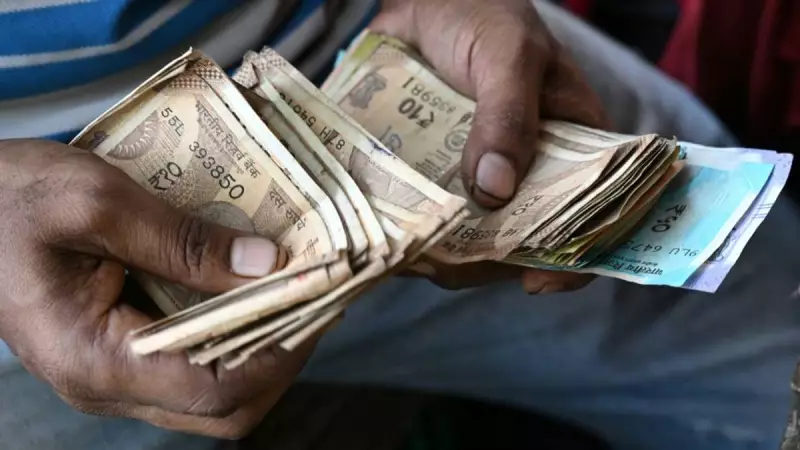
The Indian rupee plunged to a fresh all-time low on Wednesday, breaching the symbolic threshold of 90 against the US dollar. This decline extends a recent weakening trend, with analysts pointing to delayed trade negotiations with the United States and significant foreign capital outflows as primary drivers.
Trade Talks and Foreign Outflows Fuel Decline
On Wednesday morning, the rupee weakened by as much as 0.35 percent to hit a new low of 90.19 per dollar, according to data from Bloomberg. The currency's fall marks a sharp reversal from the optimism seen earlier in the year. In May, hopes surrounding early trade talks between New Delhi and Washington helped push the rupee to a near six-month high of 83.75.
However, setbacks in those negotiations, combined with disappointing corporate earnings, have triggered a massive sell-off by overseas investors. Foreign investors have offloaded well over $16 billion worth of Indian shares so far this year, putting immense pressure on the currency. Dilip Parmar, an analyst at HDFC Securities, described the situation as an "imbalance of demand and supply," exacerbated by the trade deal uncertainty.
Central Bank Adopts a More Flexible Stance
A notable factor in the rupee's sustained drop is the perceived change in strategy from the Reserve Bank of India (RBI). While the central bank has sporadically intervened this year with aggressive dollar sales to defend key levels, analysts note a recent shift towards allowing greater currency flexibility.
Raj Gaikar, a research analyst at SAMCO Securities, explained that defending a specific exchange rate level in the current macroeconomic environment would be "costly and counterproductive." With inflation running lower than expected, the policy focus has moved toward supporting economic growth rather than depleting foreign reserves to maintain an "artificial line."
Gaikar added that the RBI now appears to be intervening only to curb excessive volatility, not to reverse a trend driven by fundamental factors. He forecasts the rupee will likely settle into a range of 88 to 92 against the dollar. "This more hands-off approach signals a transition to a market-aligned regime rather than a rigid defence of symbolic levels," he stated.
Broader Economic Pressures Remain
The rupee's performance in 2025 has been among the worst in Asia. It continues to be pressured by India's current account deficit alongside the foreign fund exodus. The currency's record-low move underscores the challenges facing the world's fifth-largest economy as it navigates global financial headwinds and complex international trade discussions. The market will be closely watching for any decisive intervention or policy shifts that could stem the rupee's slide.