
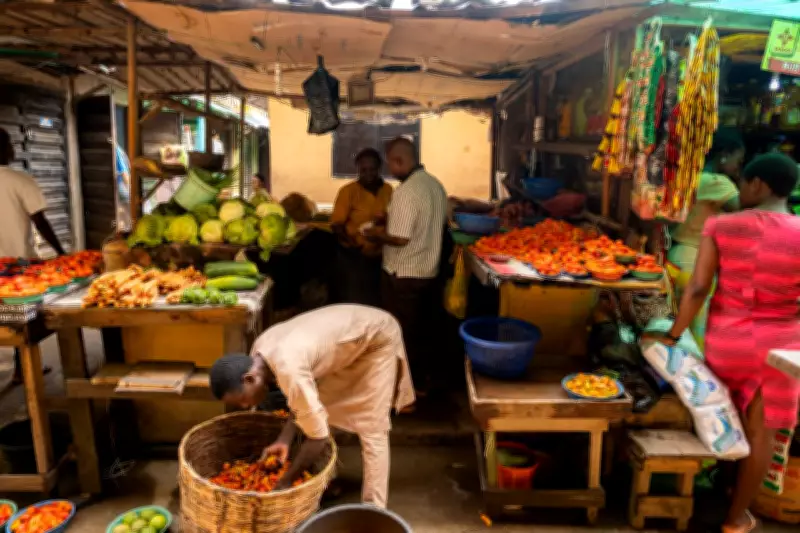
Nigeria's Inflation Rate Declines to 15.06% in February 2026
Nigeria's headline inflation rate experienced a marginal easing to 15.06 per cent in February 2026, according to the latest Consumer Price Index (CPI) report released by the National Bureau of Statistics (NBS). This figure represents a slight decline from the 15.1 per cent recorded in January 2026, marking a reduction of 0.04 percentage points month-on-month. The data indicates a modest slowdown in the overall pace of price increases across the Nigerian economy, providing a glimmer of relief amid ongoing economic challenges.
Consumer Price Index and Year-on-Year Comparison
The CPI, which measures the average change in prices of goods and services consumed by households, rose to 130 in February 2026. This reflects a 2.6 point increase from the 127.4 recorded in January. On a year-on-year basis, the inflation rate showed a significant decline when compared to the 26.27 per cent recorded in February 2025, representing an 11.21 percentage point drop over the period. However, the month-on-month headline inflation rate increased to 2.01 per cent in February, up from -2.88 per cent in January, suggesting that inflationary pressures are intensifying and may require fresh policy interventions to manage effectively.
Surge in Food Inflation and Regional Impacts
Despite the overall easing, the report highlighted renewed pressure in food costs. Food inflation stood at 12.12 per cent year-on-year in February 2026, lower than the 26.98 per cent recorded in the same period of 2025. However, on a month-on-month basis, food inflation surged dramatically to 4.69 per cent, a steep rise from the -6.02 per cent recorded in January. This sharp increase was driven by higher prices for essential items such as beans, cassava tuber, crayfish, millet flour, yam flour, and cowpeas.
The average annual food inflation rate for the 12 months ending February 2026 was 19.08 per cent, lower than the 37.4 per cent recorded in February 2025. Notably, food is becoming more expensive in states traditionally known as the country's food baskets. In February 2026, year-on-year food inflation was highest in Kogi at 26.91 per cent, followed by Adamawa at 23.12 per cent and Benue at 21.89 per cent. On a month-on-month basis, Bayelsa recorded the highest food inflation at 8.81 per cent, with Ebonyi at 8.51 per cent and Edo at 7.72 per cent.
Underlying Causes and Expert Insights
States like Benue, Kogi, Adamawa, Ebonyi, and Edo are renowned for their high agricultural productivity, producing key crops such as rice, cassava, yams, oil palm, maize, groundnuts, and wheat. However, production volumes have shrunk over the years due to escalating insecurity in these regions, particularly in Adamawa, Benue, Ebonyi, and Kogi. This insecurity, coupled with high transportation costs, has severely impacted food supply chains and driven up prices.
In response to the 11-month streak of easing inflation, the Central Bank of Nigeria (CBN) lowered the Monetary Policy Rate (MPR) from 27 per cent to 26.5 per cent during its February Monetary Policy Committee (MPC) meeting. This followed a previous cut in September 2025 to 27 per cent, indicating a trend of monetary easing aimed at sustaining disinflation. Kabir Ibrahim, President of the Nigerian Agribusiness Group (NABG), emphasized in an interview that the high cost of transportation and pervasive insecurity are primary culprits behind the soaring food prices. He urged all three tiers of government—federal, state, and local—to collaborate on subsidizing agriculture, arguing that the federal government alone cannot ensure a sustainable and affordable food supply.
The ongoing challenges highlight the need for coordinated efforts to address structural issues in Nigeria's agricultural sector and broader economy, as families continue to grapple with the daily struggle of affording basic necessities.




