
Middle East Conflict Intensifies Nigeria's Economic Survival Crisis
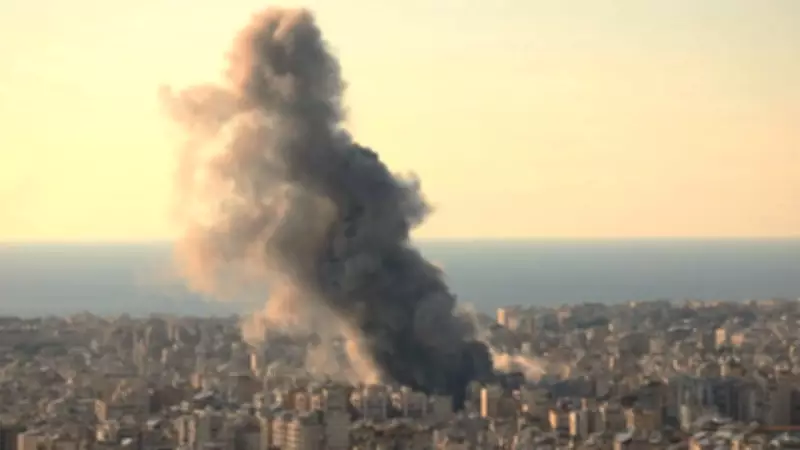
Nigeria's fragile economy is facing renewed pressure from external forces as the escalating Middle East conflict involving the United States, Israel, and Iran sends shockwaves through global oil markets, trade routes, and supply chains. For a nation heavily reliant on crude oil exports yet vulnerable to imported inflation, this crisis presents a complex paradox: while higher oil prices may boost government revenue and foreign exchange earnings, they simultaneously risk intensifying inflation, worsening the cost-of-living crisis, and squeezing businesses already struggling with weak consumer demand.
Global Tensions Fuel Local Economic Strain
Crude oil prices have surged past $100 per barrel, leading to sharp increases in fuel pump prices, spiked transport fares, and food prices exceeding N1,200 per litre. Small and medium enterprises (SMEs), already gasping for air, are bracing for even harder times. Economic analysts warn that the war, which has unsettled the global energy market and disrupted Middle Eastern shipping routes, could deepen Nigeria's existing structural weaknesses if policymakers fail to respond strategically.
Prof. Godwin Owoh, Executive Chairman of the Society for Analytical Economics, Nigeria, noted that wars historically produce severe economic consequences, often negative for countries indirectly linked through global markets. "Usually, anywhere in the world, war, in most cases, will come with very serious economic consequences, consequences that are usually negative," Owoh said. However, he highlighted that disruptions to shipping and attacks on oil infrastructure have pushed crude prices upward, potentially benefiting oil-producing nations like Nigeria.
Ripple Effects on Transport and Food Prices
Across Lagos and other major cities, transport fares have surged as petrol prices rise, forcing commuters to allocate more of their daily income to transportation. Journeys that previously cost N500 on some routes now cost about N800, while fares from Jakande Gate, Isolo, to CMS have risen to around N1,700 from about N1,400. On the Jakande Gate to Oshodi route, fares have jumped from N400 to N700, and travellers between Ikeja and Egbeda are now paying close to N800, up from N500.
For commuters like Bolaji Davidson, a civil servant travelling daily from Ajah to Victoria Island, these increases disrupt household budgets. "When transport keeps increasing like this, it affects everything. Before, I could plan my feeding and other expenses after removing transport money, but now it is becoming difficult," he lamented. Transport operators insist the hikes are unavoidable, with one bus driver at Oshodi explaining, "When petrol goes up, we have no option. The money we make from trips must still cover fuel and other expenses."
The consequences extend beyond commuting, as rising logistics costs push up food prices in local markets. In Lagos markets, staple commodities such as tomatoes, groundnuts, bread, and soft drinks have seen price increases within days. A paint bucket of tomatoes that sold for about N4,200 last week now goes for around N5,000, while raw groundnuts have jumped from about N6,000 to N7,000 per paint bucket. Eggs have become increasingly scarce, with crates selling for N6,000 and above, and available eggs noticeably smaller.
Cooked food vendors are adopting desperate strategies, such as serving smaller portions to keep meals affordable. "We cannot increase the price too much because people may stop buying. What we do now is reduce the quantity a little so we can still sell," one food seller explained. For small businesses dependent on generators due to Nigeria's chronic electricity shortages, higher fuel costs are driving up daily operating expenses, with some owners considering price hikes for their services.
Inflation and Hardship Set to Intensify
Prof. Akpan Ekpo, Emeritus professor of economics and public policy at the University of Uyo, warned that rising fuel prices could trigger inflation across virtually every sector of the economy. "Once the pump price goes up, it will affect virtually every sector of the economy," Ekpo said. "Transport costs will go up, agricultural costs will go up, and you are going to have inflation." He cautioned that the Middle East crisis could intensify the hardship already experienced by Nigerians, with many spending over 60% of their income on food, far above the recommended 10%.
To cushion the impact, Ekpo urged the government to temporarily reintroduce targeted subsidies for vulnerable groups and consider importing food to stabilise prices. He also called for direct financial support to households, suggesting that middle-class Nigerians with bank accounts receive a minimum of N100,000 monthly for at least six months to stimulate demand.
SMEs Face Mounting Pressure
Small and medium enterprises, widely regarded as the backbone of Nigeria's economy, are likely to bear the brunt of the crisis. Businesses reliant on fuel-powered generators, transportation of goods, and imported inputs are particularly vulnerable. David Adonri, Vice Chairman of Highcap Securities, noted that rising energy costs will increase production and distribution expenses, squeezing corporate profits if they cannot pass costs to consumers.
Ekpo highlighted existing challenges faced by SMEs, including limited access to finance and weak consumer demand, which could worsen. He prescribed government intervention through guaranteed loan schemes at single-digit interest rates and direct cash transfers to prevent widespread business closures. Owoh added another layer, criticising aggressive tax enforcement that seals businesses without prior notice, arguing it undermines the social contract in a context of fiscal indiscipline.
Structural Weaknesses and Over-Reliance on Oil
Analysts say the crisis exposes deeper structural weaknesses in Nigeria's economic model. Owoh argued that Nigeria's vulnerability stems more from domestic policy failures, such as lack of fiscal discipline and corruption, than external crises. He criticised the inability to refine enough petroleum products locally, despite being a major oil producer, noting that pump prices are rising faster in Nigeria than in other oil-producing countries.
Ekpo warned that relying on a single commodity for revenue is risky, as oil prices are determined by global forces beyond Nigeria's control. "We have been saying for a long time that reliance on one commodity or monoculture is very dangerous for the economy. Oil is a wasting asset. It will finish one day. You cannot plan an economy based on a revenue source you have no control over," he emphasised. He called for diversification through industrialisation and agricultural development, pointing out that Nigeria exports raw agricultural products like cocoa while importing processed goods like chocolate.
Adonri added that the war highlights the urgent need to accelerate the transition to clean energy, warning that crude oil will soon cease to be a primary energy source, potentially leaving Nigeria in limbo. He expressed scepticism that the crisis would spur meaningful policy rethinking in Abuja, citing past failures to learn from similar conflicts.
Human Factors at the Core
A striking theme among economists is that Nigeria's fundamental challenge is human rather than purely economic. Owoh stated, "Our major problem is not having an economy. Our major problem is discipline and fraud. Simply put, corruption. Simply put, fraud. That is the problem. That is why the impact is more negative on us." He pointed to cartels manipulating the domestic fuel market, with independent marketers blocking the Dangote refinery's potential to lower pump prices due to their political funding roles.
Owoh urged a shift toward evidence-based policymaking and the appointment of genuine technocrats not beholden to political interests. "Our problem is basically human. It basically has to do with the quality of the human capital that manages the economy," he concluded.
For Nigeria's policymakers, the Middle East crisis presents a delicate balancing act: higher oil prices could temporarily boost revenue and foreign exchange earnings, but they also risk fuelling inflation, increasing living costs, and straining businesses. With millions of Nigerians already grappling with rising prices and shrinking purchasing power, the stakes are high. Whether this crisis becomes another missed opportunity or a catalyst for reform may depend on the choices made in the coming months.




