
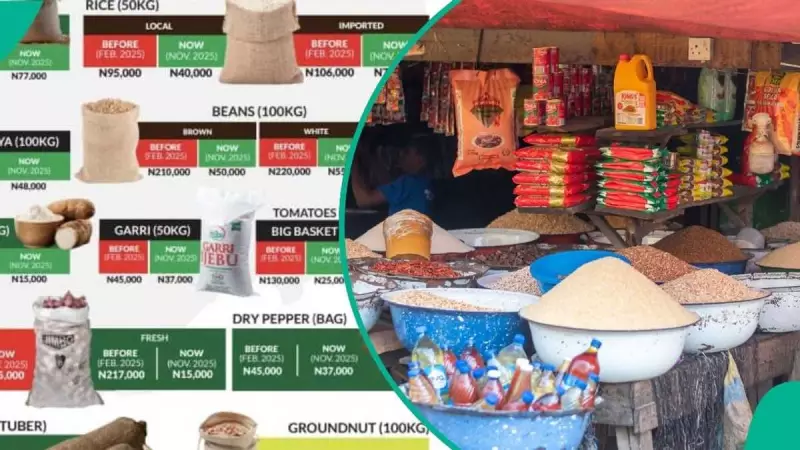
Nigerian consumers experienced a complex start to the year 2026, with food prices moving in opposite directions across markets. While the cost of essential grains like rice, beans, and garri saw a welcome decline in January, households faced continued pressure from rising prices for cooking oils and processed foods.
Regional Market Analysis: A Tale of Two Trends
The price shifts showed significant regional variation. In Abuja and the North-Central zone, markets recorded some of the most substantial drops. A 50kg bag of locally milled rice, which sold for between ₦63,000 and ₦65,000 in December 2025, dropped to a range of ₦50,000 to ₦55,000. Similarly, a mudu of local rice now sells for about ₦2,000, down from ₦2,200. Imported rice also became cheaper, selling for ₦72,000 to ₦75,000 per bag, a decrease from ₦80,000-₦85,000.
White beans followed the trend, with retail prices falling sharply. A mudu now costs between ₦1,000 and ₦1,400, a significant drop from nearly ₦2,000 in the previous month. However, this relief was counterbalanced by a steep rise in cooking oil prices. A 25-litre container of groundnut oil increased to about ₦70,000 from below ₦65,000, while palm oil rose to around ₦57,000 from ₦52,000.
Harvest Boosts South-East, Logistics Challenge Persists Nationwide
In the South-East, bumper harvests drove notable price reductions. At the Abakaliki Foodstuff Regional Market in Ebonyi State, prices for iron beans and Patasko beans fell sharply from the ₦130,000–₦150,000 range seen last year. A 25kg bag of high-grade Abakaliki rice now sells for ₦18,000–₦20,000. Garri prices also softened significantly, with a paint of white garri selling for ₦1,000.
North-West markets, including those in Kano, reported broad-based declines. Surveys showed foreign rice selling for about ₦53,000 per 50kg bag and local rice for around ₦63,000. White beans sold for about ₦60,000 per bag. Traders attributed the moderation to improved harvests and better supply flows but warned that persistent high fuel costs and security concerns remain risks to price stability.
The South-West and Lagos presented a mixed picture. A 50kg bag of foreign rice sold for about ₦57,000, while local rice was priced around ₦65,000. Cooking oils remained high, with a 25-litre container of vegetable oil costing about ₦65,000.
Government Actions and Underlying Economic Pressures
The Federal Ministry of Agriculture and Food Security has linked the price moderation for grains to several factors:
- Higher agricultural output and expanded planting.
- Government fertiliser support programmes.
- Mechanisation partnerships that improved harvest efficiency.
- Larger volumes of produce entering markets during the peak harvest cycle.
Despite this, analysts point to persistent increases in logistics, transport, and energy costs as factors limiting the overall positive impact on household budgets. The rising cost of edible oils and packaged foods underscores the fragile nature of Nigeria’s food price stability, even with the January relief for core staples.
This market shift follows a period of scarcity and high prices, particularly for items like cooking gas, which according to earlier reports, have also begun to drop in price due to improved supplies. The situation highlights the ongoing challenge of achieving consistent food affordability across all essential items for Nigerian families.




