
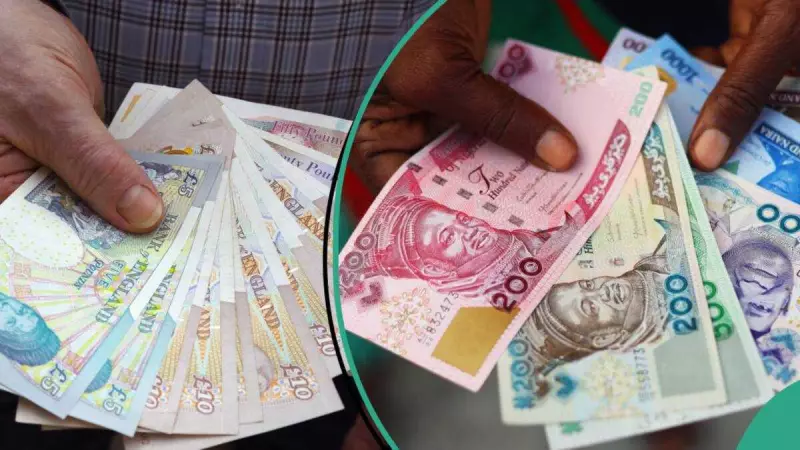
The Nigerian naira experienced renewed pressure in the official foreign exchange market on Thursday, December 18, 2025, depreciating against the US dollar despite ongoing intervention efforts by the Central Bank of Nigeria (CBN).
Official Market Records Fresh Depreciation
Data from the Nigerian Foreign Exchange Market (NFEM) window showed the local currency closed at ₦1,457.84 per dollar, representing a 0.16% decline from the ₦1,455.49 rate recorded in the previous session. During trading, the naira briefly touched an intraday low of ₦1,462.90, marking its weakest point so far in the month of December.
Forex dealers and traders attributed the slide to intense demand for US dollars, which continued to outstrip supply. Key sources of foreign currency inflows, including the CBN, exporters, and foreign investors, remained insufficient to meet the market's needs for import payments, debt servicing, and other corporate obligations.
Parallel Market Mirrors the Weakness
The pressure was not confined to the official window. In the parallel market, often called the black market, the naira also lost ground, slipping by approximately 0.20% to trade at ₦1,474 per dollar. This parallel weakening highlights broad-based demand for foreign currency and ongoing confidence challenges within the economy.
The widening gap between the official and unofficial exchange rates complicates business planning and increases transaction costs, particularly for sectors that rely heavily on imported goods and services.
Analysts Point to Structural Pressures and Seasonal Factors
Market analysts observed that while the CBN's regular interventions in the forex market have helped slow the pace of the naira's decline, they have not been enough to achieve full stability. The currency has repeatedly given up early gains in recent trading sessions, indicating that underlying structural issues persist.
However, there is a silver lining. Nigeria's external reserves remain robust at a six-year high of $45 billion, providing the monetary authority with significant firepower to support the naira. Economist and senior banker, Janet Ogochukwu, told Legit.ng that the current volatility is partly seasonal. "We will begin to see a more stable naira as we approach the end of the year and the beginning of 2026," she stated.
Global Commodity Markets Offer Mixed Signals
In related financial news, global oil prices saw a rally of nearly 2% following renewed geopolitical tensions. Brent crude rose to $59.84 per barrel. As a major oil exporter, Nigeria could eventually benefit from higher crude prices, though the positive impact on foreign exchange earnings typically takes time to materialize.
Meanwhile, gold prices extended a remarkable rally, with spot gold climbing to $4,337.85 per ounce. The precious metal has doubled in value over the past two years, driven by geopolitical risks and global economic uncertainty, which boost its appeal as a safe-haven asset.
Looking ahead, the outlook for the naira remains cautious. Sustained stability will likely depend on stronger foreign exchange inflows, improved investor confidence, and more durable supply-side support from the CBN and other sources. The strength of the nation's external reserves offers a crucial buffer as policymakers navigate these challenging market conditions.




