
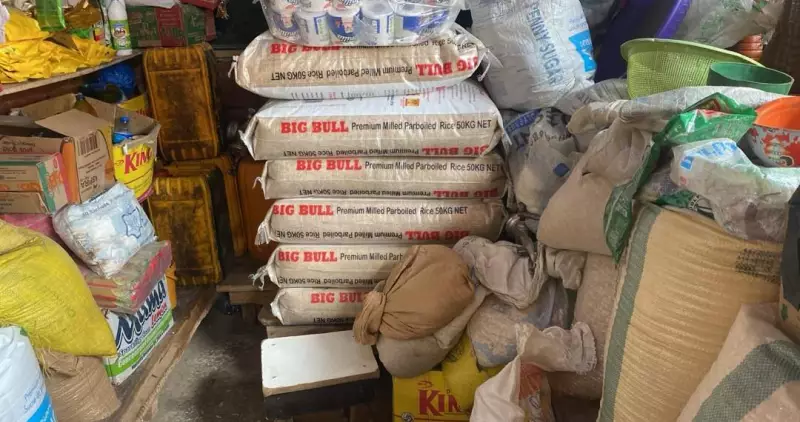
New official data reveals a significant easing of Nigeria's inflationary pressures for the month of November 2025. The National Bureau of Statistics (NBS) published figures on Monday, December 15, showing the country's headline inflation rate declined to 14.45 per cent year-on-year.
Key Drivers and CPI Rebasing Impact
This marks a notable decrease from the 16.05 per cent rate recorded in October 2025. The NBS explained that the sharp annual moderation was largely due to the rebasing of the Consumer Price Index (CPI), which now uses 2024 as the base year instead of 2009. Compared to November 2024, headline inflation in November 2025 was 20.15 percentage points lower than the 34.60 per cent recorded a year earlier.
Despite the annual improvement, prices still increased at a faster pace month-on-month. The monthly headline inflation rate rose to 1.22 per cent in November from 0.93 per cent in October. The Consumer Price Index itself climbed to 130.5 points in November, up from 128.9 points in October.
Sectoral Analysis and Food Inflation Trends
Food and non-alcoholic beverages remained the primary driver of inflation on an annual basis, contributing 5.78 percentage points to the headline figure. This was followed by restaurants and accommodation services at 1.87 percentage points, and transport at 1.54 percentage points.
On a monthly basis, food and non-alcoholic beverages were again the largest contributors, adding 0.49 percentage points. The NBS reported that monthly food prices rose by 1.13 per cent after contracting by 0.37 per cent in October. This increase was driven by higher costs for items like dried tomatoes, cassava tubers, shelled periwinkle, ground pepper, eggs, crayfish, egusi, oxtail, and fresh onions.
However, food inflation showed a dramatic annual slowdown, dropping to 11.08 per cent year-on-year in November 2025, compared with 39.93 per cent in November 2024.
Urban-Rural Divide and State-Level Variations
The inflation experience varied significantly between urban and rural areas. Urban inflation stood at 13.61 per cent year-on-year in November 2025, a sharp decline from 37.10 per cent a year earlier. Rural inflation remained higher at 15.15 per cent year-on-year, though this was 17.12 percentage points lower than the rate recorded in November 2024.
Intriguingly, month-on-month rural inflation jumped to 1.88 per cent from 0.45 per cent in October, indicating stronger short-term price pressures in rural areas compared to urban centers, where monthly inflation eased to 0.95 per cent.
At the state level, Rivers State recorded the highest year-on-year all-items inflation rate at 17.78 per cent, followed by Ogun at 17.65 per cent and Ekiti at 16.77 per cent. Plateau State had the lowest rate at 9.13 per cent. On a month-on-month basis, Bayelsa recorded the sharpest price increase at 6.58 per cent.
For food inflation specifically, Kogi State recorded the highest year-on-year increase at 17.83 per cent. The NBS cautioned that comparisons across states should be treated carefully, as CPI weights differ based on local consumption patterns.
Core and Other Inflation Components
Core inflation, which excludes volatile food and energy prices, declined to 18.04 per cent year-on-year in November 2025 from 28.75 per cent a year earlier. Other components showed mixed movements: farm produce inflation rose to 0.79 per cent, energy inflation increased to 1.08 per cent, and services inflation climbed to 1.82 per cent.
The broader twelve-month picture also shows a decelerating trend. The average CPI for the twelve-month period ending November 2025 rose by 20.41 per cent, a notable slowdown from the 32.77 per cent increase recorded in the corresponding period of 2024.
The latest data presents a complex but improving inflationary landscape for Nigeria, characterized by a significant annual slowdown driven by methodological changes and potential policy effects, yet still underpinned by persistent month-on-month price increases, particularly in essential categories like food.




