
Nigeria's headline inflation rate has continued its downward trend, falling to 14.45% year-on-year in November 2025. This marks the eighth consecutive monthly decline in the year, according to the latest data released by the National Bureau of Statistics (NBS).
Key Details from the NBS Consumer Price Index Report
The statistics agency published its Consumer Price Index (CPI) report on Monday, December 15, 2025. It revealed that the annual inflation rate dropped from 16.05% in October to 14.45% in November. This significant slowdown is attributed largely to the recent rebasing of the CPI, which updated the base year to 2024 from 2009.
Despite the annual moderation, prices increased faster within the month of November itself. The month-on-month inflation rate rose to 1.22%, up from 0.93% in October. The NBS noted that the CPI rose to 130.5 points in November from 128.9 points in October.
Compared to November 2024, when inflation peaked at 34.60%, the current rate of 14.45% represents a dramatic drop of 20.15 percentage points.
Food and Beverages Remain Primary Inflation Drivers
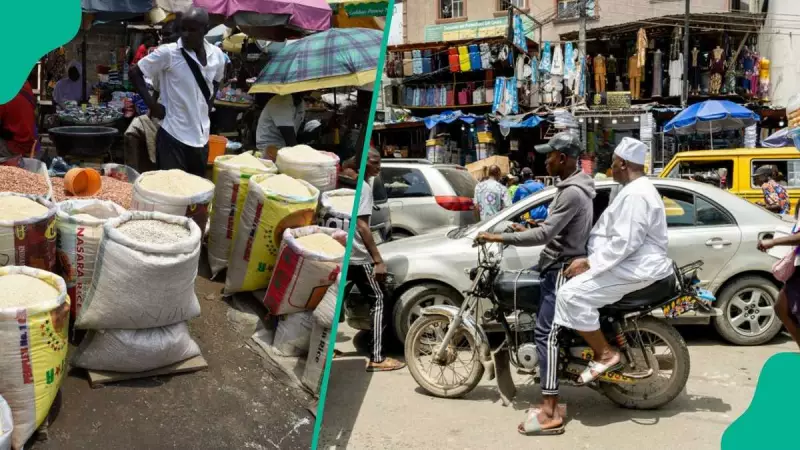
The report highlights that food and non-alcoholic beverages continue to exert the most pressure on the headline inflation rate. On a year-on-year basis, this category contributed 5.78 percentage points to the total figure.
Other significant contributors included restaurants and accommodation services at 1.87 percentage points, and transport at 1.54 percentage points. On a monthly basis, food and non-alcoholic beverages again led price increases, adding 0.49 percentage points.
Specific food items that saw notable price hikes in November included dried tomatoes, cassava tubers, eggs, crayfish, egusi, oxtail, and fresh onions.
Urban vs. Rural Inflation and State-by-State Analysis
A geographical breakdown shows a disparity between urban and rural areas. Urban inflation fell to 13.61% year-on-year, while rural inflation remained higher at 15.15%. Notably, month-on-month inflation in rural areas jumped to 1.88% from 0.45% in October, indicating stronger price pressures outside cities.
At the state level, Rivers State recorded the highest year-on-year all-items inflation rate at 17.78%, followed by Ogun at 17.65% and Ekiti at 16.77%. Plateau State had the lowest rate at 9.13%.
For food inflation specifically, Kogi State posted the highest year-on-year rate at 17.83%. The NBS cautioned that direct comparisons between states should be made carefully due to differences in consumption patterns.
Inflation Rate Dips Below Presidential Target
The current inflation rate of 14.45% is below the 15% target set by President Bola Tinubu in December 2024. While presenting the 2025 'Restoration Budget' to the National Assembly, Tinubu projected his administration would bring inflation down from over 34% to 15% by the end of 2025.
Economic analysts note that despite achieving this statistical target and a stabilised exchange rate below N1,500 per dollar, many ordinary Nigerians have yet to feel the benefits, with economic hardship persisting for a large portion of the population.
The average CPI for the twelve months ending November 2025 rose by 20.41%, a significant slowdown from the 32.77% recorded in the same period of 2024, suggesting a broader trend of moderating price pressures.




