
The World Bank has unveiled a dual forecast for Nigeria, projecting a staggering surge in its urban population alongside steady economic growth for the coming years. According to the bank's 2026 Global Economic Prospects report, released on 14 January 2026, Nigeria's economy is expected to expand by 4.4 per cent in 2026, maintaining a similar pace into 2027.
An Urban Transformation: From 7 Million to 264 Million
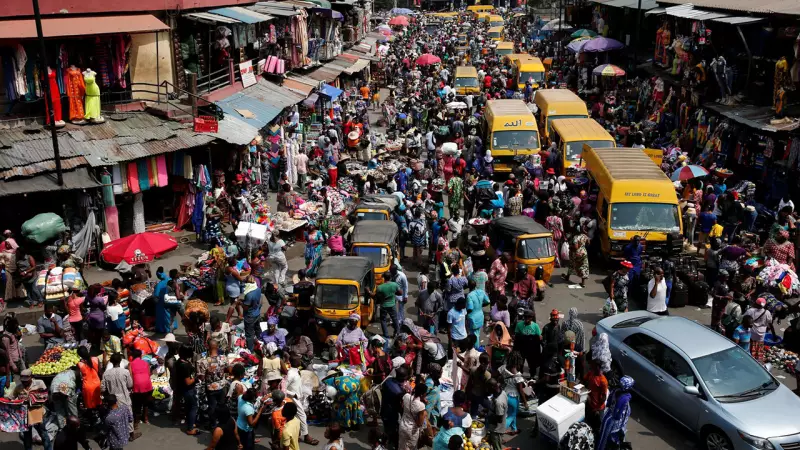
In a parallel report titled 'Multi-sector analytical review and pathway to transformation', the World Bank details a dramatic demographic shift. Nigeria's urban population is projected to reach approximately 264 million by 2050. This means that over the next 25 years alone, an additional 140.3 million people will call Nigerian cities home—a figure more than double the current urban population.
The report traces this exponential growth from just under seven million urban dwellers in 1960 to over 128 million in 2024. It warns that nearly half of this urban population currently lives in slum conditions. By 2050, it is expected that 70 per cent of all Nigerians will reside in urban areas, placing cities at the very heart of the nation's economic future.
Economic Drivers: Reforms and a Pivotal Export Shift
The projected 4.4 per cent economic growth for 2026 builds on an estimated 4.2 per cent expansion in 2025. This positions Africa's largest economy among the fastest-growing in Sub-Saharan Africa, even as global growth is forecast to slow to 2.6 per cent.
The World Bank attributes Nigeria's improved economic outlook to several key factors:
- Sustained macroeconomic reforms, including fuel subsidy removal and exchange rate unification.
- A robust services sector, particularly finance and Information and Communication Technology (ICT).
- Nigeria's emergence as a net exporter of refined petroleum products, a pivotal shift expected to strengthen external balances and ease pressure on foreign exchange reserves.
The report notes that these policy measures, alongside tighter monetary policy, have helped stabilise the macroeconomic environment after years of imbalances. While inflation remains high, a gradual decline is projected as the Central Bank of Nigeria's monetary tightening takes effect.
Challenges Amidst Rapid Urbanisation
While rapid urbanisation presents vast economic opportunities, the World Bank study cautions that it also brings significant challenges that could undermine growth if unaddressed. Based on diagnostics of 11 major cities and in-depth assessments of Lagos, Kano, Ibadan, Abuja, and Maiduguri, the report identifies five core constraints:
Unplanned growth and critical service gaps top the list, where rapid population increase and unchecked spatial sprawl have outpaced urban planning and service delivery, leading to widespread infrastructure deficits.
The report proposes a strategic roadmap to transform Nigerian cities into more livable, inclusive, and resilient urban centres.
Risks on the Horizon
Despite the positive growth forecast, the World Bank warned of downside risks, primarily from the global commodity cycle. Crude oil prices are projected to decline from an average of $69 per barrel in 2025 to $60 per barrel in 2026, with only a mild recovery expected in 2027. For an economy where oil revenues remain crucial, sustained price weakness could constrain government finances.
However, global disinflation and declining energy prices could offer Nigeria some relief by reducing import costs and potentially improving capital inflows.
The demographic and economic projections paint a picture of a Nigeria at a critical juncture, where managing unprecedented urban growth will be as vital as sustaining hard-won economic reforms to secure a prosperous future.




