
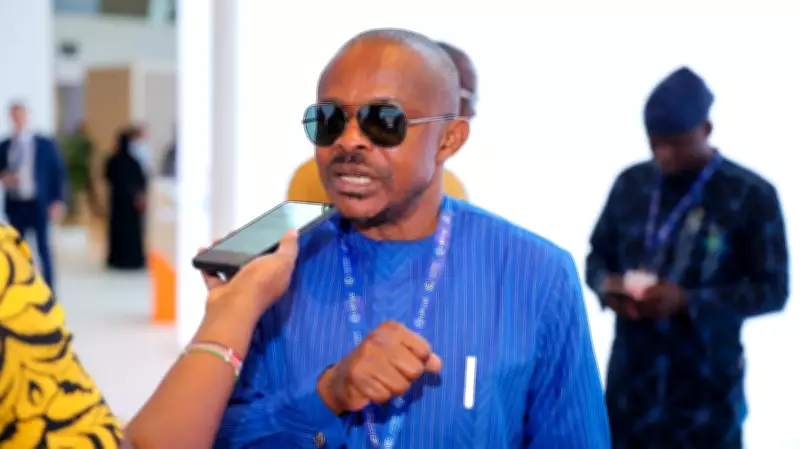
NLC and CPPE Rally Federal Government for Local Solutions Amid Energy Crisis
The Nigeria Labour Congress (NLC) has issued a strong call to the Federal Government, urging immediate action to halt the vandalism of the public sector and bring the Port Harcourt, Warri, and Kaduna refineries back into operation. According to the union, this is not a favor but a fundamental right of Nigerians, aimed at protecting them from the global oil market shocks caused by the ongoing conflict between the United States, Israel, and Iran.
Demands for Worker Relief and Accountability
In a statement released yesterday, NLC President Joe Ajaero voiced the collective anguish of millions of Nigerian workers who are bearing the brunt of a global capitalist crisis they did not create. He highlighted that petrol prices in Nigeria have surged from about N800 to as high as N1,300 per litre, describing this as a direct assault on the Nigerian people. Ajaero lamented that while imperialist rivalries play out with bombs abroad, the country's working class is bombarded with poverty and hunger due to the failure to operationalize public refineries.
The NLC has demanded an immediate wage award and a Cost of Living Allowance (COLA) for all workers to cushion the high cost of living, stating that current wages are mere starvation stipends. Additionally, the union called for a timeline for the full-scale operationalization of all public refineries and accountability for the billions of naira spent on turnaround maintenance (TAM) of these facilities.
Economic Impact and Warnings
Ajaero warned of the dangers of sabotaging the nation's refineries to create a monopoly, emphasizing that this crisis serves as a wake-up call for economic managers. He criticized the Dangote Refinery for adjusting its prices in lockstep with global volatility, passing the burden directly to the masses. "No nation achieves economic freedom by exporting jobs and importing prices," he stated, stressing the need to bring public assets to life to avoid being hostages to wars and speculators.
The NLC also demanded an expansion and overhaul of cash transfers to ensure transparency and reach the most vulnerable, with increases to match inflation. Immediate tax relief for workers and a halt to all regressive taxes on low-income earners, including proposed taxes on the informal economy, were also called for. "Taxing the minimum wage is extortion. Nigerian workers are being pauperised and massively suffering. We are not a statistic; we are the engine of this nation. When the engine overheats, the entire vehicle crashes," the NLC asserted.
CPPE's Advisory on Business Sustainability
In a separate advisory note, Dr. Muda Yusuf, Chief Executive Officer of the Centre for the Promotion of Private Enterprise (CPPE), challenged the government to act decisively and adopt strategies to mitigate the impact of the energy crisis on Micro, Small and Medium Enterprises (MSMEs) and industries. He noted that the surge in global energy prices, driven by escalating geopolitical tensions in the Middle East, has intensified cost pressures for businesses.
Yusuf explained that in Nigeria, the impact is especially severe because enterprises depend heavily on petrol and diesel to power operations amid persistent electricity supply challenges, while also facing rising transport and distribution costs. The combined effect is a significant escalation in operating expenses, mounting pressure on profit margins, and heightened risks to business sustainability, particularly for MSMEs.
Strategies for Mitigation
Urging businesses to improve energy efficiency, diversify energy sources by exploring alternatives such as solar, and enhance logistics and supply chain efficiency, Yusuf emphasized that these strategies would help businesses withstand temporary cost shocks, improve operational efficiency, and maintain stability. He also called for flexible pricing and cost management strategies, stronger financial management, and leveraging cluster-based solutions.
Yusuf warned that without deliberate adjustments by businesses and supportive policy interventions from the government, rising energy costs could significantly erode profit margins, weaken business sustainability, and dampen economic growth. He stressed that businesses are already contending with multiple macroeconomic pressures, including high inflation, elevated interest rates, and weak consumer purchasing power, making the energy crisis a compounding challenge.
Call for Investment and Dialogue
Ajaero further stressed that the about N30 trillion oil windfall forecast by the Nigeria Economic Summit Group (NESG), expected to accrue to Nigeria due to the Middle East war, must not be mismanaged like the Gulf War oil windfall. Instead, it should be invested in the Nigerian people to cushion the negative effects of the crisis. "The government must engage in sincere social dialogue with Nigerian workers and the broader citizenry. Using the Middle East war as an excuse to further impoverish Nigerians is unacceptable. The primary duty of the government is to ensure the welfare of the citizenry. We demand action. We demand justice. We demand survival," he concluded.




