World Bank Exposes Severe Gender Employment Gap in Nigeria
A startling new report from the World Bank has revealed that only 10.5% of Nigerian women participate in waged or salaried employment, highlighting a profound gender disparity in the country's workforce. This figure stands in stark contrast to the 17% of Nigerian men who engage in paid work, underscoring a significant economic imbalance that affects millions of women across the nation.
High Workforce Participation, Low Formal Employment
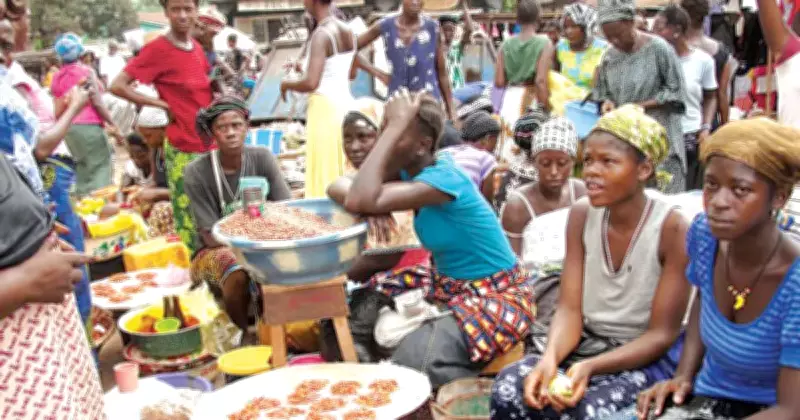
Despite an impressive 80.7% labor force participation rate among Nigerian women aged 15 and above, the vast majority remain trapped in low-income, informal roles that offer little stability or legal protection. The report categorizes these positions as vulnerable employment, encompassing activities such as small-scale trading and unpaid domestic work that fail to provide sustainable economic advancement.
When compared globally, Nigeria performs worse than average among its peers:
- 16.9% of women in paid employment across Sub-Saharan Africa
- 26.5% in lower-middle-income economies worldwide
- 54.6% globally
Vulnerable Employment and Sectoral Distribution
The data reveals that 79.1% of working Nigerian women are engaged in vulnerable employment, which includes self-employment and unpaid family work. This compares unfavorably to 54.8% of men in similar circumstances. These positions typically offer limited income, minimal legal protections, and no job security, creating substantial barriers to economic progress.
Agriculture remains a vital sector for female employment, with 23.6% of working women engaged in agricultural practices. While this percentage is smaller than the 42.7% of men in agriculture, it represents a significant portion of female economic activity. However, these agricultural roles often fall into the vulnerable employment category, lacking the benefits and stability of formal sector positions.
Root Causes of the Gender Employment Gap
The World Bank identifies several key factors contributing to this persistent gender disparity:
- Limited educational opportunities that restrict women's access to formal employment
- Financial inaccessibility that hampers business development and economic mobility
- Sociocultural constraints that reinforce traditional gender roles and limit professional opportunities
Youth Employment and Legal Inequalities
While youth unemployment among females stands at 6.29%—lower than both African and global averages—this figure still exceeds the 4.42% rate for male youth. More concerning is the NEET (Not in Education, Employment, or Training) rate of 13.4% among female youth, indicating that many young women remain outside economic activity entirely.
Legal inequalities further compound these challenges. Nigeria scores just 51% on the Women, Business and the Law index, meaning women have less than half the legal rights enjoyed by men. Implementation and enforcement mechanisms score even lower at 49% and 34% respectively, with no significant reforms occurring between 2023 and 2025.
Financial Inclusion and Social Barriers
The gender gap extends to financial inclusion, with only 52.2% of Nigerian women owning bank accounts compared to 74.3% of men. Women also demonstrate lower saving ratios, limiting their ability to establish businesses or transition to the formal economy.
Social issues including high maternal mortality rates, early childbirth, and child marriages continue to hinder women's access to education and economic participation. These factors, combined with persistent inequality in sectors like media where men dominate leadership positions, create multiple layers of disadvantage.
Economic Implications and the Path Forward
The World Bank emphasizes that improving gender equality is crucial for Nigeria's economic growth. The report suggests that addressing these disparities requires comprehensive reforms in education, legal frameworks, financial access, and social norms. Without significant intervention, the current trends threaten to perpetuate economic inequality and limit Nigeria's development potential for generations to come.