
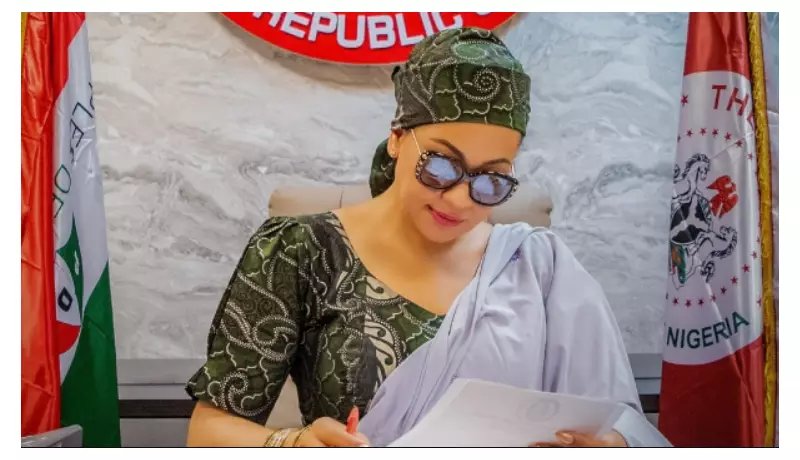
A crucial debate on Nigeria's financial future took a dramatic turn in the Senate on Thursday, 4th December 2025, as a senator spotlighted the stark economic injustice facing the country's booming digital workforce.
Senator Natasha Sounds Alarm on "Quiet Exploitation"
During the second reading of the BOFIA Amendment Bill, 2025 (SB 959), Senator Natasha Akpoti-Uduaghan, representing Kogi Central, shifted focus to what she termed the "quiet exploitation" of Nigerian youth on global social media platforms. She argued that while these young people drive massive traffic and engagement, they are being severely short-changed by international tech giants.
"Our youths are earning 50 cents for content that fetches $10 to $30 per 1,000 views in the U.S.," Senator Natasha declared. She emphasised that this glaring inequality must be addressed as Nigeria reforms its financial system, stating, "I’m speaking for the content creators because, trust me, social media has become a very critical source of income for our youths."
Broader Reforms and Regulatory Gaps
The main legislation, sponsored by Senator Tokunbo Abiru (Lagos East), aims to modernise the Banks and Other Financial Institutions Act. Its core objective is to grant the Central Bank of Nigeria (CBN) sweeping powers to classify large fintechs as Systemically Important Institutions (SIIs), subjecting them to stricter oversight.
Senator Abiru justified the move, noting that fintech and mobile-money operators now process transaction volumes rivaling traditional banks and hold vast amounts of consumer data, often stored offshore. "The law has not kept pace," he argued. "A dominant fintech can now pose as much risk as a bank." The bill seeks to:
- Empower the CBN to designate and supervise high-risk fintechs.
- Establish a national registry for transparency and beneficial ownership.
- Strengthen consumer protection and safeguard Nigeria's data sovereignty.
Abiru dismissed calls for a separate fintech regulator, warning it would cause confusion and duplication.
Call for Fairness in the Digital Economy
Senator Natasha's intervention ensured the debate expanded beyond banking risks to include the economic fate of millions of digital creators. She insisted that any financial law overhaul must mandate:
- Fairer revenue-sharing practices from global platforms.
- Full transparency in payment algorithms and structures.
- Stronger regulatory engagement with multinational tech companies.
Her call found resonance with other senators. Former Nigerian Labour Congress (NLC) President, Senator Adams Oshiomhole, shared a personal account of his fintech account being hacked, highlighting security concerns. He also pointed out the anonymity of many fintech owners, stating, "I know the directors of our regular banks, but I can’t say the same of these fintech banks... I don’t know the directors of MoniePoint, Opay and all others." He argued that proper regulation would make these institutions serve Nigerians better.
The bill has been referred to a Senate committee for further work, but Natasha's forceful argument has permanently woven the issues of the digital pay gap and creator equity into the fabric of Nigeria's financial reform conversation.




