
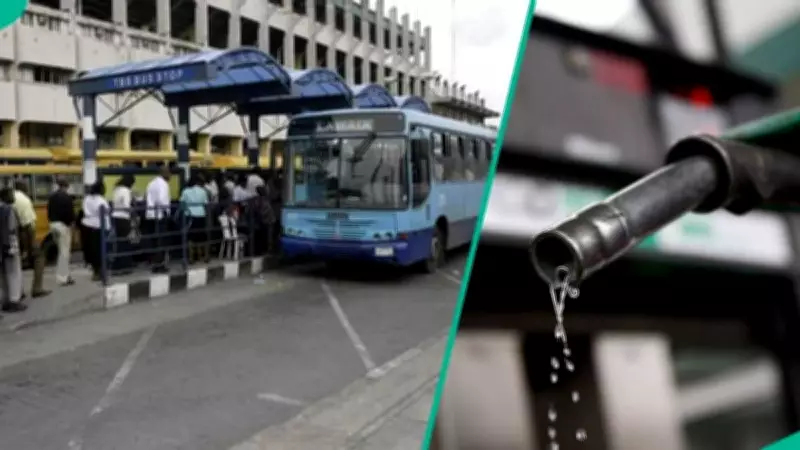
Transport Fares Skyrocket Nationwide as Petrol Prices Exceed N1,000 Per Litre
Transport operators across Nigeria have announced substantial fare increases as the price of Premium Motor Spirit (PMS), commonly known as petrol, continues to surge beyond N1,000 per litre in various regions. This development has placed immense financial pressure on commuters who must now allocate significantly more resources for both intra-city and inter-state travel.
Petrol Price Escalation Triggers Transportation Crisis
The fuel crisis intensified over the weekend as numerous filling stations in Anambra State, including major cities like Onitsha, Nnewi, Ekwulobia, and parts of Awka, either ceased operations or maintained extremely limited service. Stations that remained open witnessed extensive queues, with petrol prices ranging between N1,100 and N1,200 per litre. Notably, Altrac Filling Station and Hanaco along the Onitsha–Awka Expressway displayed pump prices of N1,150 per litre, attracting only a minimal number of buyers due to the prohibitive costs.
This situation has been exacerbated by the Nigerian National Petroleum Company Limited (NNPCL) retail outlets adjusting their pump prices nationwide. A comprehensive survey revealed that in Lagos, NNPC outlets are now dispensing fuel at rates exceeding N1,000 per litre, marking a significant departure from previous pricing structures and creating a noticeable disparity with partner stations of the Dangote Refinery.
Transportation Fare Increases: A Detailed Breakdown
The ripple effects of soaring petrol prices have manifested in dramatic transportation fare hikes across Nigeria:
- Intra-city travel has experienced increases exceeding 50%, with routes previously costing N200 now demanding N300, and fares that were N500 escalating to approximately N700.
- At the Upper Iweka Motor Park in Onitsha, transporters have raised fares from Onitsha to Awka to about N2,000, up from the previous range of N1,000 to N1,500.
- Commuters at Ekwulobia Motor Park face even steeper rises, with fares from Igboukwu to Nkpor and Onitsha doubling from N2,000 to N4,000, leaving numerous travelers stranded.
- Inter-state bus fares have surged dramatically: Lagos to Aba now costs N43,500, Lagos to Abuja N53,000, Lagos to Warri N42,000, and Abuja to Lagos N61,000.
Motorists and commuters nationwide have expressed profound concern regarding these persistent price increases, lamenting the severe impact on daily transportation and overall cost of living.
Expert Analysis: Global Market Dynamics Driving Domestic Prices
Muda Yusuf, Chief Executive Officer of the Centre for the Promotion of Private Enterprise (CPPE), provided critical insight into the underlying causes of this crisis. He explained that the recent adjustments in petroleum product prices in Nigeria directly reflect developments in the global energy market, particularly the sharp rise in crude oil prices triggered by escalating geopolitical tensions in the Middle East.
"Crude oil feedstock for refineries is priced using international benchmark prices and denominated in US dollars, irrespective of the refinery's location," Yusuf stated. "Consequently, domestic refineries in Nigeria procure crude oil at prices that mirror prevailing global market conditions, creating inevitable pass-through effects to consumers."
This expert perspective underscores how international factors continue to exert substantial influence on Nigeria's domestic fuel pricing and transportation economy, creating challenges that extend far beyond national borders.




