
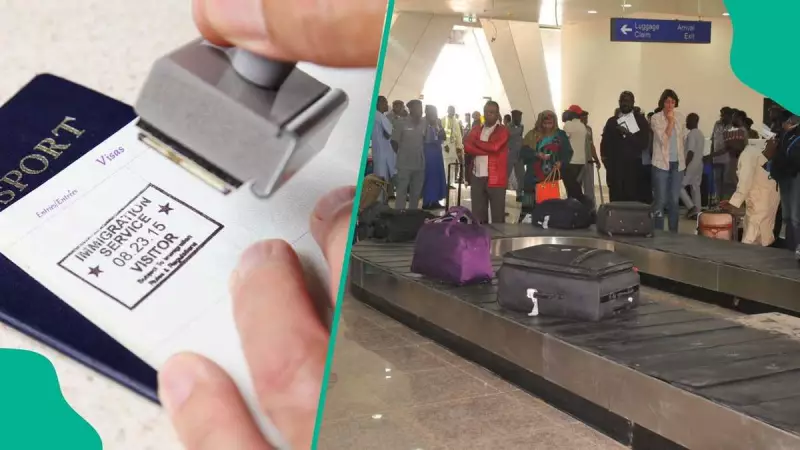
Nigeria faces severe economic repercussions following the United States government's decision to impose new travel restrictions on its citizens. Analysts have raised alarms that the country stands to lose billions of dollars annually in crucial financial inflows if the ban remains in place.
The Scope of the US Travel Restrictions
In a presidential proclamation released on the White House website on Tuesday, December 19, 2025, the US suspended the entry of Nigerian nationals under multiple immigrant and non-immigrant visa categories. The affected visas include the B-1 (business), B-2 (tourism), combined B-1/B-2, F (academic studies), M (vocational studies), and J (exchange programmes).
These categories represent a significant portion of visas issued by US diplomatic missions in Nigeria each year, covering essential travel for commerce, tourism, and education. The US government justified its decision by citing ongoing security challenges within Nigeria, mentioning groups like Boko Haram and the Islamic State, which complicate vetting processes. Officials also pointed to visa compliance data, noting an overstay rate of 5.56% for B-1/B-2 visas and 11.90% for F, M, and J visas from Nigeria.
Potential Economic Fallout for Nigeria
Economists reacting to the announcement stress that the impact extends far beyond diplomatic tensions. The most immediate and severe consequence is the potential disruption to diaspora remittances. Nigeria receives approximately $20 billion in remittances yearly, with the United States being a major source.
Analysts project that a 15% to 20% decline in US-sourced remittances, driven by reduced migration and stricter visa approvals, could result in an annual loss of $3 billion to $4 billion. For an economy already grappling with foreign exchange shortages, volatile oil revenues, and mounting external debt, such a loss would place immense strain on household incomes, the nation's foreign reserves, and the stability of the Naira.
Beyond remittances, the ban introduces other direct costs. The Nigerian public already loses an estimated over N20 billion yearly in non-refundable US visa application fees due to high rejection rates, a figure expected to climb under the new, stricter regime.
Broader Impacts on Business, Education, and Investment
The restrictions threaten to stifle vital economic connections. Nigerian entrepreneurs, executives, and professionals frequently rely on short-term business travel to the US for negotiations, training, and investor meetings. Limited access could delay crucial deals, weaken international partnerships, and erode investor confidence at a time when Nigeria is actively seeking foreign capital.
The education sector is another critical area of concern. The United States is a top destination for Nigerian students, whose tuition fees contribute billions to American institutions. These students often acquire skills that benefit Nigeria's development through future remittances, innovation, and entrepreneurship. A sustained reduction in student visas could have long-term negative implications for Nigeria's human capital development.
Political and Public Reactions
The policy has sparked significant reactions within Nigeria. PR and Media Consultant, Obiasogu David, criticized the nation's leadership, stating that "Nigeria has fallen and her respect in the comity of nations has waned in recent years."
Former Senator Shehu Sani, who represented Kaduna Central, also commented on the travel ban. He noted that the expanded restrictions now affect ordinary Nigerians, not just government officials. In a post on X, Sani suggested the policy signals a broader intent by the US to limit migration from developing nations, sending a message to countries in Africa and the Caribbean to "stay back and fix their countries."
As the situation develops, the economic ties between Nigeria and the United States face growing pressure, with billions of dollars and the prospects of countless citizens hanging in the balance.




