
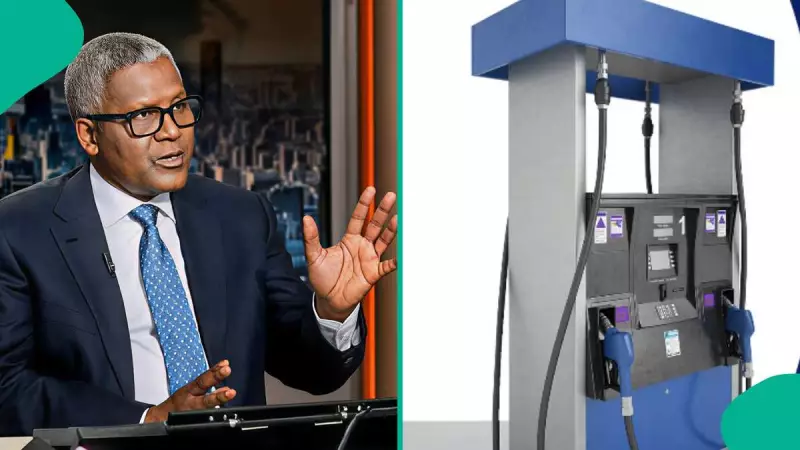
The announcement of a significant reduction in the price of Premium Motor Spirit (PMS), commonly known as petrol, by the Dangote Refinery has ignited a wave of reactions across Nigeria. The Dangote Group confirmed that a litre of fuel at its Lagos refinery dispensing gantry will now be sold for N699 to major marketers and filling station owners.
Price Cut and New Credit Facility
In a move that has brought hope to many Nigerians grappling with high fuel costs, the Dangote Refinery made the pricing announcement on December 20, 2025. Beyond the price slash, the refinery introduced a supportive measure for its customers. The company stated via a post on the social media platform X that it has launched a 10-day credit facility, backed by bank guarantees. This facility requires a minimum purchase of 500,000 litres, aiming to ease the financial burden on bulk buyers.
The news was met with widespread excitement on social media, with many citizens expressing optimism that this reduction at the refinery level would eventually translate to lower prices at retail filling stations across the country. Numerous users heaped praise on Alhaji Aliko Dangote, the owner of the massive refinery complex, for the intervention.
The Case For and Against Industrial Giants
The development has also reignited a deeper conversation about the role of large-scale indigenous investors in Nigeria's economic development. A social media user identified as Mayowa argued passionately that Nigeria needs more billionaires with the ambition and audacity of Dangote.
"You can be fairly certain that no one will commit $20 billion to a refinery in the next twenty years," Mayowa stated. He pointed to Dangote's history of building at an unmatched scale, citing the Obajana cement plant as an example where no competitor has matched its size. "If Dangote were to enter steel tomorrow, you could be confident he would build the largest steel plant in Africa as well. In my view, Nigeria needs people like this, people who think and build at scale."
This perspective found support from other users. One X user, @GSaint_ME, commented, "Is it not better to have a product even from a monopoly than you totally lack it?" They drew a parallel with the cement industry, suggesting that over-supply led to availability being taken for granted.
However, a counter-argument emerged, warning against celebrating scale without considering consumer impact. A user named Wednesday@gangleri_w urged caution, stating, "It is important that anyone who wishes the country well not get hoodwinked by these things."
They highlighted that Nigerians pay higher prices for cement compared to other African nations, arguing that massive scale does not automatically lead to affordability. "What we need is rich vibrant competition from both local producers and imports that lets us enjoy quality products at cheap prices. Not gigantic behemoths that suck us dry while we marvel at their scale," the user concluded.
A Nation Awaiting Tangible Relief
While the announcement from the Dangote Refinery is a significant development in Nigeria's downstream petroleum sector, the ultimate test will be its effect on the pump price paid by the average Nigerian motorist and business owner. The refinery's output is expected to play a crucial role in stabilizing the market and reducing the country's dependence on imported refined products.
The mixed reactions online reflect a broader national dialogue on economic development, competition, and the concentration of industrial power. As Nigerians watch to see how quickly the N699 per litre price translates to their local fuel stations, the debate on the best path to a secure and affordable energy future continues.




