
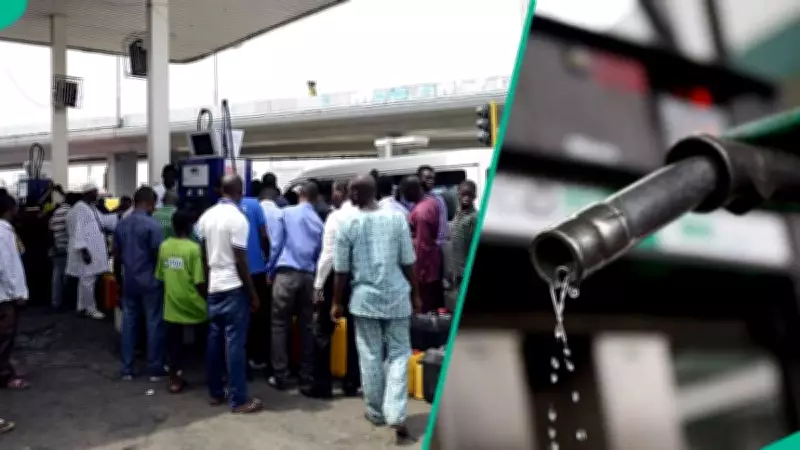
Dangote Refinery Announces Major Reduction in Petrol Pump Price Nationwide
The Dangote Refinery has officially confirmed that petrol prices at filling stations across Nigeria have been set at N839 per litre, representing a substantial decrease from the exorbitant rates Nigerians previously endured. This announcement comes as a significant development in the country's energy sector, with the refinery highlighting how domestic production capabilities are transforming fuel accessibility and affordability.
Significant Price Drop from Previous Highs
While the current N839 per litre represents an increase from the N739 per litre announced in December 2025, it still marks a remarkable reduction from the N1,250 per litre that consumers were paying previously. The refinery emphasized that this pricing reflects their ongoing commitment to improving domestic fuel supply and making petroleum products more affordable for Nigerian households and businesses.
In a detailed statement released on social media platform X on Thursday, February 5, the company explained that local refining has been instrumental in driving down fuel costs across the board. Beyond petrol, diesel prices have also experienced a dramatic decline, falling from approximately N1,700 per litre to between N980 and N990 per litre.
How Local Refining Transforms Fuel Economics
The refinery's statement clearly articulated the benefits of domestic production: "Local refining has significantly reduced fuel prices, with diesel falling from about N1,700 to N980-N990 per litre, and PMS dropping from around N1,250 to N839-N900 per litre, while also easing FX pressure and supporting naira stability."
This dual impact on both fuel pricing and currency stability represents a crucial development for Nigeria's economy, reducing dependence on imported refined products and their associated foreign exchange requirements.
Cost-Efficient Distribution Methods
To maintain these lower prices, Dangote Refinery has advised marketers to prioritize gantry loading over coastal loading methods. The company explained that by relying more on domestic production and efficient gantry evacuation systems, they have successfully minimized unnecessary costs that would otherwise be passed on to consumers.
"Gantry loading is identified as the most cost-efficient evacuation method, as it eliminates port charges, maritime levies and vessel-related costs that do not benefit end users," the statement noted.
The refinery emphasized that while marketers remain free to choose between gantry and coastal loading options, coastal logistics can add approximately N75 per litre to petrol costs. If these additional expenses were passed on to consumers, pump prices could approach N1,000 per litre.
Infrastructure Capabilities Supporting Distribution
Dangote Refinery's gantry facility boasts impressive operational capabilities with 91 loading bays that can accommodate up to 2,900 tankers daily. Through continuous 24-hour operations, this infrastructure can evacuate over 50 million litres of Premium Motor Spirit (PMS) and 14 million litres of diesel, ensuring consistent supply to markets across Nigeria.
Broader Market Context and Adjustments
This announcement comes alongside adjustments by other major players in Nigeria's fuel distribution network. The Nigerian National Petroleum Company Limited recently increased its petrol pump price to N840 per litre in Lagos, up from the previous N740 per litre.
Several other filling station operators have also made pricing adjustments:
- Ardova filling stations increased prices from N840 to N850 per litre
- MRS Oil Nigeria filling stations in Lagos now sell at N835 per litre, up from N739
- Other major operators including Mobil, Petrocam, Hyden, and Matrix have implemented similar pricing revisions
Despite these adjustments across the sector, Dangote Refinery's pricing at N839 per litre represents a significant milestone in Nigeria's journey toward fuel price stability through enhanced domestic refining capacity.




