
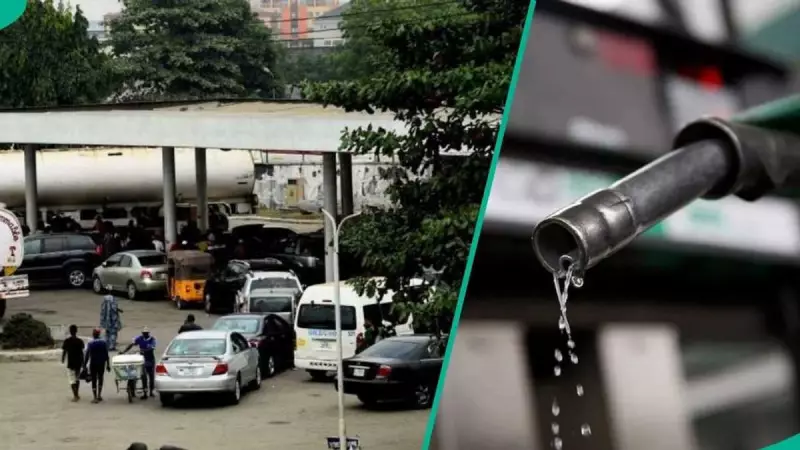
A recent analysis by S&P Global Commodity Insights has confirmed that the Dangote Petroleum Refinery maintains a significant price advantage in Nigeria's fuel market, selling petrol below the cost of imported alternatives.
Price Advantage in Deregulated Market
The report, presented during the Major Energy Marketers Association of Nigeria (MEMAN) conference, highlights that Dangote's average ex-refinery price stands at N877 per litre from its Lagos facility. This price remains substantially lower than the current "into-tank" price for imported petrol in Lagos and ship-to-ship transfers in Lome, Togo.
This pricing discrepancy provides the refinery with a clear competitive edge over other market players who depend on fuel imports. The analysis comes at a time when global oil markets show Brent crude trading at $63.63 per barrel and WTI at $59.69 per barrel as of 4:00 p.m. West Africa Time.
Drastic Reduction in Fuel Imports
Nigeria has witnessed a remarkable transformation in its petrol import patterns, with daily volumes plummeting to under 200,000 barrels per day from approximately 500,000 bpd recorded in early 2023. This significant decrease coincides with increased domestic refining capacity, particularly from the Dangote refinery, which currently operates at a production rate of 650,000 barrels per day.
The shift toward domestic production represents a major milestone in Nigeria's energy sector evolution, reducing the nation's dependence on imported refined products and conserving foreign exchange.
Regulatory Framework and Market Competition
Despite the positive developments, S&P Global emphasized the continued need for strong regulatory oversight to ensure market transparency and consumer protection. The report stressed that effective regulation remains crucial for fostering genuine competition within Nigeria's deregulated downstream sector and maintaining investor confidence.
The analysis also noted the status of other Nigerian refineries, revealing that while Port Harcourt and Warri refineries briefly resumed production in late 2024, they are currently offline. The Kaduna refinery remains closed with no specified timeline for potential reactivation.
Meanwhile, the Nigerian National Petroleum Company Limited (NNPCL) has adjusted its retail prices in response to improved supply conditions. In Abuja, NNPC filling stations now sell petrol at N945 per litre, down from N955, while Lagos prices have decreased slightly from N922 to N920 per litre.
S&P Global concluded that Nigeria's downstream transition, characterized by deregulated pricing, reduced imports, and new refining capacity, positions the country as one of Africa's frontrunners in energy market reform. However, the report cautioned that balancing competition with sector growth will be essential for maintaining efficiency and sustaining investor confidence in the long term.




