
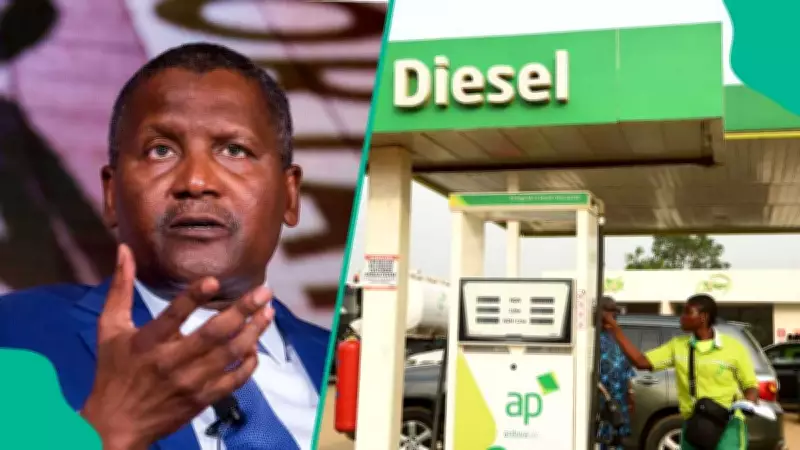
Dangote Refinery Increases Diesel Price to N1,050 Amid Global Crude Oil Surge
The Dangote Petroleum Refinery has announced a significant increase in the ex-depot price of Automotive Gas Oil (AGO), commonly known as diesel, raising it from N880 per litre to N1,050 per litre. This represents a substantial hike of N170 per litre, which is expected to have ripple effects across Nigeria's energy and manufacturing sectors.
Global Crude Oil Prices Drive Domestic Increase
The price adjustment comes in response to rising global crude oil prices, which have been climbing steadily due to ongoing conflict in the Middle East. According to market reports, Brent crude was trading at $84.74 per barrel, marking a 9% increase that has directly impacted refinery margins and feedstock costs.
Analysts had anticipated this price realignment as higher crude oil costs began squeezing refinery profitability. The renewed price pressure in Nigeria's diesel market reflects broader international trends, with concerns over supply disruptions in the Middle East contributing to global market volatility.
Market Impact and Industry Response
Prior to Dangote's official announcement, diesel prices across private depots had already shown upward movement, with average ex-depot prices hovering around N1,150 per litre. The new Dangote rate of N1,050 per litre is expected to serve as a reference point for secondary distribution pricing in major consumption hubs.
Market intelligence suggests this price increase could significantly affect various sectors:
- Transportation companies facing higher fuel costs
- Manufacturers dependent on diesel for power generation
- Large-scale industrial users across multiple sectors
Loading activities were reportedly paused briefly as marketers reviewed their positions and awaited confirmation of the updated pricing structure. However, truck-out operations have since resumed under the revised framework.
Broader Energy Market Context
This diesel price increase follows a similar adjustment for Premium Motor Spirit (PMS), commonly known as petrol, where Dangote Refinery recently increased the ex-depot price from N774 to N874 per litre, representing a N100 hike. Depot owners across the country have begun adjusting their prices in response to these refinery-led increases.
The current energy market volatility stems from geopolitical tensions in the Middle East, where energy facilities have been affected by exchanges between Iran and Israel, with United States involvement. These developments have created uncertainty in global energy markets, directly impacting crude oil prices and, consequently, refined product costs.
Expert Analysis and Future Projections
Energy experts have been warning about potential petroleum product price increases in Nigeria due to the Middle East conflict. One expert noted that although the Petroleum Industry Act prioritizes domestic refineries in crude allocation, more than 60% of Dangote Refinery's feedstock is reportedly sourced internationally, while approximately 40% of refined products consumed locally are still imported.
Downstream analysts describe the current environment as a firm pricing cycle and caution that if crude oil maintains its upward trajectory, additional increases across the diesel value chain may follow. Stakeholders are closely monitoring international oil benchmarks, given the strong correlation between global crude prices and domestic gantry rates.
The expert further explained that while higher oil prices may boost government revenue through increased export earnings, Nigerian consumers could face higher pump prices if global benchmarks continue to surge. This creates a complex economic situation where potential government gains are offset by increased living costs for citizens and operational expenses for businesses.
Manufacturers and transport operators are particularly concerned about the impact on production costs and consumer prices, as diesel remains a critical energy source for many industries in Nigeria's power-challenged environment. The price increase comes at a time when many businesses are already grappling with multiple economic pressures.




