
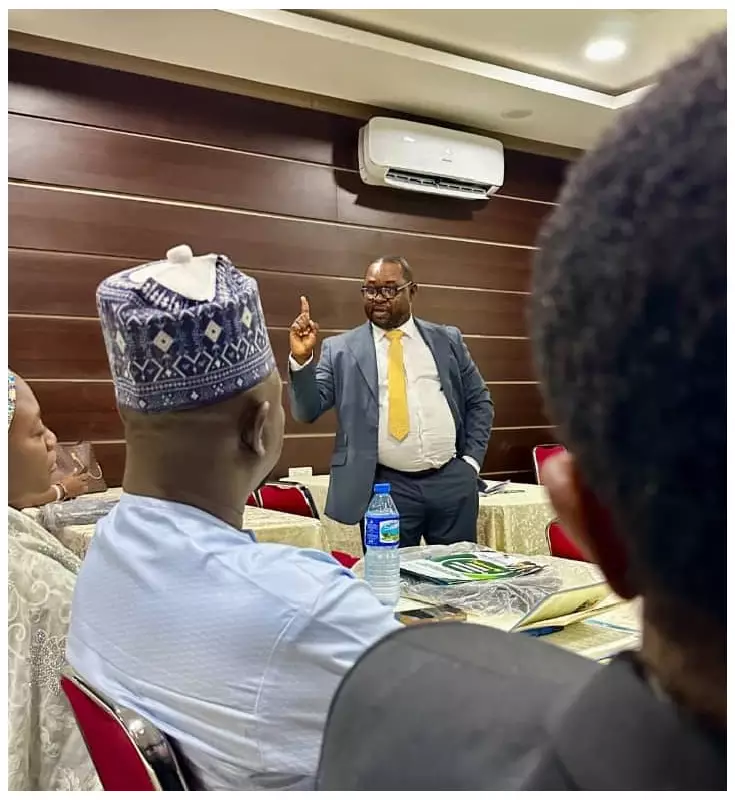
In a powerful address to top industry stakeholders, a leading energy expert has sounded a critical alarm over the state of Nigeria's power sector, calling for immediate and science-based reforms to avert further economic damage.
A Structural Embarrassment: The High Cost of Power Failure
Eur. Ing. Dr. Chinedu Ogwus, the Regional Director for Africa (Robotics and Autonomous Systems) at the Society of Petroleum Engineers International (SPEi), delivered a stark warning. He stated that decades of poor management now directly threaten Nigeria's economic growth and its ability to compete with other nations.
Dr. Ogwus made these remarks during his keynote presentation at the inauguration of the Pioneer Fellowship and Honours Cohort by the Global Chartered Institute of Energy Management (GCIEM), Canada. The event took place at the Carlton Swiss Hotel in Utako, Abuja, and was attended by policymakers, regulators, energy specialists, and technical innovators.
Speaking on the theme "Challenges of the Energy Sector in Nigeria’s Economy," he highlighted a painful paradox. Nigeria is a nation blessed with enormous oil, gas, and renewable energy resources, yet it fails to provide stable electricity to more than 70 million of its citizens. This failure forces industries to depend on expensive diesel and petrol generators, which drives up production costs and destroys competitiveness.
Despite having an installed capacity of about 13,000 Megawatts and holding an estimated 209 trillion cubic feet of natural gas reserves, only a small portion of this capacity reliably reaches homes and businesses. Dr. Ogwus labeled this situation "a structural embarrassment that undermines national competitiveness."
He quantified the crisis, revealing that energy inefficiencies, rampant pipeline vandalism, and weak infrastructure collectively drain over $28 billion from the Nigerian economy every single year.
Root Causes: Governance Failures and Systemic Lapses
Dr. Ogwus did not mince words in identifying the core problems. He pointed to systemic governance failures, the consistently poor performance of state refineries, persistent pipeline vandalism, and inconsistent government regulations as the primary culprits behind the sector's woes.
"These are not simply technical failures—they are governance failures," he asserted. He emphasized that gaps in policy and a lack of accountability have scared away vital investment and stalled progress toward a sustainable energy future for Nigeria.
A Clear Roadmap for Nigeria's Energy Recovery
Beyond diagnosing the problems, Dr. Ogwus presented a concrete plan for recovery and growth. His first recommendation is the aggressive diversification of Nigeria's energy mix. He urged a significant boost in the development of solar, wind, hydro, and other renewable sources, coupled with a comprehensive modernization of the ageing national grid.
By leveraging Nigeria's vast, untapped solar potential and deploying smart-grid technologies, the country could drastically reduce technical losses, expand access to electricity, and improve reliability, particularly in underserved rural communities.
He also stressed that domestic natural gas must form the backbone of Nigeria's energy transition. Through initiatives like the government's Decade of Gas program, Nigeria can increase electricity generation from gas, reduce harmful carbon emissions, and fuel industrial expansion.
To tackle the scourge of pipeline vandalism and oil theft, Dr. Ogwus advocated for the adoption of advanced technology. He recommended using drones, satellite monitoring systems, and proactive community engagement programs to secure critical energy infrastructure.
Financing this ambitious transition, he noted, will require mobilizing green finance from international climate funds, carbon markets, and local green bonds. He set a target of securing at least $3 billion annually for renewable and clean energy projects. Such investments would not only address the power deficit but also create jobs, diversify industries, and promote environmental sustainability.
In his concluding remarks, Dr. Ogwus called for a united front. He urged the government, private sector, and civil society to collaborate in building a resilient, secure, and inclusive energy system for all Nigerians.
"The decisions we make today will define Nigeria’s energy future," he stated. "With disciplined leadership, transparency, and innovation, Nigeria can not only power itself but also position itself to power Africa."




