
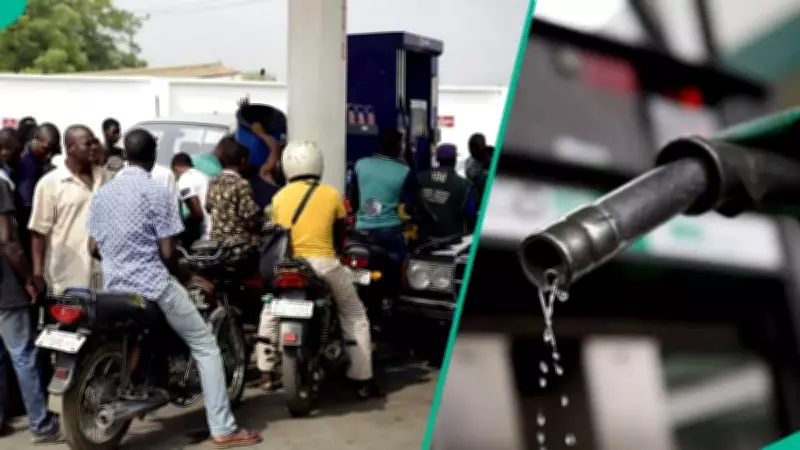
Fuel Stations Across Nigeria Slash Petrol Prices Below Official Rates
In a significant development for Nigerian consumers, numerous filling stations have implemented substantial reductions in petrol pump prices, undercutting both the Nigerian National Petroleum Company Limited (NNPC) and the recently announced rates from the Dangote Petroleum Refinery. This price movement represents a notable shift in the country's downstream petroleum market dynamics.
Widespread Price Reductions Recorded
A comprehensive survey conducted over the weekend revealed that multiple retail outlets have adjusted their pricing structures, bringing relief to motorists across various regions. The reductions represent a marked departure from last week's average of approximately N839 per litre, with new prices now ranging between N812 and N828 per litre at participating stations.
Specific examples of these price adjustments include:
- SGR filling station in Mowe offering petrol at N812 per litre, the lowest recorded price in the area
- Alade filling station near Ibafo dispensing Premium Motor Spirit (PMS) at N820 per litre
- Habeeb filling station reducing its price to N819 per litre
- SAO stations in Mowe and Lotto selling at N825 per litre
- NIPCO outlets along major corridors offering petrol at N828 per litre
- AP filling stations across the axis selling between N830 and N834 per litre
Market Competition Intensifies
These price reductions occur against the backdrop of the Dangote Petroleum Refinery's recent decision to increase its gantry price to N799 per litre from N699, with a recommended retail price of approximately N839 per litre. The current market situation demonstrates how competitive pressures are driving prices downward despite these official adjustments.
Data from the Major Energies Marketers Association of Nigeria provides crucial context, revealing that the landing cost of imported petrol averaged about N724 per litre last week. This figure makes imported PMS significantly cheaper than supplies lifted directly from the Dangote gantry, creating favorable conditions for price competition among retailers.
Dangote Refinery's Position and Infrastructure
An anonymous official from the Dangote refinery acknowledged that many stations selling at lower prices still source their products from the refinery. The official explained that the gantry price includes various regulatory charges that provide retailers with sufficient margin to engage in competitive pricing strategies.
The refinery has issued a warning about the potential consequences of continued reliance on coastal delivery of petroleum products, suggesting this approach could push petrol prices toward N1,000 per litre. In contrast, the company maintains that gantry loading represents the most efficient and cost-effective option for maintaining price stability in the market.
Dangote has emphasized its substantial infrastructure investments, including a 91-bay gantry facility capable of loading up to 2,900 tankers daily and evacuating millions of litres of fuel around the clock. The company asserts that increased domestic refining capacity has contributed to reducing fuel imports, easing pressure on foreign exchange reserves, and helping lower pump prices from last year's peak levels.
Broader Market Implications
The competitive environment has even affected Dangote-backed outlets, with an MRS filling station at Olowotedo reducing its pump price to N825 per litre from N839. However, market responses remain varied, as another MRS outlet near the Redeemed Christian Church of God camp maintained sales at N839 per litre, despite a neighboring AP station lowering its price.
This development follows recent reports of private depot owners across Nigeria slashing petrol prices last week, further intensifying competition with major suppliers including the Dangote Refinery. In Lagos specifically, several depots have priced petrol below N800 per litre to compete effectively with Dangote Refinery partners.
The current market dynamics offer renewed hope for Nigerian consumers who have faced significant fuel price pressures in recent years. As competition intensifies along major highways and within urban centers, consumers stand to benefit from more favorable pricing structures and increased choice in their fuel purchasing decisions.




