
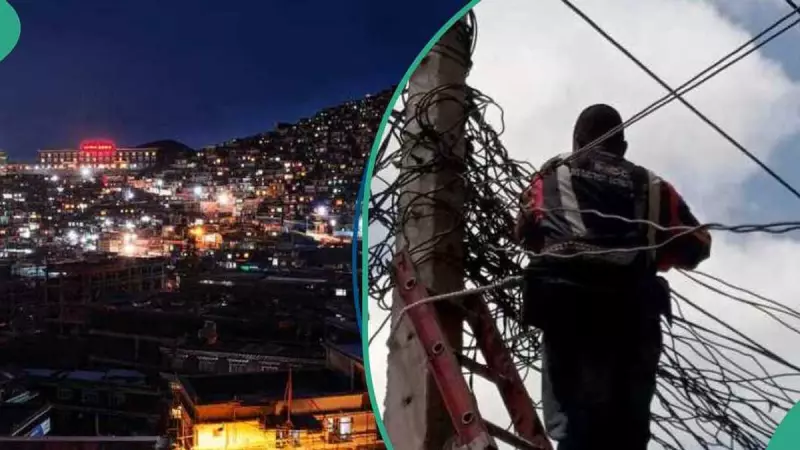
The stability of Nigeria's electricity supply has once again been thrown into question following a significant nationwide drop in power generation. The national grid operator confirmed the sharp decline on Tuesday, December 16, 2025, attributing the crisis directly to severe gas supply constraints.
Grid Operator Points to Gas Supply Constraints
In a statement released on the social media platform X, the official handle for Nigeria's grid, NationalGridNg, provided the primary reason for the widespread blackouts. The operator explained that generation companies, commonly known as GenCos, are grappling with a shortage of gas, which is critical for their operations.
The gas supply constraints have severely limited the optimal output and operational frequency of multiple power plants across the country. This disruption means the plants cannot function at their full capacity, leading to a direct reduction in the amount of electricity fed into the national transmission system.
Immediate Impact on Homes and Businesses
The immediate consequence of this generation shortfall has been felt by millions of Nigerians. Households and businesses from Lagos to Abuja and beyond have experienced prolonged periods of darkness or inconsistent power supply.
The announcement sparked immediate concern and frustration on social media, with citizens and entrepreneurs highlighting the detrimental effect on daily life, productivity, and economic activity. The incident underscores the fragile nature of Nigeria's energy infrastructure and its heavy reliance on gas-fired power plants.
A Recurring National Crisis
This latest incident is not an isolated event but part of a decades-long struggle with power instability. Nigeria's electricity sector has been plagued by systemic issues since the 1970s, when infrastructure investment failed to keep pace with rapid urbanization and industrial growth.
The national grid has proven notoriously fragile. Between 2017 and 2023 alone, the country recorded a staggering 46 total grid collapses, each plunging the nation into darkness. Even in 2025, with a generation capacity hovering around 5,800 megawatts, the system falls drastically short of meeting the needs of a population exceeding 200 million people.
Experts consistently point to a combination of factors: inadequate investment, aging infrastructure, regulatory challenges, and a fundamental over-reliance on gas. This reliance makes the entire system vulnerable to the exact kind of supply disruption witnessed on December 16.
This event marks at least the third major grid disturbance reported in 2025, following similar collapses in January and February. Despite government assurances of finding lasting solutions, the recurring nature of these failures continues to erode public confidence and imposes heavy costs on the national economy.




