
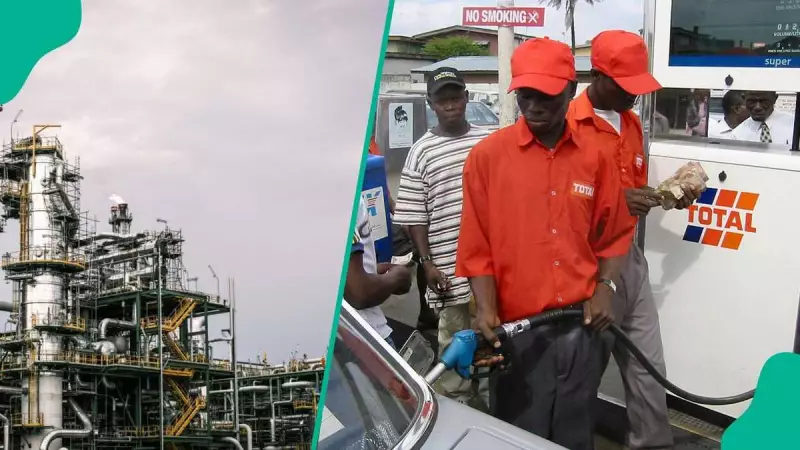
Nigeria has secured a prominent position among African nations with the most affordable fuel, ranking fifth on the continent according to recent data. This development comes as the significant influence of the Dangote Petroleum Refinery on local pricing becomes increasingly evident, reducing the country's historical dependence on imported petroleum products.
What Determines Fuel Prices Across Africa?
The cost of gasoline at the pump is not a simple reflection of global crude oil prices. While the recent drop in international crude markets has led to lower prices in many countries, several other critical factors come into play. Government subsidies, the level of domestic oil production, stringent state control over pricing, and the imposition of carbon taxes all significantly influence the final retail price consumers pay. This complex interplay explains why fuel costs vary so dramatically from one African nation to another, even among oil-producing countries.
Nigeria's Game Changer: The Dangote Refinery Effect
For Nigeria, the narrative of fuel pricing is now deeply intertwined with the operations of the Dangote Refinery. As the largest refinery in Africa and one of the biggest globally, with a capacity of 650,000 barrels per day, its presence is a cornerstone of the country's energy security strategy. By processing crude oil domestically, the refinery has curtailed Nigeria's heavy and often-criticized reliance on fuel imports, a situation long deemed anomalous for a major oil producer.
The refinery's market entry has also sparked a competitive price war with major oil marketers who had favored imports. This battle for dominance in the downstream sector has resulted in frequent price reductions, ultimately benefiting Nigerian consumers. In a recent move ahead of the festive season, Dangote set a new pump price of N739 per litre at its partner stations, following a reduction of its gantry price to N699 per litre.
The Top 10 African Countries With the Lowest Fuel Prices
Based on data from GlobalPetrolPrices, here is the list of African nations where gasoline is most affordable, presented in descending order towards the cheapest.
10. Liberia - Fuel sells at $0.918 per litre. The country's energy sector recently saw investment from Nigerian billionaire Arthur Eze's Atlas Oranto Petroleum.
9. Niger - Despite relying on imports, gasoline costs $0.895 per litre. Nigeria recently supplied fuel to alleviate a shortage in Niger.
8. Tunisia - This North African nation sells fuel at $0.870 per litre, aided by local refining capacity and proximity to Middle Eastern suppliers.
7. Ethiopia - State controls help keep pump prices at $0.789 per litre for this net importer.
6. Sudan - Government intervention maintains fuel prices at $0.700 per litre amidst the nation's challenges.
5. Nigeria - With petrol at approximately $0.542 per litre, Nigeria claims the fifth spot. The Dangote Refinery has been pivotal, not only for local supply but also for exports to neighboring countries like Cameroon and Ghana.
4. Egypt - A major oil producer with domestic refineries, Egypt offers fuel at $0.443 per litre.
3. Algeria - Selling at $0.355 per litre, Algeria's prices are shaped by subsidies and recent multi-billion dollar energy deals with foreign firms.
2. Angola - Africa's third-largest crude producer sells gasoline for $0.327 per litre, a position bolstered by the recent inauguration of the Cabinda oil refinery.
1. Libya - Topping the list for Africa and the world is Libya, where extensive subsidies and control result in an exceptionally low price of $0.028 per litre. The country is the continent's second-largest crude oil producer.
Market Dynamics and Future Outlook
The landscape of Nigeria's fuel market remains dynamic. Aliko Dangote, Chairman of the Dangote Group, continues to advocate for a ban on petroleum product imports, asserting his refinery can satisfy local demand. However, regulators and other industry stakeholders maintain that the nation's energy security cannot hinge on a single facility, ensuring the debate over imports versus local production will persist.
As 2025 concludes, the data clearly shows how domestic refining capacity, government policy, and resource wealth combine to determine what citizens pay at the pump. Nigeria's position in the top five marks a significant shift, largely driven by one of the continent's most ambitious industrial projects.




