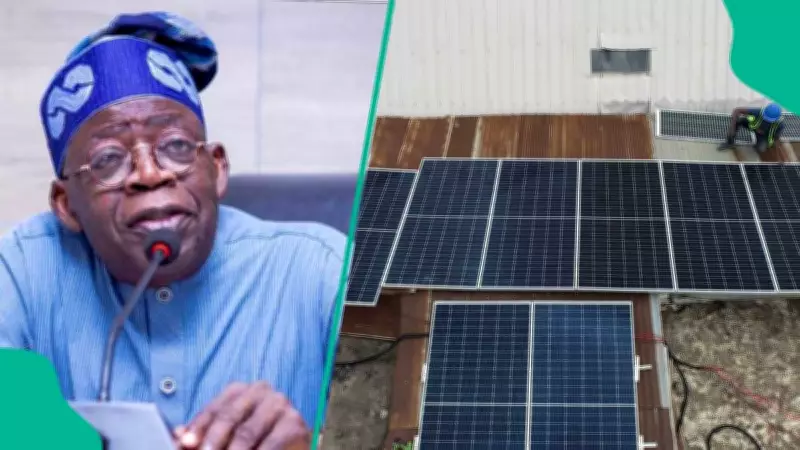
Nigeria Secures $700,000 ECOWAS Grant for Solar Power in 15 Institutions
The Federal Government of Nigeria, through the Rural Electrification Agency (REA), has successfully secured a substantial $700,000 grant from the ECOWAS Commission. This funding is specifically allocated to provide solar power systems to 15 public health and education institutions across the country, as reported by PUNCH.
Formal Agreement and Project Launch
The grant follows the signing of a Memorandum of Understanding (MoU) between the REA and the ECOWAS Commission on Monday. This agreement is part of the Regional Off-Grid Electricity Access Project (ROGEAP), a broader initiative supported by the World Bank. The signing ceremony formally marks the commencement of Nigeria's pilot implementation phase under this regional project.
Under the terms of the arrangement, ECOWAS will provide the $700,000 in grant funding, while the REA will act as the technical and financial implementing agency. The solar photovoltaic systems will be installed in selected public health centres and schools located in the Federal Capital Territory (FCT), Niger State, and Nasarawa State.
Regional Cooperation and National Development
During the signing ceremony, the Managing Director and Chief Executive Officer of the REA, Abba Aliyu, emphasized the significance of this partnership. He described it as a prime example of how regional cooperation can effectively support national development goals, particularly in the critical area of energy access.
On the ECOWAS side, the President of the ECOWAS Commission, Omar Touray, highlighted the regional impact of the pilot project in Nigeria. He stated that this initiative is central to the bloc's broader strategy to combat energy poverty across West Africa. "By providing sustainable solar solutions to schools and clinics, we are not just lighting up buildings; we are powering the future of West Africa," Touray remarked.
State-Level Collaboration and Implementation
Following the MoU with ECOWAS, the REA also entered into a separate agreement with the Niger State Government to ensure effective state-level collaboration and co-financing for the project sites within the state. Under this arrangement, the state government will provide support for coordination, monitoring, and counterpart funding for the solar installations in Niger State.
Governor Mohammed Bago of Niger State expressed his administration's alignment with the initiative, noting that it supports their development priorities. "By implementing these solar projects, Niger State is ensuring that our rural health and educational facilities have the reliable power they need," he said.
Project Implementation and Expected Benefits
To ensure the smooth execution of the project, the REA announced that a dedicated Project Implementation Unit will be established within the agency. This unit will work in conjunction with the ROGEAP Project Implementation Unit and a steering committee to oversee the installations.
The agency outlined several expected benefits from this initiative:
- Improved electricity reliability in rural public institutions
- Reduced reliance on diesel generators
- Lower operational costs for the facilities
- Promotion of clean energy adoption in line with Nigeria's energy policies
The REA, which operates under the Federal Ministry of Power and was established under Section 127 of the Electricity Act 2023, is tasked with electrifying unserved and underserved communities across Nigeria. ROGEAP is a World Bank-supported regional programme implemented by ECOWAS, designed to expand off-grid solar markets and increase access to clean energy solutions throughout West Africa and the Sahel region.
Context of Nigeria's Energy Sector
This development comes at a time when Nigeria's energy sector faces significant challenges. Recent reports indicate that electricity distribution companies (DisCos) in Nigeria generated a total of N1.13 trillion from customers between April and September 2025, despite widespread complaints over poor electricity supply and frequent power outages across the country.
According to data from the National Electricity Regulatory Commission (NERC), the collection efficiency of DisCos improved from 76.07% in the second quarter to 80.70% in the third quarter. This revenue growth occurred despite multiple grid collapses, reduced power generation, and generally poor power supply throughout the nation.
The $700,000 ECOWAS grant for solar power installations represents a strategic move toward addressing these energy reliability issues, particularly in rural areas where grid connectivity remains limited. By focusing on public health and education institutions, the project aims to create immediate positive impacts on community services while promoting sustainable energy solutions.