
Nigeria's Heat Crisis: Power Failures and Soaring Fuel Costs Trigger Health and Financial Emergencies
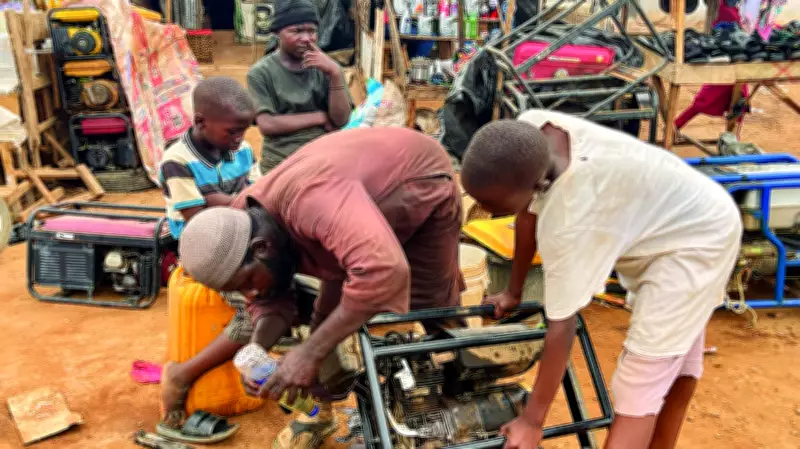
Nigeria is descending into a perilous heat trap, where escalating temperatures, erratic electricity supply, and mounting pollution converge to intensify economic distress, especially for low-income families. With thermometers climbing above 40°C in multiple states, millions are compelled to rely on air conditioners, generators, and refrigerators for survival, driving up energy expenses while simultaneously boosting greenhouse gas emissions. This vicious cycle is transforming daily existence: households now allocate an increasing portion of their income to cooling devices, businesses transfer rising energy costs to consumers, and children along with vulnerable groups confront growing health hazards from heat stress and deteriorating air quality. As power supply falters and fuel prices surge, coping with extreme heat has evolved into both a financial and public health emergency.
Daily Struggles Amidst Scorching Temperatures
Before sunrise in cities like Abuja, Kano, Lagos, and Yenagoa, the heat is already oppressive. Throughout the day, it presses against zinc roofs and concrete walls, transforming bedrooms into chambers of warm air. Surviving the daytime heat often leads to fragmented sleep at night, unless individuals are prepared to endure the roaring noise of generators and sustain air conditioners running on escalating energy bills. Currently, a litre of diesel has peaked at N1,750, while a kilowatt-hour of electricity costs between N215 and N600.
Inikpi Okpanachi, a civil servant with the Federal Airport Authority of Nigeria (FAAN), lamented the impact of heatwaves on her recovery after a caesarean section in December last year, particularly the burden of managing heat rashes on her newborn. "Infants and children are most vulnerable to heatwaves amid rising heat stroke, mental health problems and general low productivity, which can impact personal and national economy," stated public health expert Dr. Godswill Iboma. Okpanachi's survival strategy involved keeping her air conditioners operational. "As a band A electricity customer, it costs me a lot, but recovering and clearing the rashes on my baby bore a greater cost," she explained.
Financial Burdens and Health Risks Escalate
As the heat intensifies, business owners selling refrigerators, generators, electricity units, diesel, petrol, and related goods are profiting at the expense of citizens' economic well-being. While their activities, particularly in the fossil fuel sector, contribute significantly to extreme weather, they remain primary beneficiaries of the crisis. For instance, Fatai Olawoyin in Abuja's Dawaki area received a distress call from his daughter's school when she developed heat rashes that worsened during classes. Rushed to the hospital, she required medication and missed school for the rest of the week.
Olawoyin, a personal assistant at a haulage firm, struggles to manage energy bills and ration air conditioner use, yet spends N85,000 to N100,000 monthly—exceeding Nigeria's minimum wage. "Recently, heat affected my daughter's health. She developed a skin reaction and had to miss school, which required buying medication. Truly, the financial and health impacts of the heat waves are enormous," he lamented.
In Lagos's Lekki area, resident Lolade noted that soaring temperatures have sharply increased her household energy costs from an average of N150,000–N200,000 monthly to over N300,000, driven by a N600 per kWh tariff. She now runs air conditioners longer and pumps more water for frequent bathing, with rising fuel prices compounding her financial woes.
Transportation and Water Shortages Worsen Crisis
The heat wave also affects commuters in public buses, where most citizens rely on rickety vehicles without air conditioning, as e-hailing services remain financially out of reach for many. Fedora Afa, commuting around Abuja, described public transportation as exhausting and deeply uncomfortable, with intense heat turning vehicles into stifling spaces even with open windows. Overcrowding exacerbates the experience, forcing close physical contact in sweaty, confined conditions.
In Lokoja, Sule Ojotule experienced water shortages when her borehole dried up unexpectedly, leaving her family of six searching for alternatives. Although such shortages are common during dry seasons, this marked the first failure despite efforts to deepen the borehole.
Authorities Warn of Rising Temperatures and Environmental Impact
The Nigerian Meteorological Agency (NiMet) warned in March 2026 that temperatures would exceed 40°C in states including Kebbi, Niger, Kwara, Oyo, Kogi, Nasarawa, Anambra, Abia, Ebonyi, Cross River, and the Federal Capital Territory. Recent readings showed 39°C in Abuja, 34°C in Ikeja, 40°C in Jalingo, 41°C in Sokoto, and 42°C in Maiduguri. Dr. Ibrahim Wasiu, Head of Central Forecasting Office at NiMet, highlighted rising humidity as a concern.
As more Nigerians install air conditioners and rely on fossil-fuel generators, the Federal Government, in a joint report with the United Nations Environment Programme (UNEP), noted that 35 million AC units are in Nigeria as of 2026, up from one million in 2010 and eight million in 2020, with projections reaching 71 million by 2050. Electricity consumption from air conditioners alone has risen from about 24,000 gigawatt-hours (GWh) in 2020 to roughly 62,000 GWh currently, potentially reaching 110,000 GWh by 2035 and 176,000 GWh by 2050 under business-as-usual scenarios.
"The aftermath of running generators, air conditioning systems, and refrigerators is that we're producing more Greenhouse gases, GHG (CO2, methane, etc), that are causing global warming. If we don't reduce the emissions of greenhouse gases, the temperature rise will continue at unprecedented levels," Wasiu emphasized.
Deforestation and Climate Commitments at Risk
With a rapidly growing population, the Nigerian Conservation Foundation (NCF) reported that 96% of the country's green forests have been depleted, leaving only 4% forest cover. The United Nations estimates Nigeria has the highest deforestation rate globally, losing 3.7% of its forest annually. These trends challenge Nigeria's international commitments, including the Kigali Amendment, Montreal Protocol, and United Nations Framework Convention on Climate Change, making the realization of its Nationally Determined Contribution (NDC) elusive.
Government Initiatives and Market Challenges
To address these issues, the government developed the Nigeria Cooling Action Plan (N-CAP) with the United Nations Development Programme, focusing on improving energy efficiency and reducing greenhouse gas emissions. A key component is the introduction of new Minimum Energy Performance Standards (MEPS) for air conditioners by the Standards Organisation of Nigeria under NIS 943:2024, featuring the Nigerian Seasonal Energy Efficiency Ratio (NSEER).
Lawal Ismail, a facilitator representing SON on the N-CAP implementation committee, explained that MEPS will be implemented in phases, starting in December 2026, with stricter standards by 2029 and alignment with international practices by 2031. However, affordability remains a concern, as more efficient units are costlier upfront. National Project Coordinator for U4E Nigeria, Etiosa Uyigue, mentioned efforts to design financial mechanisms, such as blended financing options, to help consumers manage costs.
E-Waste and Health Implications Loom Large
As demand for affordable cooling options rises, second-hand air conditioners and refrigerators are increasingly sought after, despite concerns over efficiency and environmental risks. Uyigue acknowledged that phasing out inefficient systems could worsen Nigeria's e-waste burden, with improper disposal releasing harmful refrigerants that contaminate soil and water.
Dr. Godswill Iboma linked extreme heat and environmental degradation to heightened health risks, noting that forest loss worsens heat conditions and exposes populations to new threats. He warned that children and infants are particularly vulnerable to heat-related illnesses, and poor sleep from heat can reduce cognitive function and productivity, impacting the national economy.
NiMet advises residents to prioritize hydration, wear light clothing, and avoid strenuous activities during peak heat hours, while giving special attention to vulnerable groups like children. As Nigeria grapples with this tripartite crisis of extreme heat, weak electricity supply, and rising costs, the path forward requires coordinated efforts to mitigate both immediate survival needs and long-term environmental sustainability.




