Major Oil Marketers Adjust Petrol Prices Following Dangote Refinery's Lead
The Nigerian fuel market has witnessed significant price adjustments as major petroleum marketers, including the Nigerian National Petroleum Company Limited (NNPC Limited) and MRS Oil Nigeria Plc, have increased their pump prices for Premium Motor Spirit (PMS), commonly known as petrol. This development comes less than 24 hours after the Dangote Petroleum Refinery & Petrochemicals announced a substantial hike in its ex-depot price.
Immediate Price Increases Across Retail Outlets
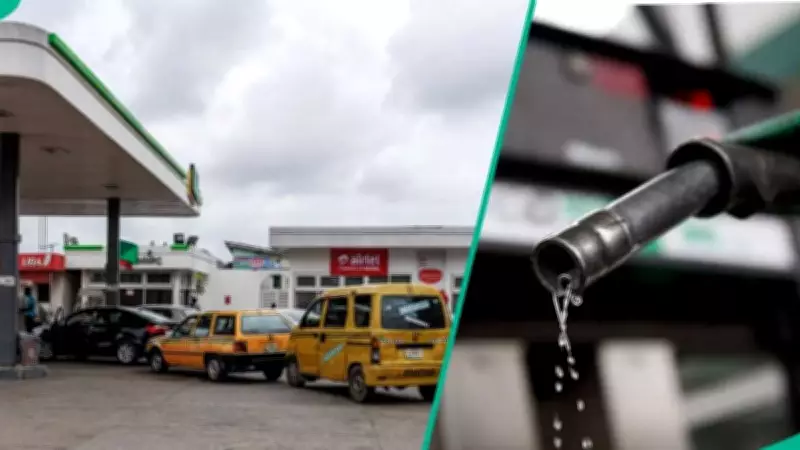
Market surveys conducted in Abuja and Lagos reveal that NNPC Retail and MRS filling stations have raised their pump prices by approximately N100 per litre. In Abuja, prices moved from N875 to N975 per litre, while in Lagos, the adjustment saw prices increase from N837 to N932 per litre. Other marketers, including AYM Shafa and AA Rano, implemented slightly lower increases of N80 per litre, bringing their rates from N880 to N960 per litre.
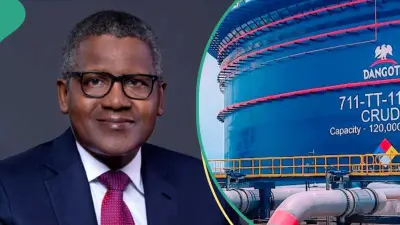
The trigger for these adjustments was Dangote Refinery's announcement on Monday, March 3, 2026, that it had raised its PMS ex-depot price from N774 to N874 per litre. The refinery cited volatility in global crude oil markets and rising replacement costs as primary reasons for the increase.
Global Factors Driving Domestic Price Surge
The latest round of petrol price hikes in Nigeria is directly linked to escalating geopolitical tensions in the Middle East. Recent military strikes involving the United States, Israel, and Iran have raised concerns about potential supply disruptions around the Strait of Hormuz, a critical global oil transit route. These developments have pushed crude oil prices to approximately $80 per barrel, up from around $70 before the crisis began.
Oil marketers in Nigeria have responded to these international market pressures by adjusting their pricing structures to account for higher anticipated landing and replacement costs. Industry analysts warn that if crude oil prices continue to climb toward $120 per barrel, further domestic price increases could become inevitable.
Industry Association Expresses Concerns
The Petroleum Products Retail Outlets Owners Association of Nigeria (PETROAN) has voiced significant concerns about the situation. In a statement released by National President Billy Gillis-Harry, the association warned that the escalating Middle East crisis poses substantial risks to Nigeria's fuel market stability.
"PETROAN notes that any sustained increase in crude oil prices will inevitably be reflected at petroleum retail outlets across Nigeria," Gillis-Harry stated. "If the crisis continues, the impact will extend beyond pump prices to affect foreign exchange stability, domestic fuel pricing structures, and overall inflation levels within the country."
Calls for Strategic Energy Security Measures
In response to these developments, PETROAN has called for urgent and strategic actions to safeguard Nigeria's energy security. The association emphasized the need to prioritize local refineries by ensuring steady crude oil supply and creating enabling policies that support optimal operations.
The association also advocated for sustaining and strengthening the Naira-for-Crude policy to reduce pressure on foreign exchange and stabilize domestic fuel pricing. Furthermore, PETROAN stressed the urgent need to revamp the four government-owned refineries to restore them to full operational capacity, thereby reducing dependence on imported petroleum products.
Dangote's Complementary Infrastructure Plans
In related developments, Dangote Refinery has announced plans to invest in Compressed Natural Gas (CNG) stations, also referred to as daughter stations, as part of its nationwide fuel distribution strategy. These stations will power the refinery's fleet of 4,000 CNG-powered trucks, facilitating the delivery of petrol and diesel to end-users across Nigeria.
The refinery disclosed these plans when announcing the launch of its fuel distribution bonanza initiative, highlighting its commitment to developing complementary infrastructure to support Nigeria's energy distribution network.
As Nigeria's fuel market navigates these challenging conditions, consumers face the immediate impact of higher transportation and living costs, while industry stakeholders grapple with the complex interplay of global market forces and domestic policy considerations.