
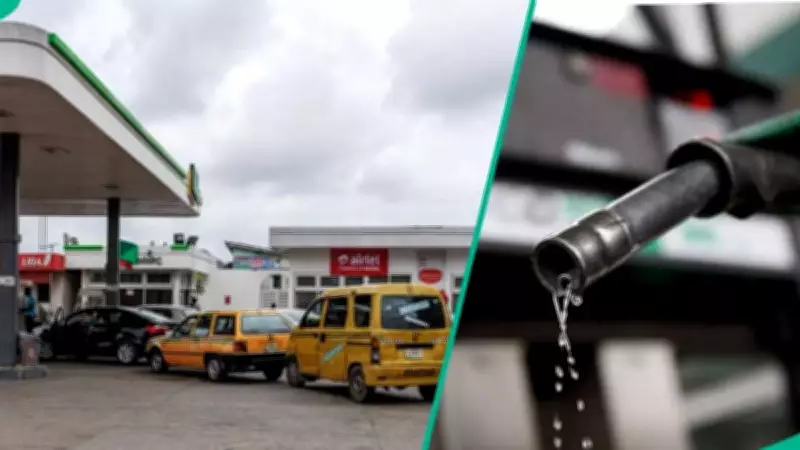
Energy Relief as NNPC Filling Stations Slash Petrol Prices Across Nigeria
In a significant development for the Nigerian economy, the Nigerian National Petroleum Company Limited (NNPCL) has reversed its recent petrol price increase, offering much-needed relief to motorists and easing financial pressures on households. This reduction follows a strategic decision by the Dangote Petroleum Refinery to lower its ex-gantry petrol price from N1,075 per litre to N1,050 per litre, announced on Wednesday, March 11, 2026.
Substantial Price Cuts at NNPC Outlets
Checks conducted by journalists reveal that NNPC retail outlets have implemented substantial price reductions, with a notable drop of N97 per litre in many locations. In Abuja, for instance, NNPC filling stations have adjusted the pump price of Premium Motor Spirit (PMS) to N1,161 per litre, down from N1,260 per litre recorded just a day earlier. This represents a significant decrease of N95 per litre, providing immediate cost savings for consumers.
Further observations indicate that in specific areas such as Herbert Macaulay Way in Abuja, NNPC outlets are dispensing petrol at an even lower rate of N1,081 per litre. In Lagos, the price cuts are even more pronounced, with reductions exceeding N180 at various NNPC stations. For example, at Egbeda, Falomo, and Marina NNPC filling stations, petrol is now being sold at N1,130 per litre, while in Fadeyi and Shomolu, prices have fallen to N1,050 per litre from a previous rate of N1,230 per litre.
Widespread Adjustments by Other Marketers
The price reductions are not limited to NNPC stations alone. Other fuel marketers have also adjusted their pump prices in response to the market dynamics. In Abuja, NIPCO, AP, and AA Rano are now selling PMS at N1,195, N1,200, and N1,223 per litre, respectively. In Lagos, an anonymous manager at an Ardova filling station confirmed that petrol prices have been reduced by N100, with the station adjusting its pump price to N1,140 from the previous rate of N1,230. The manager expressed optimism that prices could drop further, potentially reaching around N1,000 per litre in the near future.
Dangote Refinery's Commitment to Market Responsiveness
Anthony Chiejina, Chief Corporate Communications Officer for the Dangote Group, emphasized the refinery's commitment to operating under strong corporate governance and ethical standards. In a statement, he explained that the price reduction aligns with recent drops in global crude oil prices. The refinery purchases crude tied to international benchmark prices, with an additional premium ranging from $3 to $6 per barrel, and payments for foreign exchange are made at prevailing market rates without any subsidies.
Chiejina highlighted that in 2025, the refinery reduced its gantry price at least eight times and increased it only twice, demonstrating a consistent effort to support the Nigerian economy and alleviate consumer burdens. He reaffirmed the company's dedication to ensuring that the benefits of price adjustments reach Nigerians across all 36 states and the Federal Capital Territory.
Potential for Further Price Declines
Industry analysts suggest that petrol prices could experience additional declines as the government and Dangote Refinery work towards reaching an agreement on crude supply. This ongoing negotiation may lead to more stable and reduced fuel costs, offering sustained relief to the Nigerian populace. The current price cuts mark the first reduction after three successive hikes that had previously triggered nationwide increases in retail pump prices.
Broader Economic Implications
This development comes alongside other positive economic indicators, such as a reported decrease in diesel prices. According to the National Bureau of Statistics, the average retail price for Automotive Gas Oil (Diesel) stood at N1,361.57 per litre in January 2026, representing a 9.32% decrease compared to N1,501.58 recorded in January 2025. These combined reductions in fuel costs are expected to lower transportation expenses, reduce inflationary pressures, and boost economic activities across various sectors.
As Nigerians welcome this energy relief, stakeholders continue to monitor market trends and government policies that could influence future price movements. The proactive adjustments by NNPC and other marketers reflect a responsive approach to global and local economic conditions, aiming to foster a more affordable and sustainable energy landscape for the country.




