
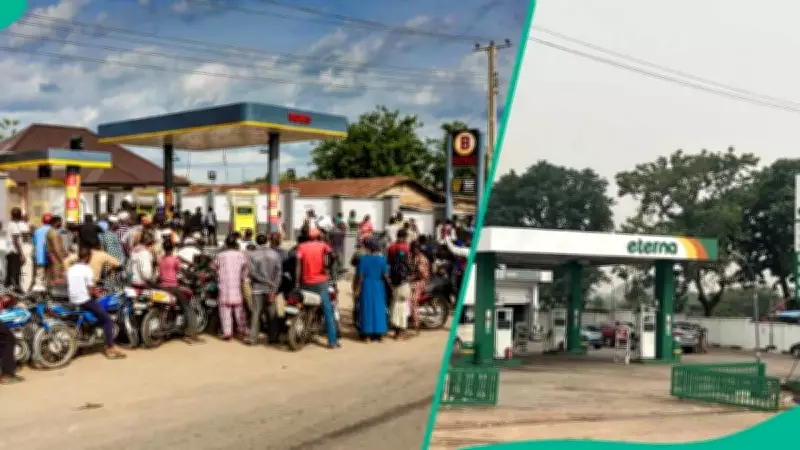
Nigeria's Petrol Prices Surge 13% in 48 Hours as Global Oil Rally Hits Hard
Petrol prices across Nigeria have experienced a dramatic 13% increase within just 48 hours, following a sharp rally in global crude oil prices that forced major industry players to implement immediate rate adjustments. The sudden spike has sent shockwaves through the Nigerian economy, with diesel costs also rising significantly, putting additional strain on businesses that rely on generators for power.
Immediate Market Response to Global Oil Surge
The immediate trigger for this rapid price adjustment was a sudden spike in international oil prices, which pushed crude above $80 per barrel. In response to these market conditions, the 650,000-barrel-per-day Dangote Petroleum Refinery suspended petrol loading operations at midnight on March 2 before announcing a new ex-depot price of N874 per litre, representing a substantial N100 increase from the previous N774 per litre rate.
This significant adjustment quickly filtered through the entire market ecosystem. Retail outlets operated by major players including MRS, Ardova Plc (AP), and Nigerian National Petroleum Company Limited began implementing new pump prices across multiple locations throughout the country. Private depots also reacted swiftly, with some temporarily suspending sales over concerns about selling below replacement cost.
By Tuesday, March 3, 2026, market realities had become starkly apparent as marketers were quoting between N925 and N940 per litre in key urban centers including Abuja and Lagos. This pricing volatility reflects the heightened uncertainty currently affecting supply channels throughout the Nigerian petroleum distribution network.
Diesel Prices Experience Parallel Surge
The price surge has not been limited to petrol alone. The Dangote Refinery simultaneously raised its ex-depot price of Automotive Gas Oil, commonly known as diesel, by N170 per litre, moving from N880 to N1,050. Even before this official announcement, diesel prices had been trending upward across private depots, with average ex-depot rates hovering near N1,150 per litre.
For Nigeria's manufacturing sector, hospitals, logistics firms, and countless small businesses dependent on generators for reliable power, this diesel price increase adds immediate and significant strain to operating costs. With unreliable grid power remaining a persistent concern across many regions of the country, diesel continues to serve as a critical resource for keeping businesses operational.
Any upward shift in diesel pricing typically creates ripple effects throughout supply chains and consumer goods pricing structures, amplifying the economic impact far beyond the initial fuel cost increase.
Threat to Recent Inflation Gains
The timing of this fuel price surge presents particular concern for Nigeria's economic stability. The nation had recently recorded ten consecutive months of easing inflation, with the headline rate slowing to 15.10% in January 2026, representing its lowest level in over five years. Food inflation had also shown signs of moderation, offering some much-needed relief to households struggling with cost-of-living pressures.
However, economic experts now warn that higher fuel prices could potentially reverse these fragile gains. Energy costs fundamentally influence transportation expenses, food distribution networks, and manufacturing overheads. When petrol and diesel prices rise significantly, the knock-on effects typically manifest in market prices within weeks, creating inflationary pressure throughout the economy.
Economists caution that Nigeria's current deregulated pricing framework means the nation is now directly exposed to international oil market movements. Without the traditional subsidy buffer that previously insulated consumers from global price fluctuations, pump prices now respond almost immediately to international market shifts.
Geopolitical Tensions Drive Global Oil Rally
The global oil price spike traces back to escalating hostilities in the Middle East region. Military strikes by the United States and Israel reportedly resulted in the death of Iran's Supreme Leader, Ali Khamenei, triggering retaliatory attacks across the region and intensifying tensions around the strategically vital Strait of Hormuz.
This critical shipping corridor handles approximately one-fifth of global seaborne oil traffic, and any disruptions to tanker movements send immediate shockwaves through international energy markets. Brent crude, which had traded around $72 per barrel just days earlier, surged past $83, with intraday highs approaching $85.
Market analysts warn that a prolonged regional conflict could push prices significantly higher, particularly if exports from Gulf producers experience interruptions lasting several weeks or more.
Industry Projections and Economic Implications
Industry stakeholders indicate that pump prices could climb even further if crude oil continues its upward trajectory. Representatives of the Independent Petroleum Marketers Association of Nigeria have projected that rates in the Federal Capital Territory could approach N980 to N1,000 per litre, depending on logistics costs and continued market volatility.
Prominent economist Paul Alaje recently noted that sustained geopolitical tension could potentially see petrol prices cross the N1,000 threshold before the end of April. He added that diesel and aviation fuel would likely rise in tandem, affecting transport fares and air ticket prices nationwide, creating broader economic consequences.
For the present moment, petroleum supply remains relatively steady, and industry marketers are urging consumers to avoid panic buying behaviors. Yet the speed of this latest price adjustment highlights a new economic reality for Nigeria: in a fully deregulated market environment, global shocks can reach Nigerian filling stations in less than 48 hours, creating immediate financial pressure on businesses and households alike.




