
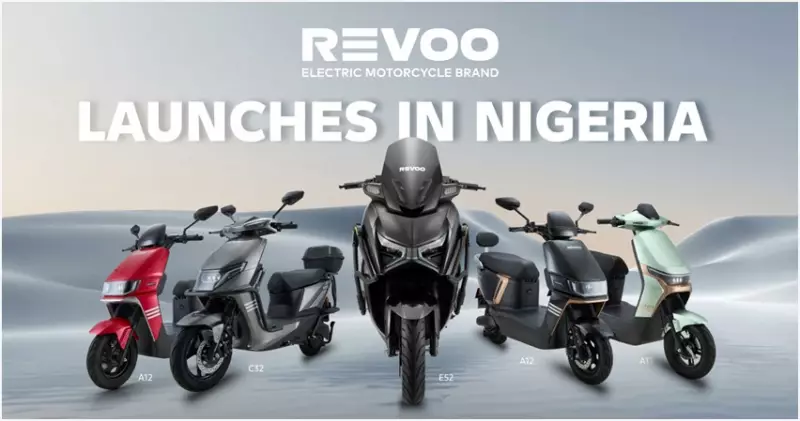
Nigeria's urban transportation landscape is set for a major shift with the official arrival of REVOO, a global electric motorcycle brand. Backed by Transsion Holdings—the powerhouse behind popular brands like TECNO, Infinix, and itel—REVOO has formally entered the Nigerian market in 2025. The brand inaugurated its presence with the opening of three physical stores in Lagos, marking a strategic expansion into Africa's largest economy.
A Strategic Move Into Green Mobility
This launch represents a significant diversification for Transsion Holdings, aiming to capture a share of the rapidly growing demand for sustainable and cost-effective transport solutions. Electric motorcycles present a compelling alternative to traditional petrol-powered bikes, offering benefits like drastically reduced running expenses, lower emissions, and quieter operation. REVOO's entry is not just about selling vehicles; it's positioned as a move to support Nigeria's transition towards greener mobility solutions.
The company, established globally in 2023, has already expanded to over 10 countries and boasts more than 250 stores worldwide. Its Nigerian venture is expected to create new employment opportunities across various sectors including sales, marketing, technical support, and after-sales service, thereby building local capacity within the green technology industry.
The REVOO Model Lineup: Built for Nigerian Roads
REVOO is launching with a range of four distinct models, each designed to meet different rider needs and budgets. Every motorcycle promises durable construction, extended battery life for daily use, and a comprehensive warranty of 1 year or 6,000 kilometers. A key selling point is the dramatically low operating cost, which the company estimates can be as little as ₦70 per day. Furthermore, each showroom will also function as a service center, ensuring easy access to maintenance and spare parts.
Model Breakdown: From Commuter to Power Rider
The lineup caters to a wide spectrum of users, from daily commuters to commercial delivery riders.
REVOO A11: The Urban Commuter
Designed as an accessible entry-point, the A11 is an electric scooter with a 1000W motor and a 60V21Ah battery. It offers a range of up to 70km on a single charge and a top speed of 45km/h, making it ideal for short city trips. Its lightweight build and user-friendly design target first-time riders.
REVOO A12: Style with Enhanced Efficiency
A step up from the A11, the A12 features a 72V21Ah battery paired with a 1000W motor. This upgrade extends its range to 80km and boosts the top speed to 50km/h. It is marketed for its smooth ride and efficient energy consumption in urban settings.
REVOO C32: The Delivery Powerhouse
Built for more demanding roles, the C32 is a robust motorcycle with a powerful 1800W motor and a large 72V35Ah battery. It can travel up to 90km and reach speeds of 60km/h. This model is particularly suited for delivery services and is engineered to handle typical Nigerian road conditions with greater ease.
REVOO E52: The Premium Performer
Positioned at the top of the range, the E52 is engineered for power and long-distance travel. It boasts a massive 3000W motor and a high-capacity 96V35Ah battery, achieving an impressive 120km range and a top speed of 80km/h. It is designed for riders who require premium performance and powerful acceleration.
Notably, all models share a charging time of approximately 5 to 7 hours, making overnight charging a convenient option for most users.
Market Implications and Future Outlook
REVOO's launch signifies a growing confidence in Nigeria's electric vehicle market. By combining global engineering expertise with a direct retail and service presence, the brand is making a clear long-term commitment. The focus on affordability, coupled with the strong backing of Transsion Holdings, positions REVOO to potentially capture a significant portion of the evolving two-wheeler market. This move could accelerate the adoption of electric mobility, contributing to reduced urban pollution and offering Nigerians a cheaper alternative to petrol-based transportation.




