
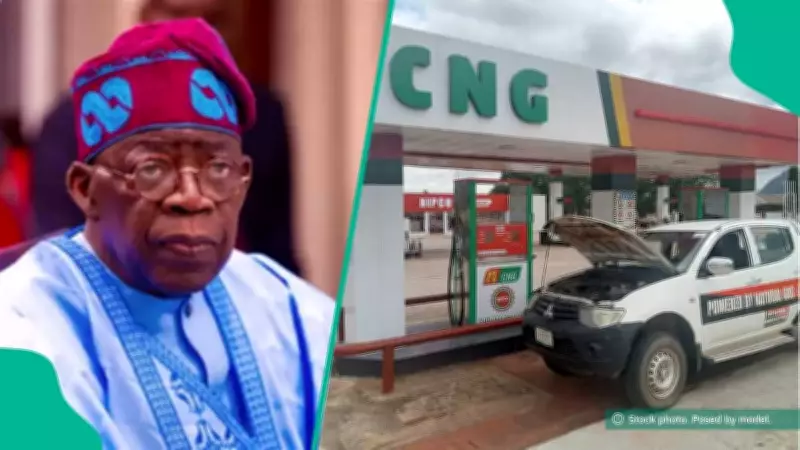
President Tinubu Directs Mass Deployment of CNG Kits to Alleviate Fuel Price Burden
In a decisive move to address the escalating cost of petrol, President Bola Ahmed Tinubu has ordered the immediate nationwide deployment of 100,000 Compressed Natural Gas (CNG) conversion kits. This initiative, part of urgent government efforts, aims to cushion the impact of skyrocketing fuel prices on Nigerians, who are grappling with financial strain due to increased transportation fares.
Global Oil Market Volatility Drives Domestic Fuel Crisis
The directive comes amid renewed volatility in global oil markets, largely driven by escalating geopolitical tensions involving Iran, Israel, and the United States. These international pressures have continued to push fuel prices upward worldwide, with Nigeria feeling the brunt. In Abuja, petrol currently sells between ₦1,260 and ₦1,280 per litre, depending on the filling station, while in Lagos, prices range from ₦1,200 to ₦1,300 per litre. The surge has triggered higher transportation costs in many cities, worsening the financial burden on millions of Nigerians who rely heavily on road transport.
Accelerating Access to Cheaper Fuel Alternatives
Ismaeel Ahmed, Executive Chairman of the Presidential Initiative on Compressed Natural Gas (Pi-CNG), disclosed the President's instruction following a meeting at the State House in Abuja. Ahmed stated that the government is closely monitoring global oil market developments and their potential impact on domestic fuel costs. According to him, President Tinubu has directed the programme to accelerate efforts aimed at providing cheaper fuel alternatives for Nigerians.
Ahmed explained: "The President is keenly following developments in the Middle East and the rising cost of petrol and diesel. He asked what we are doing at Pi-CNG to rapidly expand access to gas nationwide so Nigerians can enjoy lower transportation costs."
CNG Conversion Kits to Benefit Motorists Nationwide
The CNG conversion kits will enable vehicle owners to modify their engines so they can run on compressed natural gas instead of petrol. This initiative is expected to benefit private motorists as well as commercial transport operators, including taxi drivers, bus operators, and tricycle riders. For many drivers, switching to CNG could significantly reduce fuel expenses, as gas-powered vehicles typically cost far less to operate than petrol-powered ones.
Ahmed added that the 100,000 conversion kits are expected to begin deployment within two to three weeks, with conversion centres across the country preparing to expand their operations once distribution begins.
Expanding CNG Infrastructure and Partnerships
Beyond the conversion kits, the federal government is also working to expand the infrastructure needed to support gas-powered mobility. Ahmed revealed that about 77 CNG refuelling stations are currently at various stages of development nationwide. These facilities will be strategically located along major transportation corridors to ensure accessibility for motorists.
He also disclosed that several automobile manufacturers have expressed interest in establishing vehicle assembly plants in Nigeria, a move that could strengthen the country's automotive industry and create thousands of jobs. In addition, the Pi-CNG programme is partnering with the Rural Electrification Agency (REA) to develop solar-powered charging stations capable of supporting electric vehicles, particularly in off-grid communities.
Petrol Price Fluctuations Across Major Cities
Meanwhile, petrol prices continue to fluctuate across Nigeria as supply conditions, logistics costs, and global crude oil movements shape the market. In Port Harcourt, prices jumped sharply within days, rising from about ₦800 per litre last Saturday to between ₦1,005 and ₦1,095 by Sunday. Stations such as Restopark, NNPC, Nelly Valley, Peterkins, and Conoil later recorded pump prices ranging from ₦1,255 to ₦1,385 per litre.
Similarly, in Kano, petrol sold for about ₦1,350 per litre, while some NNPC outlets offered slightly lower prices of around ₦1,240 per litre. Industry players say the fluctuations are largely driven by supply dynamics, distribution logistics, and movements in global crude oil prices, factors that continue to shape Nigeria's fuel market.
Diesel Price Increases and Market Speculation
In related developments, the Dangote Petroleum Refinery has suspended diesel loading and sales, a move that coincided with fresh price increases by depot operators in major supply hubs. Market checks indicate that several depot owners have already raised diesel prices, with some facilities in Lagos quoting about ₦1,200 per litre. This development has fuelled speculation among industry players that another round of price adjustments could follow, further impacting the economy.




