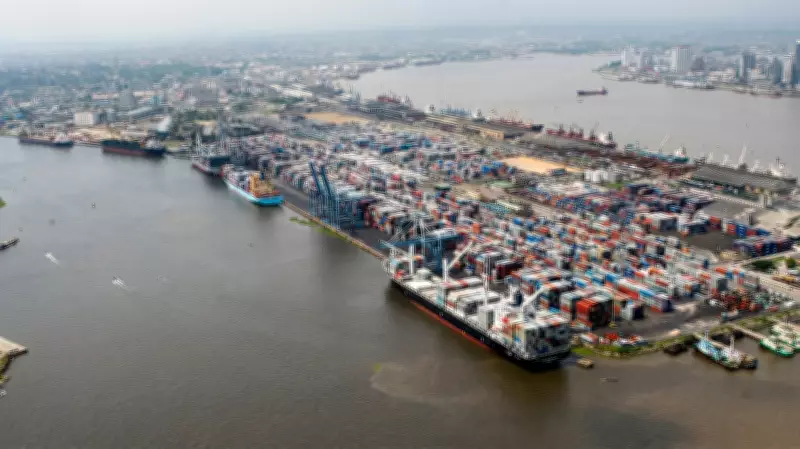
Stakeholders in the maritime sector have cautioned the Federal Government to adopt a phased approach to export expansion under China's newly introduced zero-tariff policy for Nigeria. They warned that aggressive exports could worsen food insecurity and inflation in the country, especially as Nigeria's current agricultural and governance systems are not sufficiently prepared for large-scale export liberalisation despite the opportunities presented by the Chinese market.
China's Tariff Removal on African Goods
This is just as China's tariff removal on goods from 53 African countries, which took effect on May 1, 2026, has been commended by the organised private sector, who described the policy as a strategic opportunity for exporters, especially Nigerians. The Sea Empowerment and Research Centre (SEREC) stressed that Nigeria must adopt a “Food Security First, Export Expansion Second” strategy to avoid exposing citizens to food shortages and escalating prices.
Expert Concerns on Agricultural Exports
Head of Research, SEREC, Dr Eugene Nweke, said while China's zero-tariff regime could boost Nigeria's export earnings, premature expansion of agricultural exports may increase domestic food prices, reduce local food availability, deepen dependence on raw commodity exports and encourage export under-valuation and revenue leakages. He argued that Nigeria's agricultural system is still too fragile to support aggressive export expansion without severe domestic consequences, while maintaining that export growth could unintentionally translate into domestic hunger if food exports are not properly managed.
Nweke warned that export incentives could divert food commodities from local markets, creating artificial scarcity and worsening food inflation through foreign-exchange-driven arbitrage. He also expressed concerns that Nigeria could remain trapped in a cycle of exporting raw agricultural produce and minerals while continuing to import finished products, thereby reinforcing structural economic dependency.
Revenue Protection and Recommendations
On revenue protection, Nweke identified under-invoicing, concealment practices, and weak customs intelligence systems as major risks that could deprive the country of export earnings. To address the concerns, Nweke recommended introducing dynamic export quotas on critical food staples, imposing temporary export restrictions during shortages, implementing mandatory local value-addition policies, strengthening export monitoring systems, implementing anti-under-invoicing enforcement measures, and establishing an integrated port intelligence framework.
Nweke also advocated for accelerated investment in agro-industrial infrastructure such as storage facilities, cold-chain systems, rural logistics networks and processing clusters to reduce post-harvest losses and improve domestic food supply stability.
Chamber of Commerce Views on Zero-Tariff Policy
Meanwhile, the Abuja Chamber of Commerce and Industry (ACCI) said the zero-tariff policy is a major opportunity for Nigeria's exporters and would strengthen Africa-China trade relations and enhance market access for the country's products. Director-General, ACCI, Agabaidu Jideani, noted that improved market access could enhance the competitiveness of Nigerian products in China, adding that effective utilisation of the policy could also support export diversification and increase foreign exchange earnings.
The ACCI boss said that sectors likely to benefit from the policy include agriculture, agro-processing, solid minerals and light manufacturing. Jideani warned that market access alone would not guarantee market penetration for Nigerian businesses, noting that exporters must meet strict quality standards, packaging requirements and supply consistency demanded by the Chinese market.
Jideani further warned that Nigeria must guard against a widening trade imbalance despite the export opportunities created by the policy, noting the need for the government to adopt deliberate measures to strengthen local production, encourage value addition and reduce excessive dependence on imports. He said boosting domestic industries and improving industrial capacity would help Nigeria maximise export opportunities while protecting local businesses and jobs.