
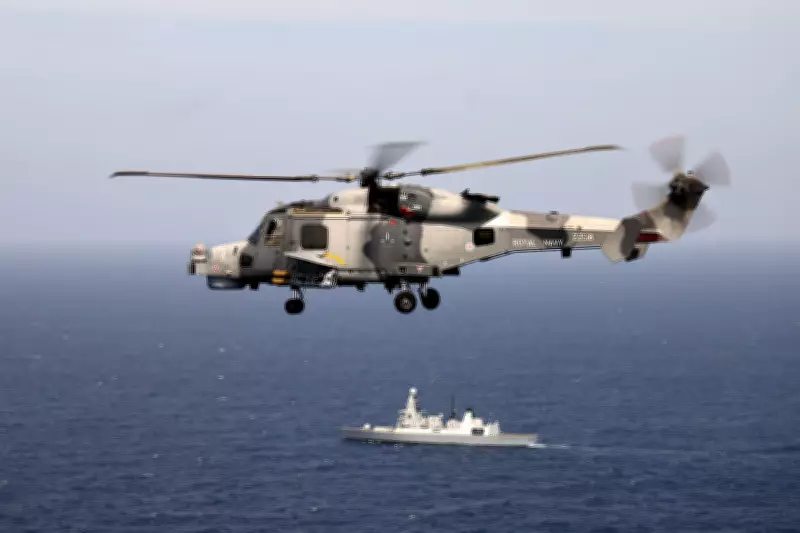
Royal Navy Attack Helicopter Intercepts Russian Vessel Near Critical UK Infrastructure
In a significant maritime security incident this week, a Royal Navy Wildcat attack helicopter was deployed to escort a Russian cargo vessel away from United Kingdom territorial waters. The vessel, identified as the Sinegorsk, had anchored perilously close to sensitive undersea telecommunications infrastructure off the coast of Somerset, prompting immediate national security concerns.
Incident Details and Immediate Response
The Sinegorsk, which had departed from a major Russian port earlier in the week, dropped anchor on Tuesday, January 27, less than one mile offshore near Minehead, Somerset. This location placed the vessel in direct proximity to crucial undersea cables that connect the United Kingdom with vital international partners including the United States, Canada, Spain, and Portugal. The ship remained anchored at this sensitive position until Wednesday afternoon, when Royal Navy authorities took decisive action.
While the Russian vessel claimed it was conducting essential safety repairs, British security officials viewed the positioning as highly suspicious. The Royal Navy responded by dispatching an RN Wildcat attack helicopter to monitor the situation closely. The military aircraft effectively chased the Sinegorsk back into open international waters, ensuring the protection of critical national infrastructure.
Political Reactions and Security Concerns
The incident has drawn substantial political attention across the United Kingdom, with security experts and government officials expressing renewed concerns about Russian maritime activities near essential infrastructure. Shadow security minister Alicia Kearns described the ship's movements as deeply suspicious, echoing broader warnings about potential threats linked to Kremlin operations.
Although the Sinegorsk is not believed to be part of Russia's so-called shadow fleet of unregulated vessels, its presence has heightened unease following a series of recent incidents involving Russian-linked ships entering UK and European waters. Security analysts have repeatedly warned that Europe faces increasing exposure to state-linked maritime threats, including potential disinformation campaigns, drone operations, and deliberate incursions near sensitive infrastructure.
Broader Context of Russian Maritime Activity
This incident occurs against a backdrop of escalating Russian maritime activities that have raised alarms across European security establishments. Earlier this month, a sanctioned Russian tanker reportedly sailed through the English Channel using a false name and flag. That vessel, previously known under multiple identities, had departed from a Turkish port and was suspected of traveling toward Russia while attempting to evade international sanctions.
Russia has long faced accusations of covert interference operations across Europe, even preceding its full-scale invasion of Ukraine. Current estimates suggest that hundreds of shadow fleet vessels, primarily unregulated tankers transporting Russian oil, regularly pass through European waters. These ships frequently disable tracking systems and falsify registry details to circumvent international sanctions, creating significant security challenges.
Analytical Perspectives and International Response
Security analysts have provided sobering assessments of the growing Russian maritime presence. Rachel Ellehuus, director-general of the Royal United Services Institute, has emphasized that such activity should be expected to continue, with potential operations ranging from disinformation campaigns to physical incursions near sensitive infrastructure. By early 2026, analysts estimated that approximately one-sixth of the world's active tanker fleet was linked to Russian operators using obscure flags and shell company structures.
In response to these escalating threats, the European Union has significantly expanded sanctions regimes, designating hundreds of vessels as part of concerted efforts to curb sanction evasion and protect regional security. These measures reflect growing international concern about the vulnerability of critical maritime infrastructure and the need for robust defensive protocols.
The Royal Navy's swift response to the Sinegorsk incident demonstrates the United Kingdom's commitment to protecting its territorial waters and essential infrastructure. However, security experts warn that such encounters may become more frequent as geopolitical tensions persist and state actors continue to test maritime boundaries. The protection of undersea cables, which form the backbone of global communications and data transfer, remains a paramount security priority for nations across the Atlantic alliance.




