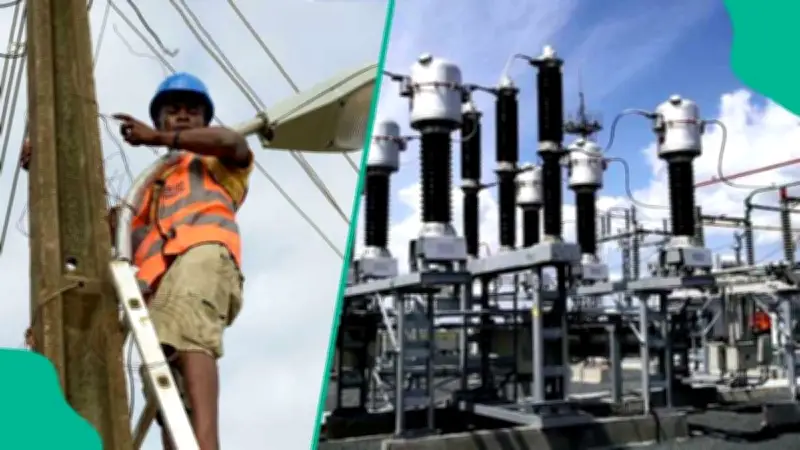
The federal government has added 208 megawatts of bulk transmission capacity to Nigeria's national grid following the inauguration of upgraded substations in Ijora and Apapa, Lagos, on Monday, July 28, 2026. Minister of Power Joseph Tegbe presided over the commissioning ceremony, stating that both projects are part of a broader push to remove transmission bottlenecks that have long prevented available electricity from reaching consumers.
Substation Upgrades in Ijora and Apapa
At the Ijora facility, three ageing 30MVA transformers with a combined capacity of 90MVA were replaced with two modern 100MVA units, pushing the substation's total installed capacity to 230MVA and contributing roughly 112MW of additional bulk transmission capacity. The upgrade is expected to improve power supply to Ijora, Costain, Oyingbo, Customs and surrounding communities within the franchise area of the Eko Electricity Distribution Company.
In Apapa, the original substation was commissioned in 1985 and had since been decommissioned due to age, leaving the area reliant on a single outdoor 60MVA transformer. Two new 60MVA transformers and modern gas-insulated switchgear equipment were installed, tripling the facility's capacity to 180MVA and adding about 96MW of bulk power availability to the axis.
Government's Commitment to Reliable Power
Tegbe said the goal was not simply to generate more electricity but to build a power system capable of delivering it where it is needed, when it is needed, and at a quality and cost that supports economic activity. He stated: “This administration is therefore determined to strengthen critical substations, reinforce transmission corridors, remove bottlenecks and chokepoints, improve system resilience and create the capacity required to evacuate and deliver Nigeria’s available electricity.”
The Lagos State Government earlier entered into a landmark Power Purchase Agreement (PPA) with three electricity generation firms as part of efforts to expand energy supply and reinforce the state’s power infrastructure. The government also announced plans to transition a large number of residents from reliance on the national grid to solar-powered home systems.
Funding from World Bank and JICA
Sule Ahmed Abdulaziz, managing director and chief executive officer of the Transmission Company of Nigeria, said the upgrades reflect the government's commitment to strengthening critical power infrastructure across the country. He said: “Electricity remains the bedrock of economic growth. Every thriving industrial cluster, commercial district, healthcare facility, educational institution, and household depends on a steady and reliable power supply for optimal performance.”
Abdulaziz disclosed that the World Bank funded the Ijora substation project, while the Japan International Cooperation Agency provided support for the Apapa upgrade. He used the occasion to appeal for similar grant-based assistance to rehabilitate other parts of the national transmission network that remain in need of urgent attention.
Related Development: Lagos Solar Permit Fee Clarification
Meanwhile, Legit.ng earlier reported that the Lagos state government had provided clarification on its solar installation fees and permits. The clarification followed a viral video showing housing ministry officials asking a resident to obtain approval before installing solar panels. The government clarified that permit and administrative fees applied only to residents of its government-owned social housing estates and not to private homeowners or tenants across the state.