
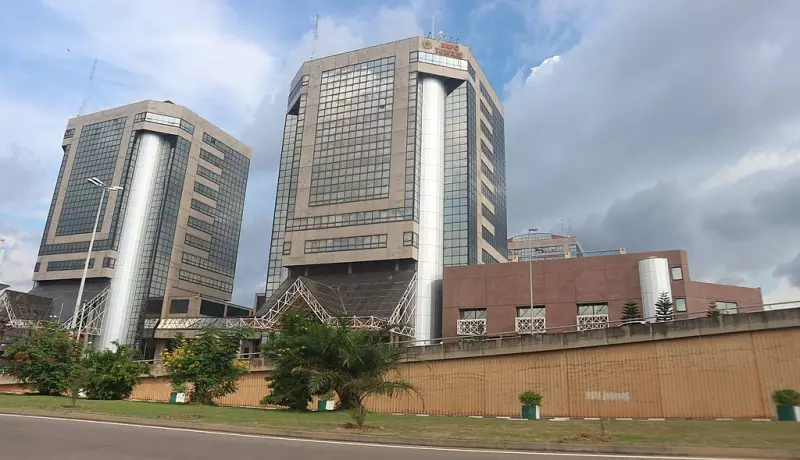
The declaration of a massive ₦5.4 trillion Profit After Tax for the year 2024 by the Nigerian National Petroleum Company (NNPC) Limited has been welcomed as a landmark achievement, signalling a positive transformation within the country's crucial oil and gas industry.
CEAR Applauds Record Performance and Reform Impact
In a statement released in Abuja, the policy advocacy group, the Centre for Energy Accountability and Reform (CEAR), praised the financial results. The group's Executive Director, Dr Ibrahim Ahmed, stated that the figures represent one of the clearest indicators yet that the company's ongoing restructuring is yielding measurable and substantial gains.
CEAR described the performance as a significant signal of progress across the nation's entire petroleum value chain. The organisation attributed the success to improved operational discipline and sweeping commercial reforms that are fundamentally reshaping the sector's financial health and outlook.
Breaking Down the Stellar Financial Results
The 2024 financial statement reveals a dramatic year-on-year improvement. The declared profit of ₦5.4 trillion marks a staggering 64 per cent increase from the ₦3.297 trillion profit recorded in the previous year, 2023.
Furthermore, the company's total revenue surged by an impressive 88 per cent to reach ₦45.1 trillion. CEAR analysts linked this robust growth to higher crude oil production levels and strategic changes implemented within the downstream segment of the business.
Leadership and Structural Reforms Drive Success
According to CEAR, the impressive turnaround is a direct result of NNPC's transition into a limited liability company structure. This change, the group argued, has enforced stronger accountability, made the company more attractive to investors, and encouraged the adoption of more efficient and commercially sound management practices.
The advocacy centre specifically credited the leadership of the Group Chief Executive Officer, Bayo Ojulari, for stabilising the company's operations and reinforcing strict cost-control mechanisms. This focus on governance comes at a critical time when global investors are increasingly selective, demanding high standards from energy sector players.
CEAR also noted that the results align with the fiscal discipline and improved governance pillars of President Bola Tinubu's Renewed Hope Agenda. The performance suggests that reforms across upstream, midstream, and downstream operations are starting to tackle perennial issues like pipeline vandalism, operational inefficiencies, and regulatory overlaps.
Future Ambitions and Areas for Caution
While celebrating the profit surge, CEAR did highlight a concerning decline in foreign exchange earnings reported in the 2024 statement. The group stated that this shortfall underscores the urgent need for sustained reforms focused on boosting crude production, expanding domestic gas output, and promoting in-country value addition to reduce over-reliance on raw crude exports.
The organisation commended NNPC Limited's forward-looking targets, which include:
- Increasing crude production to 2 million barrels per day by 2027.
- Aiming for 3 million barrels per day by 2030.
- Expanding gas production to 12 billion standard cubic feet per day by 2030.
CEAR described these goals as strategically aligned with both global energy transition trends and Nigeria's pressing domestic energy needs. The group also supported the company's ambition to attract $60 billion in new investments across the petroleum value chain, noting that such capital is vital for job creation, sustained revenue growth, and national energy security.
In conclusion, CEAR stated that with these latest results, NNPC Limited has demonstrated that Nigeria's petroleum sector can operate with remarkable efficiency when guided by clear objectives and professional management. The centre urged regulators, political stakeholders, and industry partners to support the ongoing reforms and avoid any actions that could disrupt the significant progress being made.




