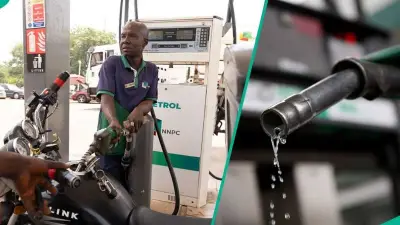
The House of Representatives Committee on Petroleum Resources (Downstream) has declared a renewed legislative agenda aimed at achieving fuel supply sufficiency and significantly improving efficiency within Nigeria's downstream petroleum sector before 2026.
Legislative Push for Stability and Self-Sufficiency
Chairman of the committee, Hon. Ikenga Imo Ugochinyere, detailed this push during an end-of-year capacity-building workshop organised by the Nigerian Midstream and Downstream Petroleum Regulatory Authority (NMDPRA) for lawmakers and their support staff on Monday, 15 December 2025. He stated that the committee's priorities are a direct response to persistent challenges plaguing the sector.
These challenges include erratic fuel supply, volatile prices, heavy dependence on imports, and critical infrastructure gaps. Ugochinyere emphasised that these issues continue to negatively impact households, businesses, and the broader economy, despite recent policy reforms.
"Above all, we must continue to act in the national interest, guided by facts, informed by expertise, and anchored in our constitutional responsibilities," Ugochinyere told participants at the workshop. He stressed that effective legislative oversight is crucial for realising the full objectives of the Petroleum Industry Act (PIA).
Building Capacity for Cooperative Governance
The workshop brought together legislators, regulatory officials, and industry experts to foster a deeper understanding of the evolving downstream landscape. Ugochinyere described the initiative as "timely and strategic," noting that capacity building is essential in a sector that directly influences fuel availability, transportation costs, inflation, and household welfare.
He argued that regulation and legislation are not independent tracks but complementary forces. "When regulators and lawmakers understand each other's mandates, constraints and expectations, the Nigerian people ultimately benefit," he said. The committee chairman commended the NMDPRA leadership for investing in the technical capacity of lawmakers, calling the collaboration a true reflection of the PIA's intent to reset Nigeria's oil and gas governance.
Ugochinyere urged participants to actively engage, question assumptions, and translate the workshop's lessons into stronger laws, more effective oversight, and improved outcomes for citizens. He stated that the programme's value would be measured not by certificates but by how it strengthens their work and improves lives.
Review of 2025 and the Road Ahead
Reviewing the committee's activities in 2025, Ugochinyere highlighted sustained engagement with regulatory reforms, wide stakeholder consultations across the fuel supply chain, and intensified oversight on fuel availability, pricing stability, and consumer protection.
The committee addressed critical issues related to:
- Importation of refined products
- Boosting local refining capacity
- Improving storage and distribution infrastructure
It also supported policies promoting energy security, market competition, and private sector participation. "We have interfaced with regulators, operators, labour unions and consumer groups to balance national interest with market realities," he noted, adding that improved coordination and evidence-based hearings have enhanced the committee's effectiveness.
Looking forward, Ugochinyere acknowledged that the sector will continue to evolve amidst global energy volatility, expanding domestic refining capacity, and heightened public scrutiny. He asserted that the National Assembly must remain proactive in safeguarding public interest while encouraging the investment and efficiency needed to finally end Nigeria's long-standing reliance on fuel imports.