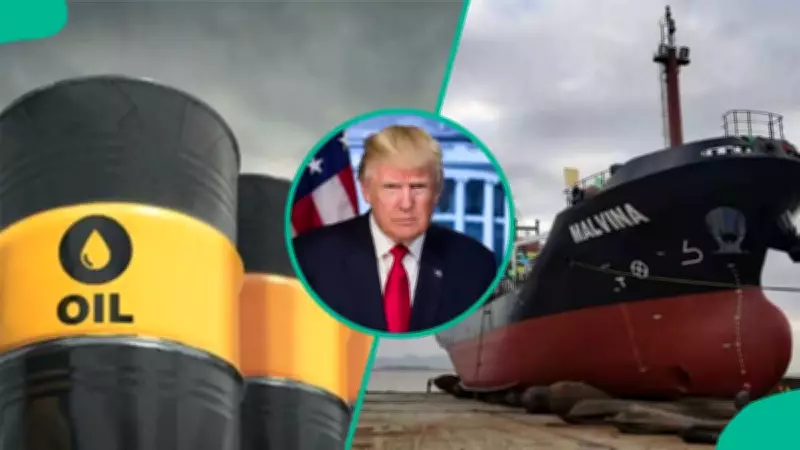
VNL Capital Flags Severe Supply Shock as Global Oil Market Enters Fragile Phase
Energy investment firm VNL Capital has issued a stark warning about a severe supply shock in global oil markets, stating that escalating Middle East tensions have disrupted critical energy flows through the Strait of Hormuz, creating one of the largest supply shortfalls in recent history. The company's report, delivered by Chief Investment Officer Dr Ifeanyi Ubah at a stakeholders' roundtable on March 24, 2026, paints a concerning picture of an oil market that has shifted into a fragile, geopolitically sensitive phase.
Strait of Hormuz Disruption Triggers Massive Supply Shock
At the heart of the crisis is the effective constraint of the Strait of Hormuz, a critical maritime passage through which approximately one-fifth of global oil supply normally flows. According to VNL Capital's report titled "Global shocks and market opportunities: How to invest in 2026," the conflict involving Iran, the United States, and Israel has severely disrupted energy flows, removing millions of barrels per day from global supply.
The disruption has forced major Gulf producers to significantly cut output, contributing to a projected global supply decline of about eight million barrels per day in March 2026. VNL Capital describes this situation as particularly severe due to the limited alternative export routes available for affected producers who are heavily reliant on the Strait of Hormuz.
"This shock has created one of the largest supply shortfalls in recent history, particularly given the limited alternative routes available for exporters heavily reliant on the Strait of Hormuz," the report states. "The lack of immediate substitution channels has amplified the severity of the disruption, tightening market conditions and increasing price volatility."
Costly Adjustments Reshape Global Oil Prices and Logistics
In response to the disruption, the global oil system is undergoing rapid but costly adaptation. Producers such as Saudi Arabia are rerouting exports through alternative infrastructure like the East-West pipeline to the Red Sea, while shipping companies are diverting cargoes around Africa or relying more heavily on pipelines to bypass chokepoints.
However, these adjustments come with significantly higher transportation costs and logistical inefficiencies, which are further intensifying upward pressure on oil prices. The reliance on longer routes and constrained infrastructure is reinforcing market tightness rather than alleviating it, according to the VNL Capital analysis.
The report highlights a major shift in oil market dynamics, noting that what was previously seen as a surplus-driven outlook has evolved into a far more fragile and geopolitically exposed environment. Disruptions to supply can now spark rapid and disproportionately large movements in global oil prices, creating increased volatility across energy markets.
"Overall, the current environment underscores a shift from surplus expectations to a more fragile and geopolitically sensitive oil market, where supply shocks can have immediate and outsized impacts on global prices," the report emphasized.
Outlook Hinges on Conflict Trajectory
Looking ahead, VNL Capital stresses that the future trajectory of the oil market will depend heavily on how the Middle East conflict evolves. A prolonged disruption is expected to sustain tight supply conditions and elevated prices, which would favor producers with spare capacity or diversified export routes.
The severity of the current disruption is amplified by limited substitution channels, meaning exporters dependent on the Strait of Hormuz have few viable alternatives in the short term. This structural limitation has heightened price volatility and tightened supply conditions across global markets, creating challenging conditions for both producers and consumers.
Ultimately, the report concludes that the crisis underscores the growing vulnerability of global energy systems, where geopolitical risks can swiftly reshape supply dynamics and market stability. The situation highlights the interconnected nature of global energy markets and the significant impact that regional conflicts can have on worldwide economic conditions.
The stakeholders' roundtable where the report was presented was themed "Global Uncertainty, Local Opportunity: Where to Invest in Nigeria," reflecting concerns about how international energy market disruptions might affect local economies and investment opportunities in oil-producing nations.