
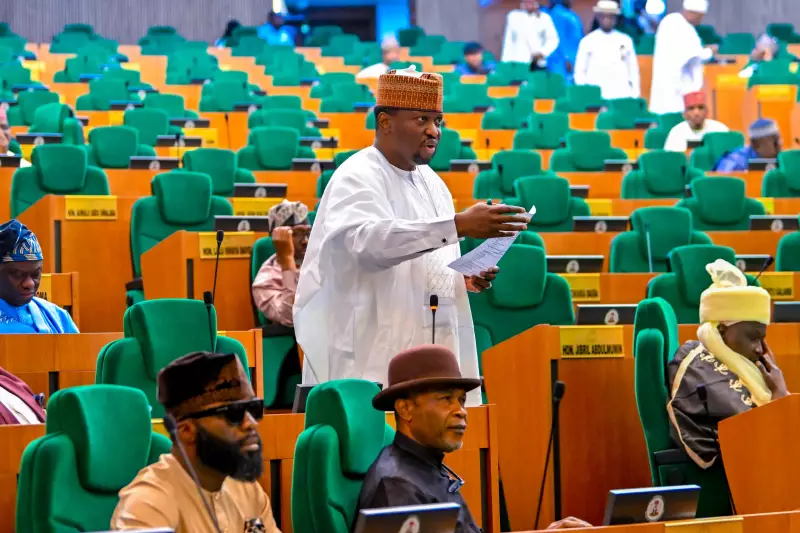
A significant allegation of a breach in Nigeria's legislative process has surfaced in the House of Representatives, casting a shadow over the recently enacted tax reforms.
Lawmaker Raises Alarm on Floor of House
On Wednesday, 17 December 2025, Honourable Abdussamad Dasuki, a member representing Sokoto State under the Peoples Democratic Party (PDP), raised a serious concern during plenary. He alleged that the versions of the new tax laws made available to the public are not the same as the bills debated and passed by the National Assembly.
Rising under a Point of Privilege based on Order Six, Rule Two of the House Rules, Dasuki stated that his legislative rights had been violated. He insisted that the content of the officially published, or gazetted, tax laws does not reflect what lawmakers thoroughly debated, voted on, and ultimately approved.
Discrepancies Found After Detailed Review
The lawmaker provided details of his investigation. After President Bola Ahmed Tinubu signed the four Tax Reform Bills into law on 26 June 2025, Dasuki spent three days conducting a meticulous review. He compared the gazetted copies obtained from the Federal Ministry of Information with the official Votes and Proceedings of the House and the harmonised versions adopted by both the Senate and the House of Representatives.
"I was here, I gave my vote and it was counted, and I am seeing something completely different," Dasuki told the chamber. He emphasized that the discrepancies he observed were not minor but represented a fundamental alteration of the legislated text.
Dasuki clarified that his primary concern was not about moving a routine motion. Instead, he aimed to alert the House to what he described as a serious breach of the legislative process and the Nigerian Constitution. He urged the Speaker, Rt. Hon. Tajudeen Abbas, to ensure all relevant documents are presented before the Committee of the Whole for comprehensive scrutiny by every member.
Call for Scrutiny and Constitutional Implications
"Mr. Speaker, the whole members should see what is in the gazetted copy and compare it with what they passed on the floor so that the necessary amendments can be made. This is a breach of the Constitution and our laws," Dasuki asserted.
In response, Speaker Tajudeen Abbas, who presided over the session, acknowledged the Point of Privilege raised by Dasuki. He assured the House that appropriate action would be taken to address the grave matter.
The tax laws in question represent a cornerstone of the current administration's economic policy. The four Acts—the Nigeria Tax Act (NTA), the Nigeria Tax Administration Act (NTAA), the Nigeria Revenue Service Act (NRSA), and the Joint Revenue Board Act (JRBA)—are designed to comprehensively overhaul the nation's tax system. Their stated goals are to drive economic growth, boost revenue generation, and improve the business environment.
Key provisions of the new laws, as intended by the National Assembly, include:
- Maintaining the Value Added Tax (VAT) rate at 7.5 per cent, rejecting initial proposals to raise it to 12.5%.
- Expanding the VAT scope but zero-rating essential items like basic food, education, healthcare, and public transport to ease inflation.
- Restructuring VAT revenue allocation: 30% based on consumption, 50% shared equally among states, and 20% based on population.
The allegations, if proven true, raise profound questions about the integrity of lawmaking and the implementation of critical national policy. The next steps by the House leadership will be closely watched as they determine the veracity of the claims and seek to uphold the sanctity of the legislative process.




