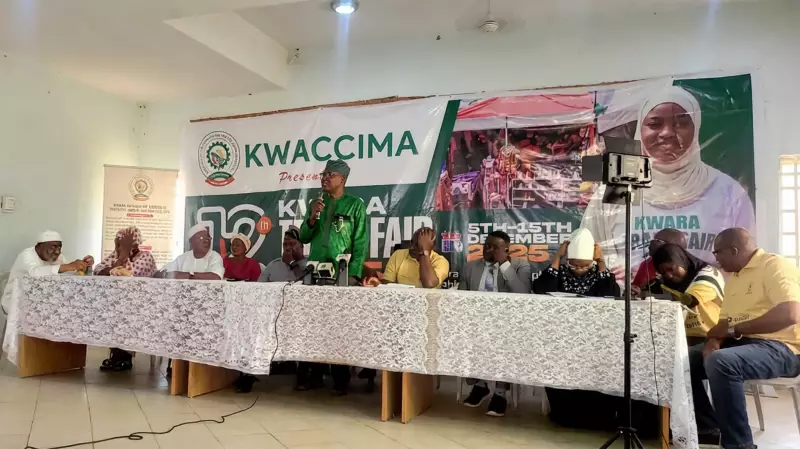
The Kwara State Chamber of Commerce, Industry, Mines and Agriculture (KWACCIMA) has leveled serious accusations against the Kwara State Government, claiming it deliberately acted to undermine the recently concluded 12th Kwara Trade Fair.
Allegations of Deliberate Sabotage
At the fair's closing ceremony on Monday, the Chairman of the Organising Committee, Alhaji Hassan Ibrahim Sani, stated that the absence of the state government, its agencies, and all 16 local government councils was not an oversight but a "deliberate and well-orchestrated plan". He revealed that despite initial expressions of interest, the government withdrew its support and participation, which KWACCIMA interprets as a move "to frustrate its success."
Severe Impact on Fair's Viability
Sani detailed the consequences of this lack of institutional backing. He reported a low visitor turnout, which directly reduced patronage for exhibitors. More critically, the situation discouraged international participation. According to him, some member countries of the D-8 Organisation for Economic Cooperation, which had shown interest, pulled out after receiving "zero signal" of support from the state government that was supposed to formally host them.
"The 12th Kwara Trade Fair, like the 11th edition held in December 2024, was not without serious challenges," Sani said. "These challenges were caused by the withdrawal of support and collaboration by the Kwara State Government... This experience drastically reduced the influx of visitors and negatively impacted expected patronage."
Resilience and a Shift to Private Sector
Despite the significant setbacks, the fair, themed "Empowering Local Entrepreneurs for Global Competitiveness," proceeded. Exhibitors from diverse sectors including agro-processing, manufacturing, technology, and fashion showcased their products. Sani commended the participation of federal agencies like the Raw Materials Research and Development Council (RMRDC), Nigerian Shippers’ Council (NSC), and the Nigerian Export Processing Zones Authority (NEPZA).
Looking ahead, Sani declared that the Chamber would not be deterred. He announced a strategic pivot, stating that future editions would rely more heavily on private sector collaboration. "We will work towards surpassing these hurdles and organise better, stronger and more befitting private sector–driven trade fairs in subsequent editions," he affirmed. Feedback from this year's event will be used to improve areas like publicity, infrastructure, and logistics.
He concluded by describing the fair's conclusion as a testament to the resilience of its organisers and stakeholders, stressing that it still managed to strengthen business relationships and contribute to the state's economic development.