
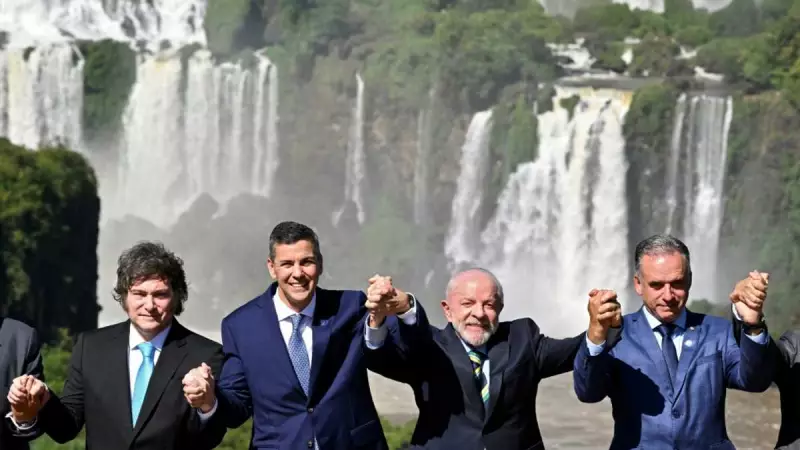
Brazilian President Luiz Inacio Lula da Silva has made a direct appeal to European Union leaders, urging them to demonstrate 'political will and courage' to finally sign a monumental trade agreement with the South American Mercosur bloc. The call came during the Mercosur summit held in Foz do Iguacu, Brazil, this past weekend.
A Deal 26 Years in the Making Faces New Delay
The leaders of Mercosur member nations—Argentina, Brazil, Paraguay, and Uruguay—had gathered with the expectation of finally sealing the agreement with the EU on Saturday, December 20, 2025. This pact would establish the world's largest free trade zone, a goal shared by EU Chief Ursula von der Leyen and a majority of the bloc's member states.
However, after negotiations that first began in 1999, the deal has been postponed once more. Lula revealed he received a letter from EU leaders expressing confidence for approval in January. European Commission sources and diplomats point to January 12, 2025, as the new expected signing date in Paraguay, though Paraguayan and Brazilian foreign ministers noted a lack of official communication on the matter.
Why the EU-Mercosur Pact is So Contentious
The proposed agreement promises significant two-way trade benefits. The European Union stands to boost exports of vehicles, machinery, wines, and spirits to Latin American markets. In return, South American nations would gain easier access for their key agricultural products like meat, sugar, rice, honey, and soybeans into Europe.
While nations like Germany and Spain are enthusiastic about the export opportunities, especially amid global trade tensions, the deal has met fierce opposition from European farmers, particularly in France and Italy. Farmers fear being undercut by a flood of cheaper imports from agricultural powerhouses like Brazil.
Protests in Brussels Highlight Deep Divisions
The tension boiled over in Brussels just days before the Mercosur summit. On Thursday, thousands of farmers protested by driving around 1,000 tractors into the city, clogging streets near a meeting of EU leaders. The demonstration turned confrontational, with protesters lighting fires and throwing objects at police, who responded with tear gas and water cannon.
Despite the hurdles, Lula emphasized the strategic importance of the deal. "We have in our hands the opportunity to send the world an important message in defense of multilateralism," he told attendees at the summit, which also included Uruguayan President Yamandu Orsi, Paraguay's Santiago Pena, Argentina's Javier Milei, and Panama's Jose Raul Mulino.
The Brazilian leader stressed that concluding the 26-year-long negotiations is crucial for reinforcing the bloc's position in an increasingly competitive global environment. He concluded his remarks by noting, "But, unfortunately, Europe has not yet made its decision." The world now watches to see if January will finally bring the courage Lula has asked for.




