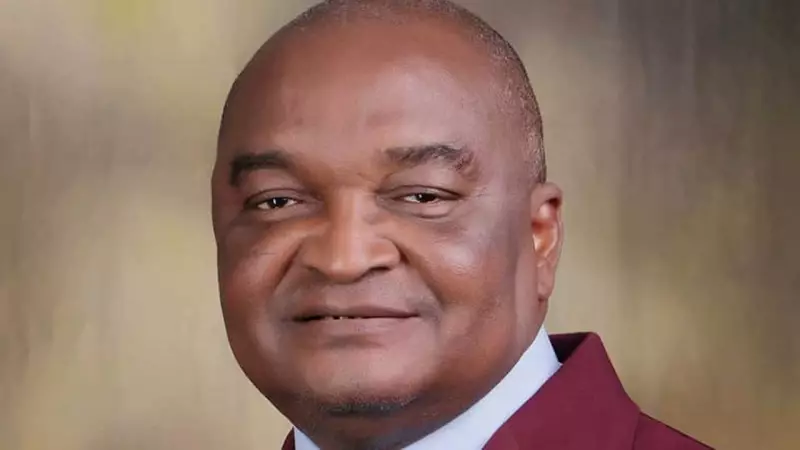
Nigerian town planning consultants have received a strong call to uphold ethical standards and embrace technological innovation during the inauguration of the Federal Capital Territory branch of their professional association.
The Soul of Professional Practice
Former President of the Nigerian Institute of Town Planners (NITP), Nathaniel Atebije, delivered a powerful message about professional integrity at the recent launch of the Federal Capital Territory (FCT) branch of the Association of Town Planning Consultants of Nigeria (ATOPCON) in Abuja.
Presenting a paper titled "Flawless Professionalism: The Soul of Enduring Practice in Urban and Regional Planning," Atebije described professionalism as the "conscience of every enduring practice" that forms the foundation for sustainable national development.
He emphasized that professional credibility in the planning sector depends on three essential pillars: competence, integrity, and civic responsibility. According to the seasoned planner, flawless professionalism represents the highest level of ethical, intellectual, and technical excellence that gives life and credibility to planning practice.
Balancing Growth and Ethics
Atebije warned that without strong ethical discipline, the town planning profession risks losing its moral vitality and degenerating into "bureaucratic routine or private speculation detached from the public good."
He explained that urban planners serve as both technicians and moral agents responsible for shaping human settlements that reflect justice, efficiency, and beauty. The planning professional must balance competing values such as:
- Growth versus conservation
- Private interest versus public good
- Immediate needs versus long-term sustainability
Citing philosophical influences from Aristotle to Kant and contemporary planning theorists, Atebije stressed that virtue, ethical conduct, and institutional memory form the essential pillars of sustainable professional practice.
Technology and Smart City Vision
ATOPCON National President, Hakeem Badejo, challenged the newly inaugurated Abuja Branch to position itself at the forefront of technological innovation and smart city development.
He outlined an ambitious agenda for the branch that includes:
- Capacity building through upskilling programs for members
- Developing proposals on Artificial Intelligence in city governance
- Leveraging Web3 technologies for urban planning
- Creating regenerative slum redevelopment proposals for FCT
Badejo also encouraged members to explore futuristic mobility solutions including automated vehicles and electric vertical take-off and landing systems for integration into Abuja's transport infrastructure.
"You should be the drivers of the future outlook of Abuja to be among the best three liveable cities in the world," Badejo declared, expressing confidence that with determination and innovation, the Abuja Branch could elevate both the profession and the city's global standing.
Building Institutional Strength
Atebije emphasized the critical importance of institutional memory - the retention and transmission of professional knowledge - as a key ingredient for continuity in urban planning practice. He warned that without proper documentation and knowledge transfer, policies become easily reversed, standards erode, and professional credibility suffers.
He recommended several concrete measures to strengthen professional practice:
- Establishing mentorship frameworks to transmit values across generations
- Strengthening continuous professional development programs
- Implementing robust peer review systems
- Promoting transparency and ethical accountability
- Creating planning innovation labs for research-led development
"The enduring strength of any profession lies not in the number of its members but in the depth of their commitment to excellence and morality," Atebije concluded, urging planners to prioritize reputation over material gain.
The Abuja Branch Coordinator, Dr. Emmanuel Agbator, described the establishment of the branch as long overdue, noting that despite decades of intense physical development, Abuja had lacked an ATOPCON presence. He pledged that the branch would work collaboratively with the broader planning community to enhance the quality of planning, design, and implementation throughout the Federal Capital Territory.