
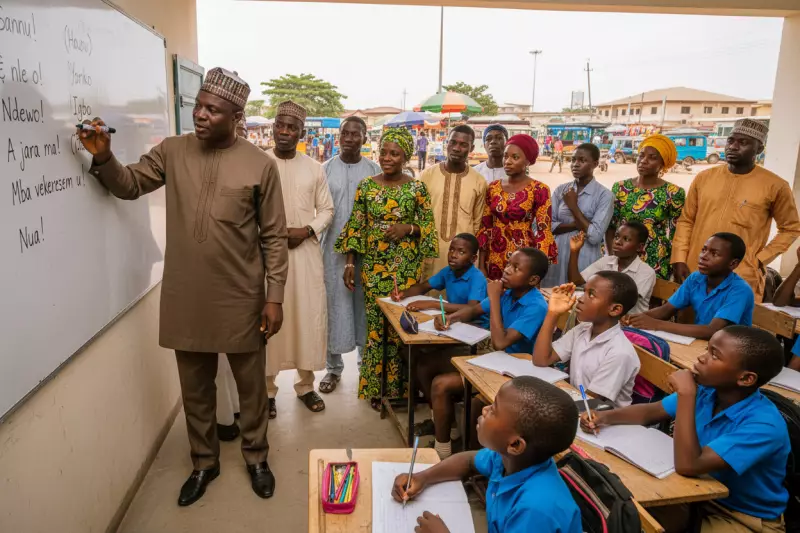
Nigeria's extraordinary linguistic landscape presents one of the world's most complex communication puzzles. With over 520 indigenous languages spanning 371 ethnic groups, the question of how Nigerians understand each other reveals fascinating insights about national unity and cultural diversity.
The Official Language That Bridges Ethnic Divides
After extensive research into Nigeria's communication patterns, the clear answer emerges: English serves as the only language common to most Nigerians. This colonial legacy has transformed into an essential tool for national cohesion, connecting people across all 36 states and the Federal Capital Territory.
The National Population Commission estimates that approximately 60 million Nigerians speak English with varying fluency levels, representing nearly one-third of the population. This makes English the primary linguistic bridge in government, education, and formal business settings throughout the country.
Nigeria's Dual Linguistic System: Formal and Informal
While English dominates official spaces, Nigerian Pidgin functions as an equally powerful unofficial lingua franca. Market women in Port Harcourt, danfo drivers in Lagos, and artisans in Kano use pidgin to transcend ethnic boundaries in ways formal English sometimes cannot.
This creates a practical dual system: English for formal settings and pidgin for everyday interactions. The two languages complement each other perfectly, with pidgin potentially reaching even more Nigerians than standard English, particularly in urban centers and informal economic sectors.
Why Indigenous Languages Can't Unite the Nation
Nigeria's three major indigenous languages—Hausa, Yoruba, and Igbo—each command impressive numbers but remain geographically concentrated. Hausa dominates northern Nigeria with 50-70 million speakers, Yoruba thrives in the southwest with 40-50 million speakers, and Igbo flourishes in the southeast with 30-40 million speakers.
Despite their constitutional recognition for legislative purposes, none of these major languages achieves nationwide commonality. A Hausa speaker from Sokoto and a Yoruba speaker from Ibadan need either English or pidgin to communicate effectively, explaining why English became essential for national unity.
The Historical Context of English Dominance
English became Nigeria's administrative language during colonial rule and maintained its official status after independence in 1960. The Federal Ministry of Education continues to mandate English as the medium of instruction from primary school onward.
This choice proved politically pragmatic. With hundreds of indigenous languages, selecting any single Nigerian tongue would have created ethnic tensions. English provided neutral ground where no ethnic group held linguistic advantage, making it the compromise that supported national cohesion.
Nigeria's Complete Linguistic Profile
Beyond the major languages, Nigeria hosts an incredible array of minority tongues representing distinct cultural universes. Edo carries the legacy of the ancient Benin Kingdom, Efik and Ibibio thrive in Cross River and Akwa Ibom states, while Kanuri connects speakers to the historic Kanem-Bornu Empire.
Tragically, this rich linguistic heritage faces significant threats. UNESCO studies indicate that 29 Nigerian languages have already vanished, with another 29 endangered. Research shows that 25% of Nigerian children under 11 cannot speak their parents' indigenous language, suggesting many languages could disappear within two to three generations.
The Future of Nigerian Languages
Looking ahead, English's dominance will likely strengthen due to globalization, technology, and economic incentives favoring English proficiency. However, counter-movements are emerging as cultural pride resurges among younger Nigerians.
Contemporary musicians like Burna Boy and Wizkid seamlessly blend English, pidgin, and indigenous languages in their lyrics, celebrating rather than hiding Nigeria's linguistic diversity. Some states have implemented mother tongue policies requiring indigenous language instruction in early primary grades.
Technology offers hope for preservation through language learning apps, social media groups, and digital documentation projects. Nigerian tech developers are creating solutions that might save endangered languages by making them relevant to digital-native generations.
Practical Communication in Daily Nigerian Life
For visitors and newcomers, English suffices for formal interactions in urban centers like Lagos, Abuja, and Port Harcourt. However, learning basic Nigerian Pidgin dramatically enhances everyday experiences in markets, transportation, and casual settings.
Basic pidgin can be learned in weeks rather than months, offering immediate practical value. Phrases like "I wan chop" (I want to eat) and "Wetin dey happen?" (What's happening?) use recognizable English words with simplified syntax that makes communication accessible across ethnic lines.
For those interested in deeper cultural connection, learning greetings in major indigenous languages—"Sannu" in Hausa, "Bawo ni" in Yoruba, "Kedu" in Igbo—shows respect and opens doors to richer Nigerian experiences.
Conclusion: Linguistic Diversity as National Strength
English remains the only language common to most Nigerians, serving as the official tongue that connects extraordinary diversity across ethnic, regional, and religious boundaries. This reality emerged from colonial history but persists because no indigenous language could unite all Nigerians without favoring specific ethnic groups.
Yet this simple answer masks a beautiful complexity. Nigeria operates in multiple linguistic registers simultaneously, with English handling formal business, pidgin managing everyday interactions, and indigenous languages carrying cultural soul. This multilayered landscape isn't a problem to solve but a feature that defines the nation's unique character.
The challenge ahead involves preserving endangered languages while maintaining English's unifying function. Both matter, and both deserve protection and celebration as essential components of Nigeria's rich cultural tapestry.