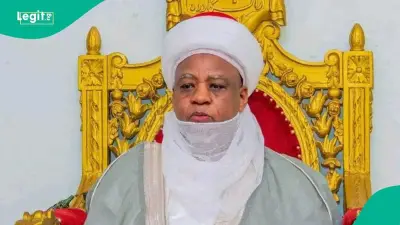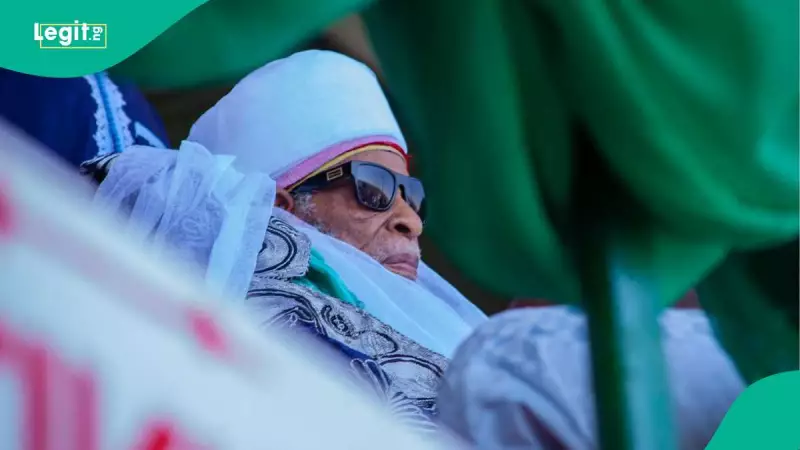
The Nigerian Islamic community mourns the passing of one of its most revered figures, Sheikh Dahiru Usman Bauchi, who returned to his Creator on Thursday, November 27, 2025. The influential scholar's son, Sayyadi Ali Dahiru Usman Bauchi, confirmed the news of his father's demise, marking the end of an era in Islamic scholarship in Northern Nigeria.
Early Life and Educational Background
Sheikh Dahiru Usman Bauchi was born on June 29, 1927, in Nafada, which was then part of Bauchi Province before the creation of Gombe State. The esteemed scholar came from a pure Fulani lineage on both his paternal and maternal sides, establishing deep roots in the region's Islamic traditions.
His journey into Islamic knowledge began under the guidance of his father, Alhaji Usman Adam, who was himself a respected Qur'an reciter and scholar. Through dedicated study, Sheikh Dahiru memorized the entire Qur'an by age 19 or 20, achieving the prestigious status of Hafiz that would define his lifelong commitment to Islamic education.
Scholarly Journey and Spiritual Lineage
The late Sheikh's educational path extended beyond his father's tutelage as he studied under other eminent Islamic scholars, including the renowned Sheikh Ibrahim Niasse of Senegal. Sheikh Dahiru was deeply rooted in the Tijaniyyah Sufi order, following spiritual traditions established by his father and maintaining this connection throughout his seven-decade teaching career.
His public teaching journey began around 1948 when he started delivering Qur'anic exegesis (tafsīr) sessions. For over 70 years, Sheikh Dahiru provided commentary on Islamic scripture while offering moral, spiritual, and social guidance firmly grounded in Qur'anic principles.
Legacy and National Influence
Sheikh Dahiru's impact extended far beyond the classroom through his establishment of numerous educational institutions. He founded multiple Qur'anic schools (tsangaya), memorization centers, and mosques across Northern Nigeria and beyond, creating infrastructure for Islamic education that will continue serving communities for generations.
His expertise in Islamic matters earned him significant national recognition, leading to his appointment as Deputy Chairman of the Fatwa Committee of the Nigerian Supreme Council for Islamic Affairs (NSCIA). This position placed him at the highest level of Islamic decision-making in Nigeria, where his scholarly opinions carried considerable weight.
The Sheikh's dedication to Qur'anic education became a family tradition, with many of his children and grandchildren becoming Hafiz themselves. This remarkable achievement reflects his commitment to embedding Islamic knowledge within the family structure and ensuring the continuation of Qur'anic scholarship.
In related family developments, Naziru Dahiru, one of Sheikh Dahiru's sons, recently declared his intention to run for Governor of Bauchi State in the 2027 election. The aspiring politician claimed his decision received divine sanction after prayers for guidance and positioned himself as a candidate representing youth interests while promising to continue the socioeconomic projects of Governor Bala Mohammed's administration.
The passing of Sheikh Dahiru Bauchi has drawn tributes from religious leaders, traditional institutions, political figures, and millions of followers across Nigeria and beyond, testifying to the profound impact he had on Islamic education and spiritual guidance throughout his remarkable 98-year life.