Nigeria's Complex Religious Tapestry: An In-Depth Exploration
Nigeria's religious landscape is extraordinarily rich and multifaceted, shaped by centuries of history, cultural exchange, and spiritual evolution. Understanding this diversity requires moving beyond simple statistics to appreciate how faith influences daily life, politics, family structures, and national identity. The primary religions practiced in Nigeria are Christianity, Islam, and traditional African religions, each contributing distinct threads to the nation's spiritual fabric.
The Dominant Religious Traditions in Nigeria
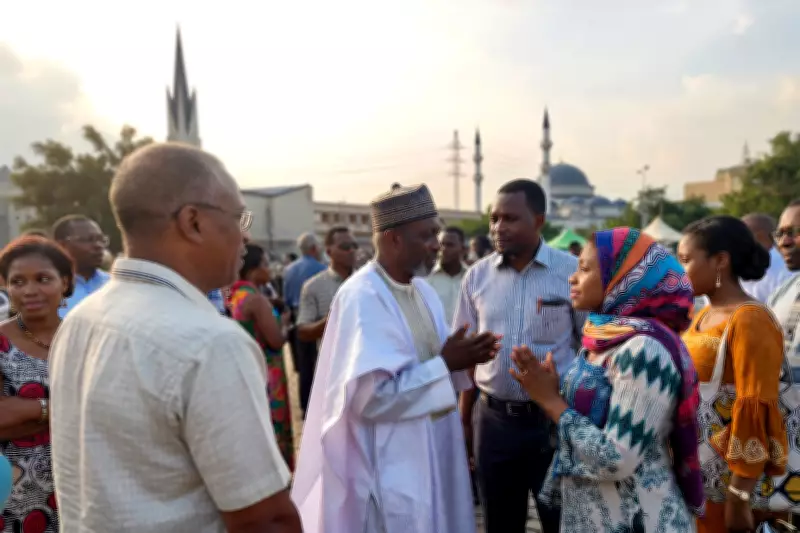
Nigeria's three dominant religious traditions are Christianity, Islam, and African traditional religions, with the distribution and influence of each varying dramatically across regions and communities. According to the Ministry of Foreign Affairs, Christianity and Islam each claim approximately 50 percent of Nigeria's population, making for a near-perfect balance that creates unique political dynamics. Traditional African religions maintain devoted followings, particularly in rural areas and among older generations, though their influence often persists subtly even among those who identify primarily as Christian or Muslim.
Christianity arrived through European missionaries during the colonial period, establishing deep roots especially in southern Nigeria. Today, Nigeria hosts one of the world's largest Christian populations, with denominations ranging from Anglican and Catholic to Pentecostal and evangelical movements. The sheer number of churches in cities like Lagos exceeds what one might find in many European capitals, reflecting the faith's pervasive presence.
Islam reached northern Nigeria through trans-Saharan trade routes as early as the 11th century, shaping Hausa-Fulani culture for nearly a millennium. The northern states remain predominantly Muslim, with Sharia law implemented in twelve states across the region. What fascinates observers is how deeply Islam has integrated with pre-existing cultural practices, creating distinctly Nigerian expressions of the faith that differ from Middle Eastern models.
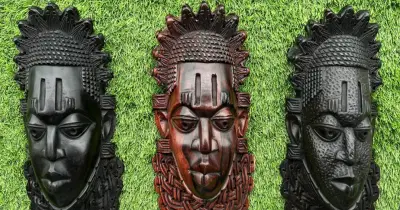
Traditional African religions, while often underestimated in official statistics, continue to influence Nigerian life profoundly. These indigenous belief systems center on worship of ancestors, nature spirits, and supreme deities known by names like Olodumare among the Yoruba or Chukwu among the Igbo. Many Nigerians who identify as Christian or Muslim still maintain connections to traditional practices, creating layered religious identities that reflect cultural pragmatism.
Regional Distribution of Religious Practices
Nigeria's six geopolitical zones demonstrate distinct religious patterns shaped by historical conquest, missionary activities, and cultural traditions. The North-West zone, including states like Kano, Sokoto, and Kaduna, is overwhelmingly Muslim, representing the historical heartland of the Sokoto Caliphate. This region maintains strong adherence to Islamic practices and has implemented Sharia law most comprehensively.
The North-East states show similar Muslim dominance, though with greater Christian minorities particularly in Adamawa and Taraba. This region faces ongoing challenges like the Boko Haram insurgency, demonstrating how religious extremism can exploit economic marginalization and governance failures.
The North-Central zone, often called the Middle Belt, represents Nigeria's most religiously mixed region, with Christians and Muslims existing in roughly equal numbers. Traditional religions maintain a stronger visible presence here. Cities like Jos in Plateau State have unfortunately become synonymous with periodic Christian-Muslim violence, though this often reflects political and economic competition as much as religious difference.
South-West states demonstrate remarkable religious diversity, with substantial Christian and Muslim populations coexisting alongside active traditional religion practice. Yoruba culture provides a unifying identity that transcends religious divisions, fostering integration. The South-South and South-East zones are predominantly Christian, reflecting intense missionary activity during the colonial period. These regions contain Nigeria's highest concentration of churches and Christian educational institutions.
Historical Roots and Contemporary Expressions
Christianity's expansion across Nigeria followed colonial trade routes and missionary activities, transforming the southern and middle belt regions into predominantly Christian territories. Methodist, Anglican, and Catholic missionaries established schools and hospitals throughout southern Nigeria during the 19th and early 20th centuries, creating educational infrastructure that accelerated Christian conversion. Pentecostal Christianity has exploded across Nigeria since the 1980s, fundamentally reshaping the religious landscape with mega-churches emphasizing prosperity gospel and spiritual warfare.
Islam's arrival in northern Nigeria predates European colonialism by centuries, giving it historical legitimacy and cultural depth that shapes regional identity profoundly. The Hausa kingdoms embraced Islam through contact with North African traders, and by the 19th century Sokoto Caliphate, Islamic scholarship and governance had become central to northern Nigerian culture. Islamic education through Quranic schools has educated millions, though this system faces criticism for sometimes prioritizing memorization over critical thinking skills.
African traditional religions represent Nigeria's original spiritual framework, predating both Christianity and Islam by millennia. Traditional Yoruba religion centers on Olodumare and a pantheon of Orisha deities, while Igbo traditional religion emphasizes Chukwu alongside Chi and ancestor veneration. The significance of ancestors in traditional African religions cannot be overstated, as they mediate between the living and the divine, offering protection and guidance when properly honored.
Religious Syncretism and Social Impact
Religious syncretism, where elements from multiple belief systems combine into hybrid practices, characterizes much of Nigeria's actual religious life despite official condemnation from religious authorities. This blending reflects Nigerian pragmatism and a cultural both/and rather than either/or approach to spiritual matters. Many Nigerians maintain household shrines for traditional deities while attending church regularly, or incorporate pre-Islamic practices like protective amulets into their Muslim faith.
Religion in Nigeria transcends private belief to become a defining marker of social identity, political affiliation, and regional belonging. The formula whereby northern states are predominantly Muslim while southern states are predominantly Christian creates a persistent north-south divide that complicates Nigerian federalism. Presidential elections often become referendums on religious representation, with Nigerians expecting informal rotation between Christian and Muslim presidents to maintain balance.
Religious institutions wield enormous economic power in Nigeria. Churches and mosques control property worth billions of Naira, employ thousands, and influence consumer behavior through their congregations. The Christian offering and Islamic Zakat systems redistribute wealth within religious communities, creating parallel economies that sometimes rival formal financial sectors.
Preserving Traditional Beliefs Alongside Modern Practice
Many Nigerians struggle with maintaining connections to traditional spiritual heritage while practicing Christianity or Islam. Practical approaches include understanding one's ethnic group's traditional belief system thoroughly, identifying cultural practices versus religious requirements, and engaging with progressive religious leaders who acknowledge cultural validity. Participating in traditional festivals as cultural observers rather than spiritual devotees allows for heritage preservation without theological conflict.
Teaching children about traditional beliefs as cultural education provides grounding and connection to ancestral wisdom. Creating personal synthesis that honors all aspects of identity—Christian/Muslim, Nigerian, and member of a specific ethnic group—allows for spiritual practice that maintains core religious tenets while acknowledging cultural heritage.
Global Context and Future Outlook
Globally, Christianity, Islam, Hinduism, Buddhism, and Judaism represent the five largest world religions. Nigeria hosts substantial Christian and Muslim populations while smaller Hindu, Buddhist, and Jewish communities exist primarily in urban centres through immigrant populations. Understanding global religious distribution contextualizes Nigeria's unique position as a nation where Christianity and Islam coexist in near-equal proportions.
The future of Nigerian religion remains uncertain. Increasing urbanization and education may reduce religious fervor, or Nigerian religiosity may persist, adapting to modern conditions while maintaining intensity. Traditional religions might continue fading, or cultural revival movements could restore their prominence. How Christian-Muslim relations evolve will significantly determine Nigeria's political stability and national cohesion.
What seems certain is that religion will remain central to Nigerian life for generations. Our religious diversity, while sometimes problematic, also enriches our culture and provides spiritual resources addressing human needs across all life stages. The challenge lies in ensuring religious diversity strengthens rather than fragments national unity, fostering interfaith learning and cooperation that benefit all communities.