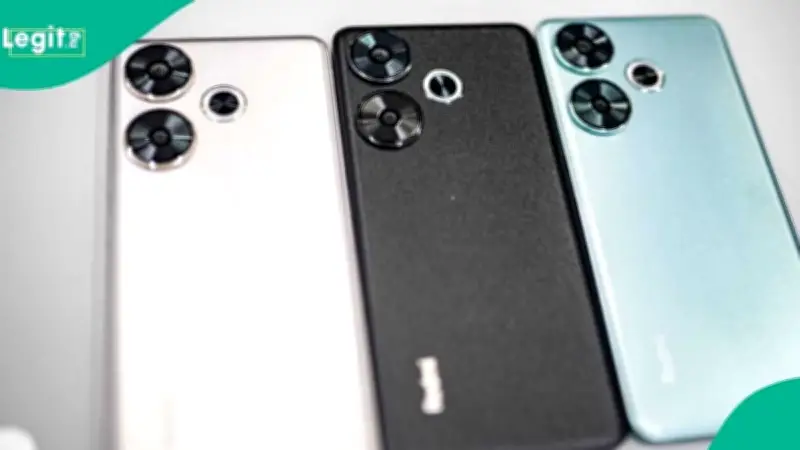
The Redmi 15C is the stronger overall package for budget buyers, offering a larger battery, faster charging, better durability, a brighter display, and longer software support compared to the Redmi 14C. However, the Redmi 14C remains competitive with its higher-resolution selfie camera and lower price point.
Price Comparison in Nigeria
Prices for both phones vary due to exchange-rate movements, stock levels, and retailer differences, so current figures should be treated as a guide. The Redmi 15C starts at about ₦130,900 for the 4GB/128GB version, while the 6GB/128GB model costs between ₦143,900 and ₦199,300. The 8GB/256GB variant ranges from about ₦168,900 to ₦230,806.
The Redmi 14C is generally cheaper, with the 4GB/128GB model selling for around ₦125,600 to ₦134,900. The 6GB/128GB version costs about ₦142,600 to ₦146,600, while the 8GB/256GB model ranges from ₦157,600 to ₦162,600. Overall, buyers can expect to pay roughly ₦15,000 to ₦40,000 more for comparable Redmi 15C configurations.
Design and Durability Differences
The Redmi 15C is slightly slimmer and carries a stronger IP64 rating, compared with the Redmi 14C's IP52 rating. This gives the newer model better protection against dust and water splashes. The Redmi 14C measures 171.9 x 77.8 x 8.2mm and weighs between 204g and 211g, while the Redmi 15C measures 171.6 x 79.5 x 8.0mm and weighs 205g.
Display: Redmi 15C Takes the Lead
Both smartphones feature 120Hz IPS LCDs, but the Redmi 15C offers a slightly larger 6.9-inch panel compared with the 6.88-inch screen on the Redmi 14C. The 14C has a 720 x 1640-pixel resolution and peak brightness of 600 nits. The 15C has 720 x 1600 pixels and reaches up to 810 nits. That extra brightness should make the Redmi 15C easier to view in brighter outdoor conditions.
Performance Remains Largely Unchanged
There is little reason to expect a major performance difference between the two models. Both use the MediaTek Helio G81 Ultra, with an octa-core CPU and Mali-G52 MC2 GPU. Both also support memory expansion and dedicated microSD storage. The Redmi 14C comes in several configurations, including 4GB/64GB, 4GB/128GB, 6GB/128GB and 8GB/256GB. The Redmi 15C offers 4GB/128GB, 6GB/128GB and 8GB/256GB among its configurations.
Camera: The Older Phone Wins
Interestingly, the Redmi 15C does not represent an across-the-board camera upgrade. Both phones feature a 50MP main rear camera, but the Redmi 14C has a 13MP front camera, while the Redmi 15C uses an 8MP selfie camera. For users who prioritise selfies and video calls, the older Redmi 14C therefore has an advantage.
Battery and Charging Favour the Redmi 15C
This is one of the clearest upgrades in the newer model. The Redmi 14C packs a 5,160mAh battery with 18W charging, while the Redmi 15C comes with a much larger 6,000mAh battery and 33W charging. The combination should give the 15C an advantage in battery endurance and charging speed. Neither model includes a charger in the box in some markets, so buyers should check the contents before purchasing.
Software Support Gives the 15C a Longer Lifespan
The Redmi 14C launched with Android 14 and HyperOS, while the Redmi 15C runs Android 15 with HyperOS 2. More importantly, the 15C is promised four major Android upgrades and six years of security updates, compared with two major OS upgrades and four years of security updates for the 14C.
Verdict
The Redmi 15C is the stronger overall package, particularly for buyers who want a bigger battery, faster charging, better water and dust resistance, a brighter display and longer software support. However, the Redmi 14C remains relevant because it is cheaper and has a higher-resolution selfie camera. For buyers focused on value and basic everyday use, the older model could still make sense. For those willing to spend more for longer-term use, the Redmi 15C offers the more substantial upgrade.